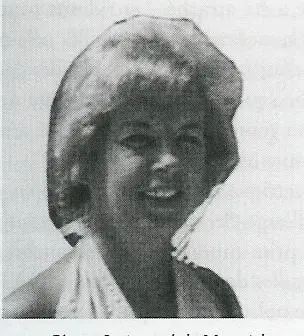
Anna Stagg Yarnold, a 59-year-old artist, lived in a waterfront home in the quiet, affluent community of Senneville, Quebec. She was married to her husband, Robert, and together they had raised two children, a daughter named Sarah and a son, James. Though she lived alone at the time, her life on the western tip of the Island of Montreal was peaceful.
That peace was irrevocably shattered on Friday, October 15, 1999, when she became a victim in a string of brutal killings that terrorized the greater Montreal area.
On that autumn day, Anna was attacked inside her own home. The evidence of a violent struggle began in the bathroom, suggesting a sudden and terrifying confrontation. Anna fought for her life, managing to flee from her attacker and run outside into her garden. Her escape was tragically short-lived. In the place that should have been her sanctuary, she was overtaken, bludgeoned, and beaten to death. Her body was later discovered in a flower bed. The initial scene was so violent that police briefly considered it a crime of passion, and even looked at her husband, who was quickly cleared.
The investigation into Anna's murder soon revealed a chilling connection to other recent homicides. In the fall of 1999, a pattern of extreme violence against women living alone emerged across the region. The victims, often middle-aged, were being brutally attacked in their homes. The crime scenes were complex and often left investigators with few initial leads. As police forces from Montreal, Laval, and other jurisdictions began to share information, they realized they were hunting for a serial killer. The similar nature of the attacks on Anna and other women, including Monique Gaudreau and Mary Glenn, pointed to a single, predatory offender.
The breakthrough came from the investigation into the murder of 50-year-old Mary Glenn, who was killed in her Baie-D'Urfé home just two months after Anna. At that scene, investigators recovered a crucial piece of evidence: a single fingerprint. This print was matched to William Patrick Fyfe, a 44-year-old handyman with a criminal record for theft. Born in Toronto and raised in Montreal, Fyfe had a transient history, working odd jobs and moving between Ontario and Quebec. His unassuming appearance as a handyman allowed him to gain access to his victims' homes and trust.
On December 22, 1999, the Ontario Provincial Police arrested Fyfe at a truck stop near Barrie, Ontario. The evidence against him quickly mounted. Traces of Anna Yarnold's blood were found on clothing belonging to Fyfe. DNA evidence from other crime scenes, along with the fingerprint from Mary Glenn's home, created an undeniable link to the string of murders. Fyfe, who became known as "The Killer Handyman" and was also suspected of being a serial rapist known as "The Plumber" in the 1980s, had been making trips from Ontario to the Montreal area, embarking on a frenzy of rape and murder.
William Patrick Fyfe was charged with five counts of first-degree murder. The victims he was convicted of killing were Anna Yarnold, 59; Mary Glenn, 50; Monique Gaudreau, 46; Teresa Shanahan, 55; and Hazel Scattolon, 52, who he had murdered nearly two decades earlier in 1981. Fyfe confessed to four additional murders, bringing his total number of victims to at least nine, spanning from 1979 to 1999. His methods were brutal, including stabbing, bludgeoning, and strangulation. On September 21, 2001, Fyfe was sentenced to life in prison with no possibility of parole for 25 years.
Anna Yarnold is remembered by her family as a dearest wife and mother. Memorials published in the years following her death attest to the deep loss felt by her husband and daughter. Her violent death was part of a dark chapter in Quebec's history, a series of crimes that highlighted the chilling reality that a monster could be hiding in plain sight, passing himself off as an ordinary handyman. The investigation that brought William Fyfe to justice stands as a testament to the power of forensic science and the collaborative efforts of multiple police agencies to end a two-decade reign of terror.