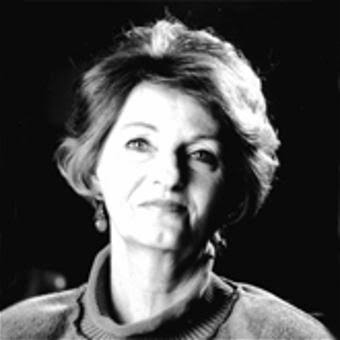
In the quiet waterfront community of Baie-d'Urfé on Montreal's West Island, Mary Glenn, a 50-year-old female graphic artist, lived a life that was horrifically cut short in the winter of 1999. Her death on December 15 would become the final, crucial piece in a puzzle of violence that had haunted Quebec for two decades, leading to the capture of one of Canada's most prolific serial killers.
On that Wednesday, a neighbor who regularly visited Mary to help with her accounting made a
devastating discovery. She found Mary deceased inside her home. There were immediate signs of a brutal struggle; her body showed evidence of having been beaten with a blunt object and stabbed multiple times. The violence of the attack was stark, yet there were no signs of forced entry, suggesting the killer may have gained her trust to get inside.
Montreal police homicide detectives descended on the scene, which was the 49th murder on the island that year. Investigators noted the extreme violence of the crime, a characteristic that was beginning to form a terrifying pattern. In the preceding months, other women living alone in the greater Montreal area had been murdered in their homes with similar brutality. The communities of the West Island were on high alert, gripped by fear as police searched for a connection between the slayings.
The investigation into Mary Glenn's murder would prove to be the breakthrough authorities desperately needed. While processing the chaotic scene in her home, forensic experts uncovered a single, vital clue: a fingerprint left behind by the killer. This piece of evidence was meticulously collected and analyzed. When the print was run through the national database, it came back with a match: William Patrick Fyfe, a 44-year-old handyman with a criminal record.
The fingerprint gave investigators a name and a face, connecting Fyfe directly to the scene of the crime. He had no known reason to be in Mary Glenn’s home. With this definitive link, an intensive surveillance operation was launched. Just one week after Mary’s death, on December 22, 1999, William Fyfe was arrested by the Ontario Provincial Police at a truck stop near Barrie, Ontario, hundreds of kilometers from Montreal.
Fyfe, who became known as "The Killer Handyman," had a history of preying on women after offering his services for odd jobs. His arrest brought an end to a reign of terror that began as far back as 1979. The forensic evidence from Mary's home was irrefutable. In addition to the fingerprint, Fyfe's DNA was also linked to the crime scene, and blood evidence connected him to other victims.
William Patrick Fyfe was charged with five counts of first-degree murder, including that of Mary Glenn. His other proven victims were Hazel Scattolon, 52, killed in 1981, and three women he murdered in the two months prior to Mary: 59-year-old Anna Yarnold, 46-year-old Monique Gaudreau, and 55-year-old Teresa Shanahan. He eventually pleaded guilty and was sentenced to life in prison with no possibility of parole for 25 years. After his conviction, Fyfe confessed to at least four other murders, bringing his total number of admitted victims to nine.
The murder of Mary Glenn was the final act in a long and horrifying series of crimes. While her life was stolen with shocking brutality, the evidence left at the scene of her death was the key that locked her killer away, ensuring he could never harm another woman again. Her case closed a dark chapter in Quebec's history, bringing a measure of justice to the families of all of William Fyfe's victims.