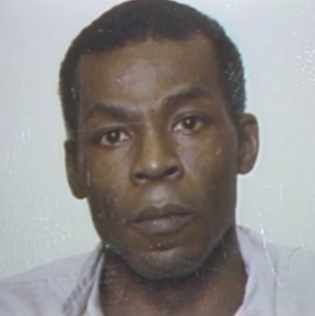
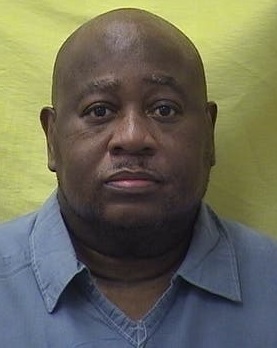
Billy Lee Chadd: Serial Killer and Rapist
Billy Lee Chadd, born December 14, 1954, in San Diego, California, is an American serial killer and rapist responsible for three confirmed murders committed in California and Nevada between 1974 and 1978. Chadd also confessed to a possible fourth murder in Kansas, although investigators were never able to verify that claim. His crimes involved burglary, sexual assault, kidnapping, binding victims, strangulation and repeated knife attacks. Two of his confirmed murder victims were women in the San Diego area, while his third confirmed victim was a man killed in Las Vegas.
Chadd's criminal history began well before the confirmed murders. As a teenager he was arrested for rape and placed in the California juvenile correctional system. He escaped from custody more than once and continued displaying violent behavior. By his early twenties, Chadd was married and had a child, but he struggled to maintain employment and committed burglaries. It was during one of those intended burglaries that he committed his first confirmed murder.
The Murder of Patricia Franklin
Patricia Franklin was a 30-year-old secretary employed by Scripps Clinic who lived in the Linda Vista area of San Diego. Contemporary reporting places her murder on the night of July 26, 1974. Some later accounts list July 27 because her body was discovered the following day.
According to Chadd's eventual confession, he was driving through Linda Vista looking for a residence to burglarize. He selected Franklin's home and entered while she was inside. The planned burglary turned into a prolonged sexual assault. Franklin was restrained with cord, sexually assaulted and ultimately attacked with a knife. Investigators determined that she had suffered numerous stab wounds, particularly around her neck, and evidence also indicated that she had been strangled.
After killing Franklin, Chadd ransacked the house and fled. Her body was discovered on July 27. San Diego homicide investigators found a partial fingerprint at the scene, but at the time they had no suspect with whom they could compare it. Interviews with Franklin's friends and coworkers produced no obvious motive or attacker, and the case remained unsolved for several years.
The Franklin homicide would later become important after investigators began examining similarities between her death and the 1978 murder of Linda Hewitt. Once Chadd became a suspect, investigators were eventually able to connect him to Franklin's killing, and Chadd provided a detailed confession describing how he had selected her residence while searching for a place to burglarize.
The Murder of Delmar Bright
After Franklin's murder, Chadd moved to Las Vegas, Nevada. There he found employment in the restaurant industry and eventually became acquainted with Delmar Bright, who worked in the hotel industry.
On August 7, 1975, Chadd and Bright went to Bright's apartment in Las Vegas. Chadd later described a situation in which Bright offered him money to pose nude. Once inside the apartment, Bright was restrained with electrical cords. Chadd turned the encounter into a killing, using a knife and a cord around Bright's neck. Bright's throat was cut and he was strangled.
Chadd attempted to remove evidence from the apartment before leaving. The murder initially became associated with another violent offender, and authorities did not immediately recognize Chadd as Bright's killer. It was only after Chadd was arrested in connection with crimes in California that he confessed to Bright's murder and provided investigators with details of what had happened inside the Las Vegas apartment.
The Bright case demonstrated that Chadd's violence was not limited to female victims or to California. Nevada ultimately prosecuted Chadd for Bright's death, giving him another life sentence in addition to the punishment he received for the California murders.
The Murder of Linda Hewitt
On February 15, 1978, 28-year-old Linda Hewitt was caring for children at a home in the Mira Mesa area of San Diego. Hewitt, who had an infant son of her own, had recently been living in National City.
Chadd encountered Hewitt while she was traveling with her child and accompanied her toward the house where she was babysitting. Once there, the encounter became violent. Hewitt was restrained and sexually assaulted. During the attack, Chadd threatened her infant child in order to terrorize and control her.
Chadd then repeatedly stabbed Hewitt. Her throat was cut, and investigators documented additional knife wounds to her body. Her infant son survived the attack.
The children for whom Hewitt was babysitting returned to the Mira Mesa house around lunchtime and discovered her body. A neighbor contacted police. Investigators immediately began reconstructing Hewitt's movements before her death and learned that she had been seen earlier that morning at a nearby drugstore with a man accompanying her and her baby.
The Hewitt murder reminded experienced San Diego homicide detectives of Patricia Franklin's killing nearly four years earlier. Both victims had been sexually assaulted, restrained and subjected to extensive knife violence. Investigators began considering whether the same offender might have been responsible for both crimes.
The Chula Vista Home Invasion
Only weeks after Hewitt's murder, Chadd committed another major attack, this time in Chula Vista. On March 2, 1978, he entered a family's home armed with a large knife or machete. Chadd had previously encountered the mother while working as a Marine corporal connected with Balboa Naval Hospital. Her husband was receiving treatment, and Chadd had obtained identifying information that included the family's address.
Chadd entered the woman's bedroom during the night and sexually assaulted her at knifepoint. When her 17-year-old daughter became involved, he assaulted the teenager as well. Other family members were awakened, and Chadd used the weapon to control the household while victims were tied and restrained.
He eventually forced the mother and her teenage daughter into a vehicle and drove them away from the residence. During the drive, Chadd repeatedly questioned whether the woman recognized him. He took the victims into a remote area east of Chula Vista. Rather than murdering them, however, he released them, and they were later encountered along the roadway.
The mother's recognition of her attacker became one of the most important breaks in the investigation. She remembered seeing Chadd at Balboa Naval Hospital. Police were consequently able to identify Billy Lee Chadd as a suspect and issued an interstate fugitive warrant.
Arrest and the Link to the Murders
Louisiana authorities arrested Chadd in Lafayette on March 24, 1978. He was returned to California, where the Chula Vista victims identified him. Initially the investigation centered on rape, kidnapping and related charges, but homicide investigators soon became interested in Chadd as a possible suspect in the murders of Patricia Franklin and Linda Hewitt.
Physical evidence helped strengthen the connection. Fingerprints associated with the murder investigations could now be compared with a known suspect. Investigators also received information that Chadd had spoken while incarcerated about killing a woman in Linda Vista years earlier.
Detectives repeatedly questioned him. Chadd eventually began talking openly about his crimes and confessed to killing Franklin and Hewitt. His statements contained details that connected him to the crime scenes. He also confessed to the Las Vegas murder of Delmar Bright.
Confirmed Victims
- Patricia Franklin, 30 — Killed during the night of July 26, 1974, in Linda Vista, San Diego, California. Her body was discovered July 27. Franklin was restrained, sexually assaulted, strangled and repeatedly stabbed. Some later accounts use July 27 as the murder date because that was the day her body was found.
- Delmar Bright — Killed August 7, 1975, inside his apartment in Las Vegas, Nevada. Bright was restrained with electrical cords, cut with a knife and strangled. Chadd later confessed to the killing.
- Linda Hewitt, 28 — Killed February 15, 1978, at the Mira Mesa, San Diego, California, home where she was babysitting. Hewitt was sexually assaulted and repeatedly stabbed, and her throat was cut. Her infant son survived.
The Alleged Kansas Murder
Chadd also claimed that he killed an unidentified male hitchhiker or motorist near Ellsworth, Kansas, in June 1974, before Patricia Franklin's murder. According to Chadd, he was hitchhiking when he became involved in an argument with the man. He said he struck the victim with a rock and threw the man's body, along with a dog and a duffel bag, from a bridge into a creek.
Investigators in Kansas took the confession seriously enough to communicate with San Diego authorities. Chadd was reportedly able to identify the general creek or location on a map. However, authorities found no body and could not locate a homicide or missing-person report from the period that matched his story. The claimed Kansas killing therefore remains unverified and should not be counted among Chadd's three confirmed murder victims.
Dark Secrets
While incarcerated and awaiting prosecution, Chadd wrote an autobiographical manuscript that became known as "Dark Secrets." In it, he described his criminal history, violent fantasies and his version of the murders. The manuscript became important evidence because it offered prosecutors and investigators an unusually extensive account of his thinking and conduct.
Chadd attempted to separate his violent impulses from his ordinary identity by describing an internal "monster" that emerged when he committed violent acts. Investigators and prosecutors, however, treated his writings as evidence of his awareness of his actions rather than proof that another force was actually responsible for the crimes.
Psychiatric examinations became part of the legal proceedings, particularly because Chadd repeatedly expressed unusual attitudes about punishment and at one stage actively sought a death sentence. Courts nevertheless found him competent to participate in the proceedings.
Trial and Death Sentence
Chadd was charged in California with the murders of Patricia Franklin and Linda Hewitt as well as sexual offenses, robbery and other crimes. Linda Hewitt's murder was prosecuted as a capital offense because it occurred during other serious crimes and because Chadd had previously murdered Franklin.
In 1979, against the advice of his defense attorney, Chadd insisted on pleading guilty. He was convicted and received a death sentence for Hewitt's murder. The Franklin murder resulted in a life sentence because of the legal status of California's death penalty at the time Franklin was killed.
The death judgment did not remain intact. In People v. Chadd, the California Supreme Court concluded that the trial court had improperly accepted Chadd's guilty plea in the capital case without the consent required from his attorney under California law. His conviction and death sentence were therefore reversed, allowing the state to prosecute him again.
Nevada Conviction and Final Sentences
Chadd also faced prosecution in Nevada for the murder of Delmar Bright. His confession resolved a case that had previously led authorities toward another suspect. Chadd ultimately received a life sentence for Bright's murder.
After the reversal of his original California judgment, Chadd again resolved the California cases through guilty pleas. In 1982 he received life sentences for the murders of Patricia Franklin and Linda Hewitt rather than another death sentence. Combined with his Nevada murder sentence, Chadd was left serving three life terms. He also received an additional prison term of approximately 13 years for crimes connected with the Chula Vista sexual assaults and kidnappings.
Criminal Pattern
Chadd's confirmed killings did not follow a narrow victim profile. Patricia Franklin and Linda Hewitt were women attacked in the San Diego area, while Delmar Bright was a man killed in Las Vegas. What connected the crimes was Chadd's use of restraint, close personal control, knives or strangulation and his willingness to prolong attacks before killing his victims.
His offenses also frequently began through circumstances that initially appeared unrelated to murder. Franklin's residence was selected for burglary. Chadd met Bright socially before going to his apartment. Hewitt encountered Chadd while going about an ordinary day with her infant son. In the Chula Vista case, he used information obtained through his position at a military hospital to locate the family he later attacked.
Chadd's arrest ended a series of crimes that investigators initially had little reason to connect across California and Nevada. His later confessions, physical evidence and detailed descriptions brought together murders committed over several years. Three killings are confirmed: Patricia Franklin in 1974, Delmar Bright in 1975 and Linda Hewitt in 1978. The alleged 1974 Kansas murder remains an uncorroborated confession rather than a verified victim.
Current Status
Billy Lee Chadd avoided execution after his original death judgment was overturned, but he remained incarcerated under multiple life sentences. He has been held within the California prison system, including Mule Creek State Prison. His case remains notable both for the severity of the crimes and for the unusual legal battle surrounding his attempt to plead guilty and accept a death sentence against the wishes of his attorney.