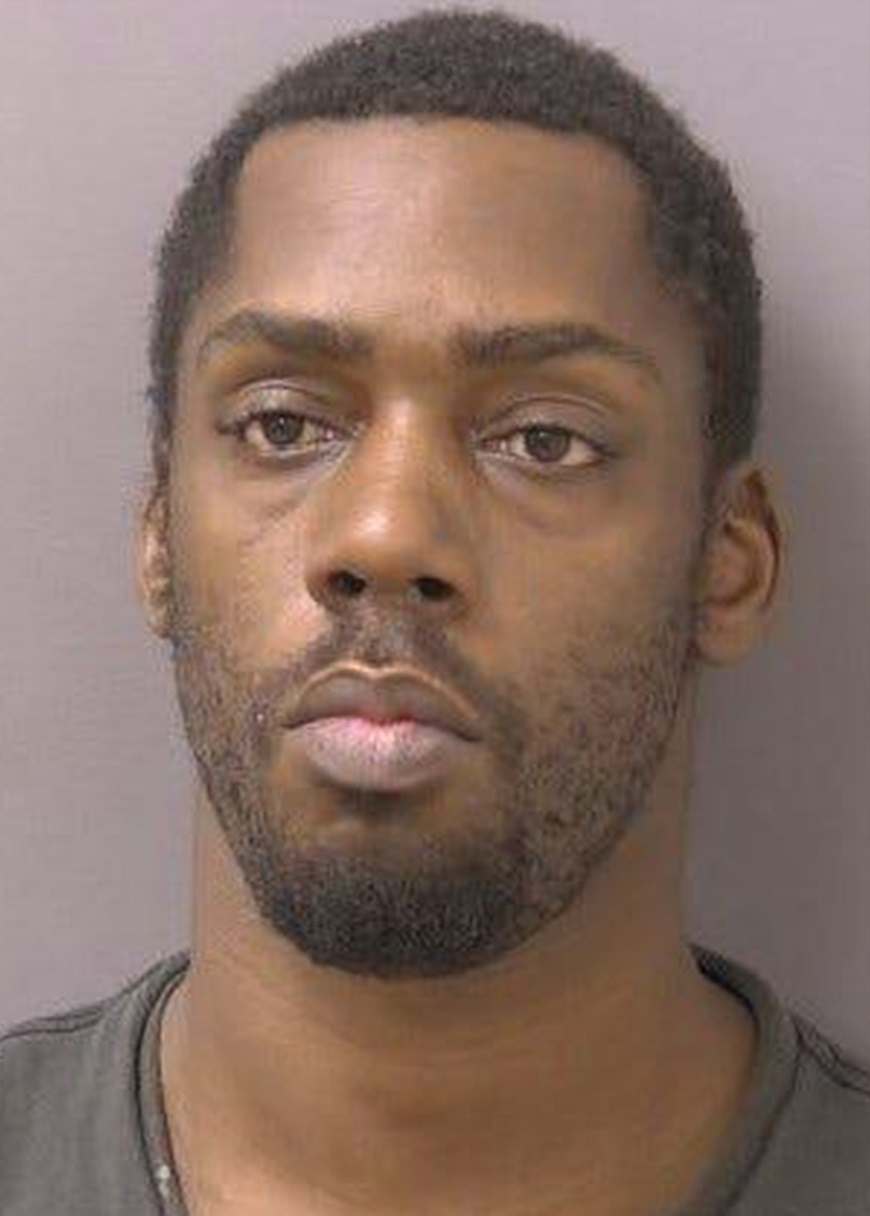
Paul Raymond Apodaca: Albuquerque Serial Killer
Overview
Paul Raymond Apodaca is an American serial killer and convicted sex offender responsible for the murders of three girls and young women in Albuquerque, New Mexico, between 1988 and 1989. His victims were 21-year-old University of New Mexico student Althea Oakeley, 13-year-old Stella Gonzales, and 18-year-old Kaitlyn Arquette. The three victims had no known relationship with Apodaca or with one another. Their murders remained unsolved for more than three decades before Apodaca unexpectedly confessed in 2021.
The killings were committed over approximately thirteen months and involved two different methods. Oakeley was attacked with a knife as she walked home, while Gonzales and Arquette were shot. Investigators ultimately determined that Apodaca knew information about the crimes that supported his confessions, including details that authorities said had not been publicly available. In January 2024, rather than proceeding to separate murder trials, Apodaca pleaded guilty to three counts of second-degree murder and additional charges. He received an effective prison term of 45 years.
Murder of Althea Oakeley
On the evening of June 22, 1988, 21-year-old Althea Oakeley was attending a gathering at a fraternity house near the University of New Mexico campus in Albuquerque. Oakeley, originally from the Taos area, was a University of New Mexico student. After becoming upset during the gathering, she left on foot and began walking toward the residence she shared with her brother.
At the time, Apodaca was associated with the nearby Albuquerque Technical Vocational Institute, now Central New Mexico Community College, where he participated in a work-study security position. His responsibilities reportedly included watching parking areas and helping ensure that students could safely reach their vehicles.
According to the account Apodaca eventually gave investigators, he noticed Oakeley walking alone and followed her. He admitted that he initially intended to sexually assault her. As Oakeley passed him, she reportedly acknowledged him in a friendly manner. Apodaca later told detectives that instead of carrying out his original plan, he attacked her with a knife.
The attack occurred near 1320 Buena Vista Drive SE in Albuquerque. Witnesses heard Oakeley screaming and subsequently found her critically wounded. She was able to communicate that she had been stabbed before collapsing. Emergency personnel transported her to the hospital, but her wounds proved fatal. Oakeley died on June 22, 1988.
Decades later, detectives examining Apodaca's confession found details that helped corroborate his account. Among those details was his description of a distinctive watch that he said he had lost during the attack. Investigators found that a watch matching that description had indeed been recovered near the crime scene in 1988. Apodaca also provided information concerning his movements and employment that investigators compared with surviving records and witnesses.
Murder of Stella Gonzales
Less than three months later, 13-year-old Stella Gonzales became Apodaca's second known murder victim. During the early morning hours of September 9, 1988, Stella and a female friend were walking along Central Avenue near Tingley Drive and the Rio Grande in Albuquerque. They had been out during the night and were making their way through the area at approximately 1:15 a.m.
A vehicle approached the girls, and gunfire was directed at them. Stella was struck in the head. She was rushed to a hospital in critical condition. Contrary to some summaries of the case that list September 9 as the date of her death, contemporary reporting and later court coverage established that Stella survived the initial shooting for approximately two days. She died from her injuries on September 11, 1988.
The murder attracted relatively limited publicity compared with some of Albuquerque's other unsolved killings. With no identified killer, Stella's case eventually became a decades-old cold case. Her family was left without an explanation for why a 13-year-old girl had been targeted.
When Apodaca began confessing in 2021, he told investigators about killing another girl who had been walking near a bridge, although he initially could not remember her name. Detectives compared his description with unresolved Albuquerque homicides and identified the victim as Stella Gonzales. Investigators said Apodaca provided significant details that led them to conclude that he was responsible for the shooting.
Murder of Kaitlyn Arquette
Apodaca's third confirmed victim was 18-year-old Kaitlyn Arquette, a recent graduate of Highland High School who had already begun taking college courses and planned to continue her education. Kaitlyn was the daughter of author Lois Duncan, who was known for young-adult novels including I Know What You Did Last Summer.
Late on July 16, 1989, Kaitlyn was driving east on Lomas Boulevard after leaving a friend's home. As she traveled through Albuquerque near the downtown area, a vehicle came alongside her car and she was shot in the head. Her car continued out of control, crossed traffic lanes and eventually crashed into a pole near Lomas Boulevard.
Kaitlyn was still alive when emergency personnel reached her and was transported to the hospital in critical condition. She never recovered from the devastating injuries. Kaitlyn was declared brain-dead, and her family made the decision to discontinue life support. Although July 16 is frequently listed as the date of the murder because that was the night she was shot, Kaitlyn Arquette's actual date of death was July 17, 1989.
The investigation into Kaitlyn's shooting became one of Albuquerque's most widely discussed cold cases. Several young men were at one point accused in connection with the murder, but those prosecutions collapsed, and the case remained unresolved. Kaitlyn's mother became convinced that important questions surrounding the investigation had never been adequately answered. Duncan conducted her own extensive research and eventually wrote the nonfiction book Who Killed My Daughter? about her effort to identify Kaitlyn's killer.
One of the extraordinary aspects of the case was that Apodaca's name had surfaced long before his confession. Records concerning the original crime scene placed him in the area as an apparent bystander after Kaitlyn's car crashed. A private investigator working for the Arquette family later became interested in Apodaca and questioned him while he was imprisoned on an unrelated sexual assault conviction. Despite those suspicions, no murder charge was brought against him at the time.
Lois Duncan continued searching for answers for the remainder of her life. She died in 2016, five years before Apodaca confessed and approximately eight years before he formally pleaded guilty to murdering her daughter.
Confirmed Victims
- Althea Oakeley, 21 — Died June 22, 1988. Oakeley was stabbed while walking home from a gathering near the University of New Mexico. She was found near 1320 Buena Vista Drive SE in Albuquerque, New Mexico, and died from her wounds. Apodaca later admitted that he had followed her and intended to sexually assault her before attacking her.
- Stella Gonzales, 13 — Died September 11, 1988. Stella was shot during the early morning hours of September 9 while walking with a friend along Central Avenue near Tingley Drive and the Rio Grande in Albuquerque, New Mexico. She survived for approximately two days before dying at the hospital from her injuries.
- Kaitlyn Arquette, 18 — Died July 17, 1989. Kaitlyn was shot late on July 16 while driving along Lomas Boulevard in Albuquerque, New Mexico. Her vehicle subsequently crashed into a pole. She was hospitalized in critical condition and died the following day.
A Pattern of Violence Against Women
The murders were not the only violent crimes connected to Apodaca. His criminal history extended for years and included serious sexual violence. In 1995, Apodaca was convicted of kidnapping and raping a 14-year-old family member. He subsequently spent years in prison and became a registered sex offender.
During the investigation that followed his 2021 confessions, Albuquerque police also examined his admissions concerning sexual assaults committed during the late 1980s and early 1990s. One previously untested sexual-assault kit produced DNA evidence that matched Apodaca. The discovery was made as Albuquerque authorities worked through a backlog numbering thousands of old sexual-assault kits.
Apodaca himself provided investigators with an explanation for at least part of his violence. While discussing the Oakeley murder, he described having developed intense resentment and hatred toward women. His statements, combined with the sexual nature of some of his other crimes, gave investigators a disturbing picture of violence that extended beyond the three murders for which he was ultimately convicted.
The 2021 Confession
The break in the murder cases came unexpectedly on July 20, 2021. Apodaca was being taken into custody by University of New Mexico police in connection with a probation violation. During his contact with officers, he began making statements about serious crimes from his past. He first identified Althea Oakeley by name and admitted that he had murdered her.
As officers and Albuquerque detectives continued dealing with Apodaca, his admissions expanded. He acknowledged killing Kaitlyn Arquette and described another young victim whose identity he could not immediately remember. Investigators eventually determined that the unidentified girl he described was Stella Gonzales.
Detectives did not simply accept the confessions at face value. Because details about the decades-old murders had appeared in newspapers, books and other media, investigators attempted to determine whether Apodaca knew information that only the killer or investigators should have known. Police reviewed old evidence, witness accounts, employment records and surviving investigative files. Authorities eventually concluded that enough of his information could be independently corroborated to charge him.
Cold Cases Reopened
The confession forced detectives to revisit three investigations dating back more than 30 years. Oakeley's murder was formally linked to Apodaca first. Police announced a murder charge in August 2021 after detectives compared his account with the original evidence. The investigation then expanded to the Gonzales and Arquette homicides.
By early 2022, Apodaca had been indicted on murder charges involving all three victims. Prosecutors initially pursued first-degree murder charges. Apodaca's defense attorneys challenged the admissibility of his confessions, arguing in part that his condition during his interactions with law enforcement raised questions about whether the statements had been legally obtained.
A judge ultimately rejected the effort to suppress the crucial statements. The court found that Apodaca had voluntarily raised the murders himself and had remained sufficiently lucid to understand and answer investigators' questions. With the confessions available to prosecutors, the cases moved toward resolution.
Guilty Plea and Sentencing
On January 25, 2024, Paul Raymond Apodaca appeared before the Second Judicial District Court in New Mexico and pleaded guilty to three counts of second-degree murder for the deaths of Althea Oakeley, Stella Gonzales and Kaitlyn Arquette. Two of the murder counts carried firearm enhancements because Gonzales and Arquette had been shot.
Apodaca also pleaded guilty to kidnapping and attempted criminal sexual penetration connected with his attack on Oakeley. The plea formally established his criminal responsibility for all three killings, ending the possibility that the families would have to endure separate murder trials decades after their loved ones died.
The court imposed a total sentence of 62 years, structured so that Apodaca would serve 45 years of incarceration in the New Mexico Department of Corrections. Any remaining suspended portion of the sentence was accompanied by supervised probation requirements, and he was ordered to remain registered as a sex offender.
More Than Three Decades Without Answers
The unusually long passage of time between the murders and their resolution became one of the defining features of the Apodaca case. Oakeley, Gonzales and Arquette were murdered when Apodaca was a young man, yet he was not held responsible for their deaths until he was in his 50s. For their families, the intervening decades meant years of unanswered questions, renewed investigations, false leads and repeated disappointment.
The Arquette case became nationally known because Lois Duncan publicly documented her family's struggle for answers. Oakeley's death remained especially significant within both her Taos community and the Albuquerque law-enforcement community. Stella Gonzales' family endured a different form of uncertainty as the murder of a 13-year-old child received comparatively little sustained public attention for many years.
Apodaca's eventual confessions connected what had originally appeared to be three separate Albuquerque murders. The victims were of different ages, were attacked under different circumstances and had no known personal connection with their killer. The common factor was Apodaca, who encountered them while they were vulnerable and then disappeared back into the community without being identified as their murderer.
Legacy of the Case
The Paul Raymond Apodaca investigation demonstrated both the difficulty of solving decades-old homicides and the importance of preserving evidence. His statements gave detectives the breakthrough they had lacked for more than 30 years, but those statements became far more valuable when investigators could compare them against surviving crime-scene information and old case files.
The case also drew renewed attention to untested sexual-assault evidence. A DNA match obtained through the testing of an old rape kit independently connected Apodaca with another act of sexual violence and illustrated how long evidence can remain capable of identifying an offender when it is finally examined.
Most importantly, the resolution established the identities and verified deaths of three confirmed victims: Althea Oakeley, who died on June 22, 1988; Stella Gonzales, who was shot on September 9 and died on September 11, 1988; and Kaitlyn Arquette, who was shot on July 16 and died on July 17, 1989. More than three decades after their killings, Paul Raymond Apodaca formally admitted in court that he was responsible for taking all three lives.