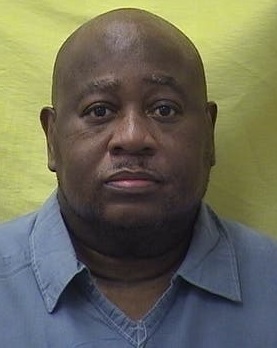
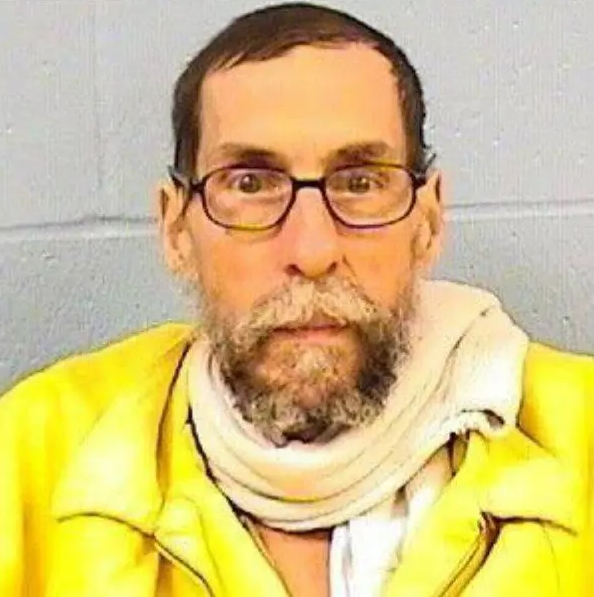
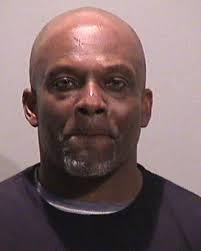
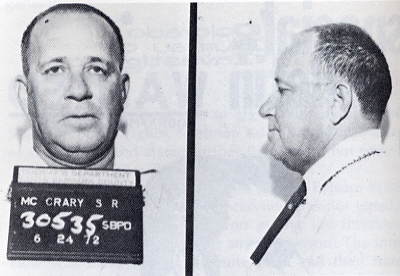
Dellmus Charles Colvin
Dellmus Charles Colvin is an American serial killer and former long-haul truck driver whose known crimes stretched from New Jersey to northwest Ohio. Born August 3, 1959, Colvin was ultimately connected to a series of women who were killed and abandoned in isolated industrial areas, roadside locations, vacant properties, and other places where their remains might go unnoticed. Five Ohio murders resulted in guilty pleas in 2006, he subsequently admitted involvement in a sixth Ohio death, and years later he pleaded guilty to the 1987 murder of Donna Lee White in Atlantic City, New Jersey.
Many of the women Colvin targeted were involved in prostitution and were struggling with drug addiction or other difficult circumstances. Investigators concluded that he repeatedly exploited women whose disappearances he believed might receive less immediate attention. Several of the victims were strangled or suffocated, and a number of their bodies were wrapped in bedding before being abandoned. Because some victims were not discovered until weeks or months after they disappeared, the precise dates of death are not publicly established in every case.
The Victims
The dates below distinguish confirmed or reasonably established dates of death from dates on which remains were discovered. This is important in Colvin's case because several victims had been dead for substantial periods before their bodies were recovered, and some secondary accounts have incorrectly treated recovery dates as dates of death.
- Donna Lee White, 27 — September 15, 1987 — Atlantic City, New Jersey: White, a resident of Somers Point, was found dead on September 15, 1987, in a vacant lot or parking area near the former Garwood Mills property in Atlantic City. Colvin was associated with the case at the time, but an autopsy initially attributed White's death to acute cocaine intoxication. The investigation was eventually closed. More than two decades later, authorities reopened the case after learning about Colvin's Ohio murders. Colvin ultimately admitted that he strangled White and disposed of her body. He pleaded guilty to her murder in April 2011.
- Valerie Jones, 38 — exact date of death not publicly established; remains found January 6, 2000 — Toledo, Ohio: Jones's skeletal remains were discovered near the Ottawa River and the Hoffman Road landfill area in Toledo. Colvin later admitted responsibility for her death and described strangling her. Because her remains were already skeletal when found, publicly available contemporary accounts do not establish a reliable exact date on which she was killed.
- Dorothea Wetzel, 40 — exact date of death not publicly established; remains found August 5, 2000 — South Toledo, Ohio: Wetzel, who was also known by the surname Oviedo and reportedly used the nickname "Angel," was found near the bank of the Maumee River by a man walking his dog. Her remains had been wrapped in a blanket and left in an isolated location. Shortly after Colvin pleaded guilty to five other murders in October 2006, investigators announced that he had admitted involvement in Wetzel's death. Police said he described her death as involving an intended overdose. His admission made Wetzel the sixth Ohio woman publicly connected to him.
- Jacquelynn Thomas, 42 — September 1, 2000 — Bedford Township, Michigan: Colvin admitted killing Thomas on September 1, 2000. Her body was discovered the following day, September 2, near Smith and Telegraph roads in Bedford Township, Monroe County, Michigan, just north of the Ohio state line. Thomas was among the victims whose death Colvin admitted as part of the plea negotiations that spared him from a possible death sentence.
- Lily Summers, 43 — exact date of death not publicly established; body found April 8, 2002 — Lake Township, Wood County, Ohio: Summers, a mother of two, was discovered inside a large tractor-trailer behind B&B Repairs at 4400 Martin-Moline Road near Metcalf Field. Colvin later admitted responsibility for her killing. Investigators grouped her murder with the other Toledo-area cases because of similarities in the victims, methods of killing, and manner in which the bodies were concealed or discarded.
- Jackie Simpson, 33 — believed killed after disappearing in mid-January 2003; body found April 23, 2003 — Toledo, Ohio: Simpson, a mother of two, disappeared in approximately mid-January 2003 and remained missing for nearly three months. Her decomposed body was found beneath bushes near a tanning business at 4200 Creekside Avenue. Colvin later admitted killing her. He described smothering Simpson, and investigators found forensic evidence linking him to her. Because she disappeared months before her remains were discovered, April 23 should be regarded as the recovery date rather than her confirmed date of death.
- Melissa Weber, 37 — believed killed after disappearing in early February 2005; body found May 9, 2005 — Toledo, Ohio: Weber disappeared in early February 2005 after leaving a South Toledo residence. On May 9, her decomposed body was discovered beneath a couch at a vacant trucking terminal behind 1045 Matzinger Road. Her body had been wrapped in bedding. DNA evidence recovered during the investigation proved critical in connecting Colvin to the homicide. The exact day Weber was killed has not been reliably established in public records; May 9, 2005, is the date her body was discovered.
A Pattern Hidden Across Northwest Ohio
The similarities among the Toledo-area victims eventually became impossible for investigators to ignore. Women were disappearing from environments connected with street prostitution and drug use. Their bodies were later turning up in industrial districts, near waterways, behind businesses, beside roads, or in locations associated with trucks and commercial transportation. Several victims had been strangled or smothered. Bodies were sometimes wrapped in blankets, sheets, or comforters before being abandoned.
Colvin's work as a truck driver gave him mobility, privacy, and access to locations far removed from residential neighborhoods. A tractor cab or trailer could provide a secluded environment, while highways and industrial areas supplied countless potential disposal locations. That mobility later created one of the most troubling questions surrounding the investigation: whether the known Ohio and New Jersey murders represented only a small portion of his crimes.
The Investigation That Exposed Colvin
A major break came after a woman survived a violent encounter with Colvin in 2004. The investigation resulted in authorities obtaining Colvin's DNA profile. Detectives subsequently compared that profile with evidence preserved from unsolved crimes.
The comparison linked Colvin to Melissa Weber and Jackie Simpson. Evidence associated with the two victims gave prosecutors enough information to charge him with aggravated murder. When Colvin's trial began in Lucas County in September 2006, prosecutors portrayed the two deaths as the work of a predator who deliberately selected women he considered vulnerable.
Simpson and Weber were particularly important because investigators could place Colvin in direct forensic connection with the victims. Once prosecutors demonstrated the strength of the evidence against him, the possibility of a death sentence became very real.
The 2006 Plea and Five Ohio Murders
On October 2, 2006, while his murder trial was underway, Colvin accepted a plea agreement. In exchange for prosecutors removing the possibility of a death sentence, he pleaded guilty to four counts of aggravated murder and one count of complicity to aggravated murder involving five women.
Those five victims were Jackie Simpson, Melissa Weber, Valerie Jones, Jacquelynn Thomas, and Lily Summers. What had begun as a prosecution centered principally on Simpson and Weber suddenly resolved several murders that had remained unsolved for years.
Ohio correctional records now list Colvin as serving an aggregate sentence of life without parole for multiple aggravated-murder and complicity convictions. The sentences stem from Lucas County and are structured consecutively, ensuring that he has no realistic prospect of release.
The Admission Involving Dorothea Wetzel
The disclosures did not end with the plea agreement. Investigators continued questioning Colvin, and on October 3, 2006, authorities announced that he had admitted involvement in the death of Dorothea Wetzel.
Wetzel's skeletal remains had been discovered six years earlier along the Maumee River. Her case shared important features with the other victims, including her vulnerability and the isolated disposal of her remains. Colvin reportedly supplied investigators with information concerning the method by which her death occurred, leading police to publicly connect him to a sixth Toledo-area death.
The 1987 Murder of Donna Lee White
The Ohio investigation eventually brought renewed attention to an old New Jersey case. Donna Lee White had been found dead in Atlantic City on September 15, 1987, when Colvin was living and working in the area. He had been investigated at the time, but White's death was initially ruled the result of acute cocaine intoxication. With no homicide ruling, the case went dormant.
After authorities learned that Colvin had become a convicted serial killer in Ohio, investigators in Atlantic County reviewed White's death again. The circumstances were reexamined, and in June 2010 Colvin was indicted for her murder. He was eventually returned to New Jersey to face the charge.
On April 8, 2011, Colvin pleaded guilty. He admitted strangling White and leaving her body in a vacant area in Atlantic City. The guilty plea transformed what had originally been classified as a drug-related death into the earliest confirmed murder associated with Colvin. He received an additional 30-year prison sentence for killing White.
Possible Additional Victims
The discovery that Colvin had killed in both New Jersey and Ohio immediately raised concerns that his years as a long-haul truck driver could have allowed him to murder women in other states. Investigators compared unsolved killings along trucking routes with Colvin's movements and examined whether other women whose bodies were found near highways or truck stops might be connected to him.
Colvin later dramatically expanded his own claims. In 2020, while already imprisoned, he asserted that he had killed as many as 52 women between approximately 1983 and 2005. He claimed that his murders occurred in numerous states and described one supposed victim whom he said he killed in Illinois near the LaSalle County area.
Illinois authorities took the claim seriously enough to search a location connected to his description. Investigators recovered two pieces of bone during the search, initially raising the possibility that Colvin had directed them to another victim. Subsequent examination determined that the bones were not human. No additional murder was established from that search.
For that reason, Colvin's claim of 52 murders must remain separated from the cases actually supported by confessions, guilty pleas, forensic evidence, or police findings. He is associated with seven named women on a substantially firmer evidentiary basis, while his much larger claimed victim count remains unverified.
Method and Victim Selection
Colvin repeatedly selected women who were involved in prostitution, drug use, or unstable circumstances. This pattern was significant because serial offenders have historically viewed such victims as less likely to be immediately reported missing or to receive extensive public attention. Colvin had access to women through the environments in which he worked and traveled, and his commercial driving allowed him to move between jurisdictions without appearing unusual.
Strangulation and suffocation were the principal methods associated with the known murders. Several victims were wrapped in sheets, blankets, or other bedding, and their bodies were then transported to secluded locations. Industrial properties, waterways, vacant trucking facilities, and roadside areas provided places where remains might not be noticed for long periods.
The decomposition of several victims complicated investigations considerably. By the time remains were discovered, detectives sometimes could not determine the precise date of death. This is why the dates on which Jones, Wetzel, Summers, Simpson, and Weber were found should not automatically be treated as the dates on which they were murdered.
DNA and the Collapse of the Cold Cases
Colvin's case demonstrates the importance of preserving forensic evidence from unsolved homicides. The murders had initially appeared to be separate cases involving women found in different locations over a period of years. Once investigators had Colvin's DNA profile, evidence retained from the victims allowed detectives to establish connections that had previously been invisible.
The DNA evidence surrounding Simpson and Weber created the immediate criminal case against Colvin. His decision to avoid the death penalty by admitting additional murders then gave investigators answers in several older cases for which they had lacked enough evidence to identify a killer.
Those admissions in turn caused authorities outside Ohio to reexamine Colvin's history, leading eventually to the successful prosecution for Donna Lee White's 1987 murder. A murder originally overlooked as a drug death was solved more than two decades after it occurred because detectives continued comparing old cases against newly identified serial offenders.
Imprisonment
Colvin remains incarcerated in Ohio. State correctional records list him at Ross Correctional Institution and show his status as incarcerated with an aggregate sentence of life without parole. His Ohio record includes multiple aggravated-murder convictions and a conviction for complicity to aggravated murder. The additional New Jersey sentence for Donna Lee White ensures that even apart from the Ohio sentences, he faces decades of imprisonment.
Legacy of the Case
Dellmus Charles Colvin's crimes illustrate the difficulties authorities face when a serial offender operates among vulnerable populations and travels regularly across jurisdictional boundaries. His victims were mothers, daughters, sisters, and relatives whose personal struggles made them easier for a predator to approach, but those circumstances did not make their disappearances or deaths less important.
At least seven named women are strongly connected to Colvin through guilty pleas, admissions, investigative findings, or a combination of those factors: Donna Lee White, Valerie Jones, Dorothea Wetzel, Jacquelynn Thomas, Lily Summers, Jackie Simpson, and Melissa Weber. Five Ohio murders produced homicide convictions in 2006, Wetzel's death was subsequently acknowledged by Colvin, and White's murder resulted in a separate New Jersey guilty plea in 2011.
Whether Colvin actually committed anything approaching the 52 murders he later claimed remains unresolved. His occupation placed him on highways throughout the country and gave investigators legitimate reason to examine unsolved cases beyond Ohio. Nevertheless, without corroborating evidence, unidentified remains, matching DNA, or additional verified confessions, the larger number remains a claim rather than an established victim count. What is certain is that the murders already attributed to Colvin left a trail of families waiting years, and in some instances decades, for answers.