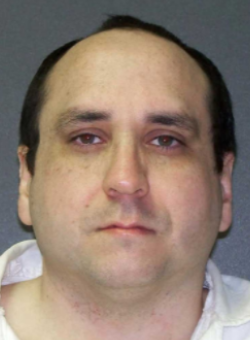
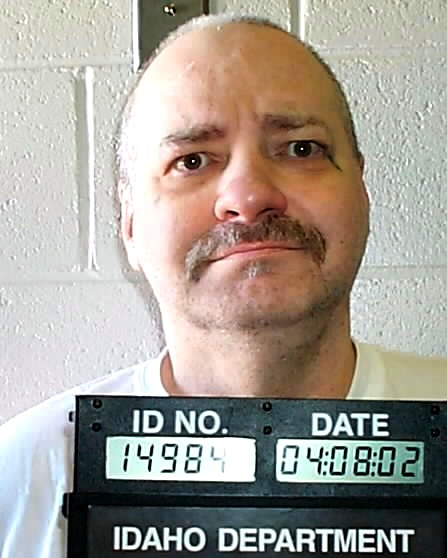
Kevin Taylor: The Chicago Serial Killer
Background and Early Criminal History
Kevin Taylor was born on June 11, 1974, in Chicago, Illinois. His childhood was marked by instability, with both of his parents involved in the criminal justice system. Taylor spent much of his youth moving through foster homes and later developed a criminal record of his own. In 1993, he was convicted of burglary and sentenced to four years in prison. He was convicted of unlawfully using or possessing a weapon in 1999.
After his release, Taylor obtained employment as a cook at the Cheesecake Factory on North Michigan Avenue in Chicago. By the summer of 2001, he was living with his girlfriend and their two children. To coworkers and acquaintances, he appeared to be maintaining an ordinary life. Away from his workplace and family, however, Taylor was approaching vulnerable women on Chicago streets and arranging sexual encounters that ended in violence.
The 2001 Murders
Between June and August 2001, Taylor strangled four women in Chicago. The victims were women he encountered while seeking paid sexual services. According to investigators and Taylor's later confession, he took the women to isolated locations, where arguments developed during or after the encounters. Taylor claimed that disputes over money or the sexual arrangements caused him to become enraged. He then used his hands or arms to strangle the women.
After killing his victims, Taylor abandoned their bodies in alleys, a garbage container and an abandoned building. The locations were scattered across different areas of Chicago, initially making it difficult for police to determine whether the deaths were connected. The victims were treated as disposable by their killer, but the circumstances surrounding the bodies eventually revealed a repeated pattern of strangulation and concealment.
Known Victims
- Ola Mae Wallace, 39 — June 25, 2001 — Chicago, Illinois: Wallace's body was found in an alley in the 5200 block of North Broadway, near the North Sheridan Road area. She had been strangled. Her killing became the first known murder in Taylor's approximately two-month series.
- Diane Jordan, 42 — July 10, 2001 — Chicago, Illinois: Jordan was found dead in an alley in the 1400 block of North Mohawk Street. Investigators determined that she had been strangled. Her death shared important similarities with the killing of Ola Mae Wallace.
- Cynthia Halk, 38 — July 27, 2001 — Chicago, Illinois: Halk was strangled after encountering Taylor near the end of his work shift. Her body was discovered on July 29 inside a city garbage container in an alley near Clark and Division Streets, reportedly at or near 1150 North LaSalle Street. A fingerprint connected to Taylor was later found on the container. Taylor was separately tried and convicted for Halk's murder.
- Bernadine Blunt, 39 — August 18, 2001 — Chicago, Illinois: Blunt's body was found inside an abandoned building at 331 East Kensington Avenue on Chicago's South Side. She had been strangled. A work timecard bearing Taylor's name was discovered beneath or near her body, providing investigators with the critical lead that directed them to him.
The Attack on Phyllis Robinson
Taylor's series might have continued had one woman not survived. On July 27, 2001, he attacked 38-year-old Phyllis Robinson. Taylor strangled Robinson and left her believing that she was dead. Robinson survived and retained a clear memory of her attacker. Her testimony later became one of the most important elements of the investigation.
After Taylor was taken into custody, Robinson viewed a police lineup and identified him as the man who had attacked her. Her identification gave investigators a living witness who could connect Taylor directly to the pattern of violence. Taylor was ultimately convicted not only of four murders but also of attempted murder for the assault on Robinson.
Investigation and Arrest
During the summer of 2001, Chicago police were already concerned about a larger number of women who had been found slain in the city. After the third death in Taylor's series, authorities issued warnings to women working on the streets, advising them that a strangler might be targeting them. Investigators examined whether the recent killings were connected to as many as 18 deaths involving vulnerable women during the preceding years.
The discovery of Bernadine Blunt on August 18 produced the breakthrough. Investigators found a timecard bearing Kevin Taylor's name at the abandoned building where her body had been left. The card was connected to Taylor's employment at the Cheesecake Factory. Police located him at the restaurant and arrested him on or about August 20 or August 21, 2001.
Once Taylor was in custody, detectives compared the evidence from the four deaths. The victims had been strangled, their bodies had been abandoned in secluded or degrading locations, and each had reportedly been associated with street prostitution or drug addiction. Phyllis Robinson identified Taylor, and his fingerprint was linked to the garbage container in which Cynthia Halk had been found.
Confession and Reconstruction of the Crimes
Taylor eventually confessed to killing the four women and attacking Robinson. He told investigators that he had become angry during encounters with the women and strangled them following disputes. His explanations portrayed the killings as spontaneous explosions of rage, but the repeated sequence of selecting vulnerable women, moving them to secluded places, strangling them and abandoning their bodies demonstrated an established pattern.
Taylor accompanied authorities to locations associated with the crimes and reenacted or described how the attacks occurred. His statements were recorded, creating powerful evidence for prosecutors. The confession also allowed investigators to connect crimes that had occurred in different Chicago neighborhoods over several weeks.
The Murder of Cynthia Halk
Cynthia Halk's murder became the first case brought to trial. Halk suffered from epilepsy and had reportedly been taken by relatives to Provident Hospital for treatment shortly before her death. Her family expected the hospital to contact them when she was ready to leave, but she did not return home. Three days later, her partially clothed body was found inside a garbage container on Chicago's North Side.
According to the prosecution's account of Taylor's confession, he encountered Halk while looking for a woman after completing a shift at the restaurant. She reportedly agreed to a sexual encounter for a small amount of money. During the encounter, Halk attempted to leave. Prosecutors said Taylor strangled her while she was experiencing an epileptic seizure, took back the money he had given her and placed her body in the garbage container.
Halk was remembered by her family as a mother and grandmother whose medical condition prevented her from maintaining regular employment but did not prevent her from caring for her grandchildren. Her daughter described the devastation caused by the degrading way in which Halk's body was discarded and emphasized that her mother had dignity in life despite the indignity forced upon her in death.
Trials, Guilty Pleas and Sentencing
Taylor's trial for the murder of Cynthia Halk began in January 2006. Prosecutors presented his recorded confession, physical evidence and details concerning the discovery of Halk's body. Taylor did not testify. A jury found him guilty of first-degree murder, and he received a 50-year prison sentence for Halk's death.
Taylor still faced separate trials for the murders of Ola Mae Wallace, Diane Jordan and Bernadine Blunt. Prosecutors intended to seek the death penalty in at least one of those cases. Rather than proceed through three additional murder trials and risk a death sentence, Taylor pleaded guilty to the remaining murders.
On September 6, 2006, Taylor was sentenced to life imprisonment without the possibility of parole for the three additional first-degree murder convictions. The life sentences ensured that he would never be released, regardless of the separate 50-year sentence imposed for Cynthia Halk's murder.
Criminal Pattern and Legacy
Kevin Taylor targeted women whose circumstances made them especially vulnerable to predatory violence. Their involvement in prostitution, struggles with drugs or medical and financial difficulties reduced the likelihood that their disappearances would immediately receive widespread attention. Taylor exploited that vulnerability and then abandoned the victims in places where he apparently believed their deaths would be dismissed or remain unconnected.
The survival of Phyllis Robinson, the timecard discovered with Bernadine Blunt and the fingerprint evidence associated with Cynthia Halk brought the series to an end. Together with Taylor's confession, these pieces of evidence established his responsibility for four murders committed during a period of less than two months.
Taylor was convicted of four counts of first-degree murder and one count of attempted murder. His crimes left four families grieving and a surviving victim with the lasting consequences of a near-fatal attack. His permanent imprisonment closed the criminal proceedings, but the case remains an example of the extreme danger faced by marginalized women and the importance of investigating their deaths with the same urgency given to every homicide victim.