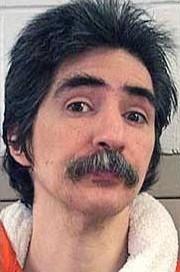
Alexander Wayne Watson: The Maryland Serial Killer Identified Through DNA
Overview
Alexander Wayne Watson Jr. is an American serial killer responsible for the murders of four women and girls in Maryland between 1986 and 1994. His crimes occurred primarily in Anne Arundel County, with his final known murder taking place in Prince George’s County. Watson targeted victims of different ages and circumstances, including a woman inside her home, a jogger, a teenage student walking to school and an office manager working alone.
Watson was born on September 24, 1969, in Maryland. He committed his first known murder when he was only 17 years old. Despite the brutality of that crime and the forensic evidence collected by investigators, Watson remained unidentified and continued living near the communities where several of the killings occurred. He was finally arrested after murdering his fourth victim in 1994, but authorities did not initially realize that they had captured a serial killer.
The Murder of Boontem Anderson
Watson’s first known victim was 34-year-old Boontem Anderson, a mother of two who lived in Gambrills, Maryland. On October 8, 1986, Anderson remained home from her job at Fort Meade because she was ill. During the day, Watson entered or was admitted into her residence. He was familiar with Anderson’s family because he knew one of her sons and had reportedly worked with him at a fast-food restaurant.
Anderson was sexually assaulted, stabbed and strangled. Her unclothed body was left in a bathtub, where she was discovered later that day by her fiancé’s 11-year-old son. Watson lived only a few miles from the home and was still a juvenile when he committed the murder. Investigators preserved physical evidence from the scene, but the forensic technology available in 1986 could not identify him.
The Murder of Mary Elaine Shereika
On the morning of May 23, 1988, 37-year-old Mary Elaine Shereika went jogging near her home in the Gambrills area before she was expected at work. When she failed to arrive, her fiancé reported her missing. Later that day, a farmer working in a rye field discovered her partially clothed body.
Shereika had been sexually assaulted, stabbed and strangled. Investigators found a bloodstained sock near her body and collected biological evidence that would eventually prove crucial. Watson later acknowledged encountering Shereika as she jogged past a park. He followed her, forced her into the field and killed her in the secluded location.
As with Anderson, Shereika lived within Watson’s general neighborhood. The proximity of the crimes demonstrated that Watson was hunting in surroundings he understood well, allowing him to approach his victims and leave the scenes without drawing immediate suspicion.
The Murder of Lisa Kathleen Haenel
Nearly five years passed before Watson’s next known murder. On January 15, 1993, 14-year-old Lisa Kathleen Haenel left home to walk to Old Mill High School, where she was a ninth-grade student. She never arrived. Her mother reported her missing, and relatives and authorities began searching the area around the school.
Lisa’s body was found on January 16, 1993, in a ravine behind the school. She had been stabbed and strangled, and most of her clothing had been removed. Investigators did not find evidence that she had been sexually assaulted. However, they recovered an apparently discarded Newport cigarette near her body. One end carried Lisa’s blood, while saliva left on the opposite end contained the killer’s DNA.
The cigarette became an important piece of evidence because it physically connected the person who smoked it with Lisa and the crime scene. At the time, however, investigators had no matching DNA profile and could not identify the person who had left it behind.
The Murder of Debra Cobb
Watson’s final known victim was 37-year-old Debra Cobb, an office manager in Forestville, Maryland. On June 13, 1994, Watson attacked Cobb during a robbery at the office where she worked. Watson was employed in the same office complex and was soon identified as a suspect.
Cobb was stabbed to death, and the evidence against Watson developed much more quickly than it had in the earlier cases. He was arrested and later pleaded guilty to first-degree murder. Watson claimed that his dependence on crack cocaine had contributed to the robbery and killing, although that explanation did not diminish his criminal responsibility.
In December 1994, Watson received a life sentence without the possibility of parole for Cobb’s murder. At that point, law enforcement officials knew him as a convicted murderer, but they had not yet connected him to the three unsolved killings in Anne Arundel County.
Known Victims
- Boontem Anderson, 34 — Murdered on October 8, 1986, inside her home in Gambrills, Anne Arundel County, Maryland. She was sexually assaulted, stabbed and strangled, and her body was found in a bathtub.
- Mary Elaine Shereika, 37 — Murdered on May 23, 1988, near Gambrills, Anne Arundel County, Maryland. She disappeared while jogging and was found later that day in a rye field. She had been sexually assaulted, stabbed and strangled.
- Lisa Kathleen Haenel, 14 — Murdered on January 15, 1993, while walking to Old Mill High School in the Millersville and Glen Burnie area of Anne Arundel County, Maryland. Her body was discovered in a ravine behind the school on January 16, 1993.
- Debra Cobb, 37 — Murdered on June 13, 1994, during a robbery at her workplace in Forestville, Prince George’s County, Maryland. Watson was arrested and convicted in connection with her stabbing death.
The DNA Investigation
The murders of Anderson, Shereika and Haenel remained unresolved for years, but investigators carefully preserved evidence from each scene. As DNA testing became more advanced, forensic scientists were able to develop genetic profiles from biological material associated with the crimes.
Watson’s DNA was available to authorities because of his conviction for Cobb’s murder. Investigators eventually compared his profile with evidence from the older cases. The results connected Watson to the sexual assaults and murders of Anderson and Shereika. DNA recovered from the cigarette near Lisa Haenel’s body also implicated him in the teenager’s killing.
The forensic matches revealed that three apparently separate cold cases were the work of the same offender. They also established that Watson had begun killing years before the murder for which he was already imprisoned.
Charges and Guilty Pleas
In July 2004, Maryland authorities charged Watson with the murders of Anderson, Shereika and Haenel. He was already serving his life sentence for killing Debra Cobb. The cold-case charges exposed the full extent of his known crimes and confirmed that the man imprisoned since 1994 had operated as a serial killer for approximately eight years.
Watson pleaded guilty in August 2007 rather than face a trial in which prosecutors could have sought the death penalty. During court proceedings, he admitted responsibility for the three Anne Arundel County murders. He reportedly denied committing any other killings.
The court imposed four additional life sentences, including sentences connected to the murders and related offenses. The punishment ensured that Watson would remain imprisoned for the rest of his life. His sentences were ordered to run alongside the life term he was already serving for Cobb’s murder.
Pattern of the Crimes
Watson did not restrict himself to a single type of victim. His victims ranged in age from 14 to 37 and were attacked while performing ordinary daily activities. Anderson was home sick from work, Shereika was jogging, Lisa was walking to school and Cobb was working in an office. The apparent normality of those settings made the crimes especially disturbing.
Three victims were strangled, and all four suffered fatal knife attacks or other sharp-force injuries. The murders of Anderson and Shereika included sexual assault. Lisa’s killing lacked the same confirmed sexual component, while Cobb’s murder occurred during a robbery. Although the immediate circumstances differed, the repeated use of close physical violence and Watson’s willingness to attack in familiar locations connected the crimes behaviorally as well as forensically.
The long intervals between some of the murders also allowed Watson to avoid identification. Two years separated the first and second killings, followed by almost five years before Lisa’s murder. The pauses made it more difficult for investigators to recognize an active series, particularly before DNA databases allowed evidence from different jurisdictions and years to be compared.
Significance of the Case
The Watson investigation became an example of how preserved forensic evidence can solve crimes many years after they occur. Detectives working the original cases could not have predicted every future development in genetic testing, but their collection and preservation of biological material ultimately allowed later investigators to establish Watson’s identity.
The cigarette recovered near Lisa Haenel was especially significant. What might once have appeared to be ordinary litter contained saliva from Watson and blood from the victim. Modern analysis transformed that small item into powerful evidence linking him directly to the murder scene.
Watson’s identification also brought long-delayed answers to families who had lived for years without knowing who had killed their loved ones. While his convictions could not undo the loss, they formally established responsibility and prevented the three older murders from remaining permanently unresolved.
Imprisonment and Legacy
Alexander Wayne Watson remains known as the murderer of four confirmed victims. He received multiple life sentences and has been held within the Maryland correctional system. Because he was already incarcerated when DNA connected him to the earlier crimes, the investigation did not remove an active killer from the streets, but it revealed the true history of a prisoner whose violence had been only partially understood.
His crimes left four families grieving and several Maryland communities confronting the realization that an unidentified killer had lived among them for years. The case illustrates both the limitations faced by investigators before modern DNA technology and the enduring value of revisiting unsolved murders as forensic science advances.