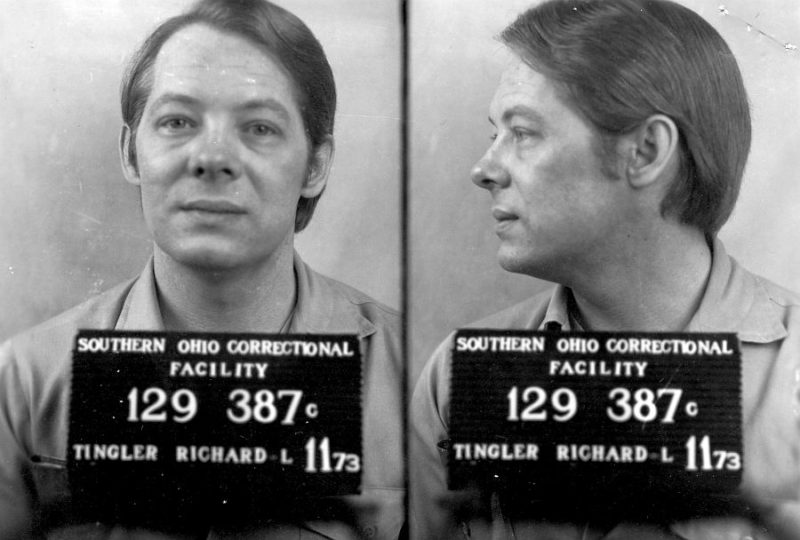
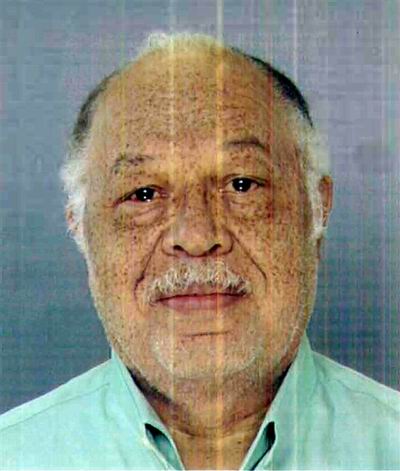
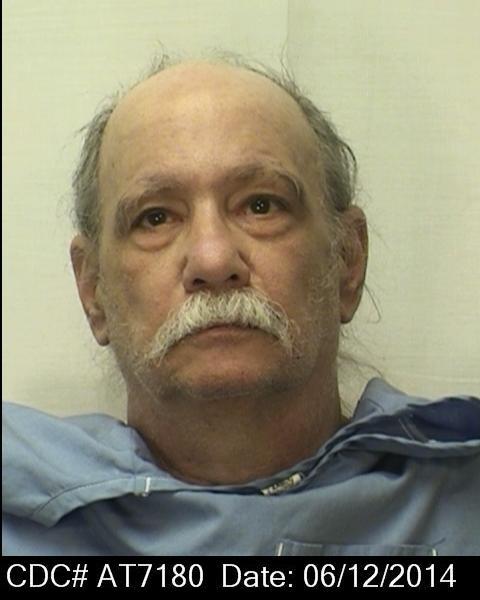
Richard Lee Tingler Jr.: Ohio Murderer and FBI Most Wanted Fugitive
Early Life and Criminal History
Richard Lee Tingler Jr. was an American murderer responsible for six confirmed killings in Ohio during 1968. His crimes occurred during two exceptionally violent robbery incidents in Cleveland and Columbus. Although Tingler is frequently described as a serial killer, the four Cleveland victims were killed together, followed approximately one month later by the double murder in Columbus. His pattern was therefore closely associated with armed robbery, witness elimination, and sudden bursts of extreme violence.
Tingler was born in December 1940 and grew up in a troubled household. Accounts of his childhood describe frequent physical punishment and an unstable relationship with his mother. As a young man, he entered the United States Air Force, but his military service was disrupted by criminal behavior. In June 1959, while stationed in Alaska, Tingler went absent without leave with another serviceman and became involved in several burglaries in Anchorage.
After pleading guilty to charges connected to four break-ins, Tingler received a federal prison sentence. He was released in February 1961, but his freedom was brief. Approximately six months later, authorities arrested him in Portsmouth, Ohio, on numerous breaking-and-entering charges. He was sentenced to a term of one to fifteen years in an Ohio prison.
Tingler was paroled in August 1964, but additional burglaries resulted in his return to custody as a parole violator. He was released again in February 1968. Within seven months, his criminal conduct escalated from property offenses to multiple murders.
The Rockefeller Park Murders
During the early morning hours of September 16, 1968, four people were murdered in Cleveland, Ohio. Their bodies were discovered by early-morning visitors in Rockefeller Park. The victims had been arranged near one another and had each suffered multiple gunshot wounds to the head. Investigators determined that two firearms had been used.
The victims were identified as tavern proprietor Joseph Zoldman, part-time bartenders Raymond Homer and Ronald Mahone, and Martha Lancaster, a young woman who had been with the group. Investigators believed the four had been taken captive during or immediately after a robbery at Zoldman’s tavern. They were apparently transported at gunpoint to Rockefeller Park, where they were shot to prevent them from identifying the robber.
The manner in which the victims were killed indicated planning and deliberate witness elimination. Rather than flee after obtaining money, the killer removed the victims from the original crime scene and executed them in an isolated location. The positioning of the bodies and repeated shots suggested that the gunman intended to ensure that no one survived.
The Columbus Lawson Milk Company Murders
On October 20, 1968, approximately one month after the Cleveland killings, an armed man entered a Lawson Milk Company store in Columbus, Ohio. It was approximately 10:30 p.m., and the business was nearing closing time. Inside were store manager Phyllis Crow, 18-year-old employee Susan Pack, and teenage visitor James “Jimmy” Stevens.
The gunman, later identified as Tingler, was not wearing a mask. He displayed a firearm and forced the three victims into a back room. Tingler bound and gagged them before taking money from the cash register and store safe. Contemporary accounts place the amount stolen at approximately $562.
Although Tingler could have left after completing the robbery, he instead returned to the restrained victims. Susan Pack and Jimmy Stevens were savagely beaten about the head. Tingler then shot both teenagers in the back of the head with an automatic pistol, killing them.
Tingler also attacked Phyllis Crow. He beat her and twisted a wire coat hanger around her neck in an attempt to strangle her. Crow lost consciousness, and Tingler apparently believed she was dead. Approximately half an hour later, she regained consciousness, freed herself, and summoned help. Her survival gave investigators a witness who had seen the assailant’s uncovered face at close range.
Crow later identified Tingler from a photograph. Ballistics testing also connected the Columbus murders to one of the firearms used in the Rockefeller Park killings. The eyewitness identification, physical evidence, and similarities between the crimes allowed authorities to link Tingler to all six Ohio murders.
Confirmed Victims
- Joseph Zoldman, 54 — Murdered on September 16, 1968, in Rockefeller Park in Cleveland, Ohio. Zoldman was a tavern proprietor believed to have been abducted during a robbery and taken to the park, where he was repeatedly shot.
- Raymond Homer, 26 — Murdered on September 16, 1968, in Rockefeller Park in Cleveland, Ohio. Homer was identified as one of Zoldman’s part-time bartenders and was found shot alongside the other three victims.
- Ronald Mahone, 22 — Murdered on September 16, 1968, in Rockefeller Park in Cleveland, Ohio. Mahone was also associated with Zoldman’s tavern and was killed by multiple gunshots.
- Martha Lancaster, 21 — Murdered on September 16, 1968, in Rockefeller Park in Cleveland, Ohio. Lancaster was the only woman among the four victims found together in the park.
- Susan Elaine Pack, 18 — Murdered on October 20, 1968, at a Lawson Milk Company store in Columbus, Ohio. Pack was bound, gagged, beaten, and shot in the back of the head during the robbery.
- James “Jimmy” Stevens — Murdered on October 20, 1968, at the Lawson Milk Company store in Columbus, Ohio. Stevens, a teenager visiting the store, was restrained, beaten, and shot in the back of the head.
Possible Additional Victim
- Brooks Hutchenson, 49 — Found murdered on April 28, 1969, in a motel room in Gilman, Illinois. Hutchenson had reportedly checked into the motel with a recently encountered man using the name “D. L. Williams.” He was shot four times at close range, and his money and Ford LTD were stolen. Tingler, who had been living under the alias Don Williams, later appeared at an Oklahoma farm driving Hutchenson’s automobile. The circumstances strongly connected Tingler to the killing, although his principal Ohio prosecution concerned the six confirmed murders committed in 1968.
The Manhunt
On October 24, 1968, authorities issued a federal warrant charging Tingler with unlawful interstate flight to avoid prosecution for murder and armed robbery. By then, he had fled Ohio and was attempting to conceal his identity.
The FBI placed Tingler on its Ten Most Wanted Fugitives list on December 20, 1968. He became the 291st fugitive added to the list. Wanted posters described him as armed and dangerous and circulated his photograph throughout the United States.
Tingler adopted the name Don Williams and obtained work as a farm laborer near Dill City, Oklahoma. He was employed by farmer Alvin Hoffman and was paid in cash. Tingler carried a pistol almost everywhere he went, but he initially avoided serious suspicion by performing his work reliably and keeping his background secret.
His behavior eventually became increasingly erratic. Residents complained that he fired guns indiscriminately, shot glass insulators from utility poles, and killed a neighbor’s dog without justification. Some people in the community noticed that the farm worker known as Don Williams resembled the fugitive pictured on FBI wanted notices.
Hoffman visited the Washita County Sheriff’s Office and saw Tingler’s wanted poster. Concerned that his hired worker might be the fugitive, he asked a neighbor to examine the poster independently. The neighbor also believed the photograph depicted the man calling himself Don Williams. They reported their suspicions to law enforcement.
Arrest in Oklahoma
On May 19, 1969, FBI agents and members of the Washita County Sheriff’s Office went to the farm near Dill City. They found Tingler working in a field. He was carrying a .25-caliber automatic pistol but surrendered without resistance after officers confronted him.
The arrest ended a nationwide search that had lasted several months. Investigators recovered information about Tingler’s aliases and movements while he was a fugitive. His possession and use of vehicles belonging to other people also intensified suspicions that he had committed additional crimes while avoiding capture.
Trial and Conviction
Tingler was returned to Ohio and prosecuted for the six murders. The case against him included Phyllis Crow’s eyewitness identification, evidence from the robberies, and ballistics findings linking the Columbus murder weapon to the Cleveland killings.
In 1969, Tingler was convicted and sentenced to death in Ohio’s electric chair. The court characterized the killings as calculated and deliberate. The evidence showed that his victims had not been killed during a chaotic struggle. They had been restrained, transported, or otherwise rendered defenseless before being shot.
In 1972, Tingler’s death sentence was commuted to life imprisonment after major court rulings disrupted existing death-penalty laws across the United States. He subsequently remained incarcerated in Ohio rather than being executed.
Criminal Pattern and Motive
Tingler’s confirmed murders were financially motivated, but robbery alone does not fully explain the level of violence he inflicted. In both confirmed incidents, he killed people who could identify him after the theft was complete. His victims were unarmed and under his control when he attacked them.
The Rockefeller Park victims were apparently removed from the tavern and taken to a secondary location before being executed. At the Lawson store, Tingler bound and gagged the victims, stole the money, and then chose to attack them rather than escape. His effort to strangle Phyllis Crow with a coat hanger demonstrated his determination to leave no living witnesses.
The shootings involved close-range wounds, repeated gunfire, and attacks directed at the victims’ heads. The beating of Susan Pack and Jimmy Stevens before they were shot added another element of gratuitous violence. These acts led investigators and later writers to characterize Tingler as a cold and calculating killer whose violence went beyond what was necessary to carry out a robbery.
Death in Prison
Richard Lee Tingler Jr. spent the remainder of his life in the Ohio prison system. He served approximately twenty-six years following his 1969 conviction and more than three decades in custody when his earlier imprisonment is included.
Tingler died on March 18, 1995, at a hospital in Columbus, Ohio. He reportedly suffered massive organ failure. He was 54 years old. His death permanently closed any possibility of prosecuting him for the suspected murder of Brooks Hutchenson or determining whether he had committed other unidentified crimes during his months as a fugitive.
Legacy of the Case
Tingler’s crimes were among Ohio’s most disturbing robbery-related murders of the late 1960s. Six people were killed during two attacks separated by approximately one month, and another victim narrowly survived an attempt on her life. Phyllis Crow’s ability to escape her restraints and identify the attacker was critical to the investigation.
The case also demonstrated the importance of national fugitive publicity. Tingler successfully hid under an assumed name for months, working in a rural community far from the Ohio crime scenes. His capture occurred only after local residents recognized his resemblance to the photograph on an FBI wanted poster and reported their suspicions.
The victims of Tingler’s crimes ranged from teenagers to a middle-aged business owner. They were killed not because of personal disputes with him, but because they happened to be present during robberies and could potentially identify the offender. Their deaths reflected Tingler’s willingness to eliminate innocent witnesses in order to escape responsibility for his crimes.