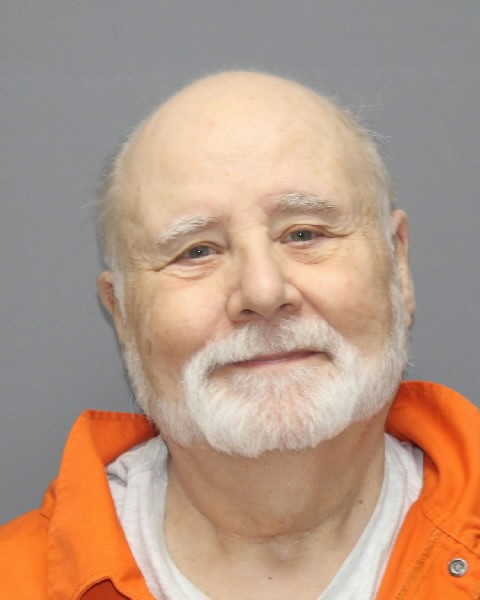
Gerald Walter “Jerry” McFadden: The Texas Killer Known as “The Animal”
Background and Criminal History
Gerald Walter McFadden, commonly known as Jerry McFadden, was born on March 21, 1948, in Haskell County, Texas. He became a violent repeat offender whose history of sexual assault, kidnapping and murder extended across several states. McFadden referred to himself as “The Animal,” a nickname that became widely associated with him after the murders of three young people in East Texas in 1986.
Long before he was identified as a serial killer, McFadden had accumulated a disturbing record of violence against women. He received three separate rape convictions between 1972 and 1978. Despite the seriousness of these offenses, he repeatedly returned to society without completing the full prison sentences originally imposed upon him. His releases became highly controversial after he committed additional violent crimes.
McFadden was paroled from prison in July 1985. Less than a year later, he abducted and murdered three young people who had gone to Lake Hawkins for what was supposed to be an ordinary outing. Those killings shocked the small communities surrounding Hawkins and Tyler and eventually led to changes in the public debate over parole policies for violent offenders in Texas.
The 1979 Murder of Anna Marie Hlavka
McFadden’s earliest confirmed murder remained unsolved for nearly four decades. On July 24, 1979, 20-year-old Anna Marie Hlavka was found dead inside her apartment in Portland, Oregon. Her sister discovered her body after becoming concerned about her. Investigators determined that Hlavka had been sexually assaulted and strangled with the electrical cord from a clock radio.
Evidence was collected from the apartment, but investigators were unable to identify the killer with the forensic technology available at the time. The case remained open as a cold case while McFadden continued committing violent offenses elsewhere. He was never questioned or prosecuted for Hlavka’s murder during his lifetime.
Decades later, investigators used DNA evidence and genetic genealogy techniques to develop McFadden as a suspect. His identity was confirmed through comparisons involving biological relatives. In January 2019, Portland authorities announced that McFadden had been identified as Hlavka’s killer. By then, he had been dead for almost 20 years, having been executed in Texas in 1999.
The Lake Hawkins Abductions
On May 4, 1986, 18-year-old Suzanne Denise Harrison, 20-year-old Gena Lee Turner and 19-year-old Bryan Drew Boone went for a drive around Lake Hawkins in East Texas. Harrison and Turner were close friends, while Boone was Turner’s boyfriend. The three young adults were well known in their community and had promising futures ahead of them.
During their outing, they encountered McFadden near the lake. Investigators concluded that he took control of the group and abducted them. The precise sequence of everything that occurred afterward could not be fully reconstructed, but evidence established that McFadden transported the victims away from the lake and killed all three.
Suzanne Harrison was sexually assaulted and strangled. Her body was abandoned near a recreational area approximately 25 miles from Lake Hawkins. She was discovered on May 5, 1986, one day after the three friends disappeared.
Gena Turner and Bryan Boone remained missing for several additional days. Searchers eventually found their bodies together in a wooded location. Both had been shot. Their bodies were recovered on May 10, 1986. Evidence indicated that they had also been murdered on May 4, the night the group vanished.
Investigation and Arrest
McFadden quickly came under suspicion because witnesses had seen him around Lake Hawkins on May 4. A couple also reported that they had been attacked by a man near the lake on the same day. Their description and information helped investigators identify McFadden as a suspect.
Authorities arrested McFadden on May 6, 1986, while Turner and Boone were still missing. Evidence recovered during the investigation connected him to the victims and the crime scenes. Ammunition associated with McFadden was linked to the type used to kill Turner and Boone. Witness testimony also placed him in the area during the critical period.
The discovery of Turner and Boone’s bodies confirmed the community’s worst fears. The murders generated intense anger because McFadden had already been convicted of multiple violent sexual offenses and had been paroled only months earlier. Many residents believed the three young people would still have been alive if he had remained incarcerated.
Escape and Massive Manhunt
While being held in the Upshur County Jail, McFadden carried out a dramatic escape. On July 9, 1986, he overpowered jailer Kenneth Mayfield and took another jail employee, Rosalie Williams, hostage. McFadden forced Williams to leave the jail with him, beginning an extensive search across the region.
The escape caused widespread fear because residents knew that an accused triple murderer and repeat sexual offender was at large. Hundreds of law-enforcement officers participated in the operation, which became one of the largest manhunts in Texas history. Roads were monitored, wooded areas were searched and residents were warned to remain alert.
McFadden remained free for approximately two days before officers captured him on July 11, 1986. Williams survived the hostage ordeal. McFadden was later convicted of crimes connected to the escape and received a life sentence in August 1986, separate from the murder prosecution.
Trial, Conviction and Death Sentence
McFadden was tried for the capital murder of Suzanne Harrison. Prosecutors presented physical evidence, witness accounts and details connecting him to the disappearance and deaths of all three Lake Hawkins victims. The prosecution argued that Harrison had been abducted, sexually assaulted and murdered as part of the same criminal episode in which Turner and Boone were killed.
In July 1987, a jury convicted McFadden of capital murder. After a separate punishment hearing, he was sentenced to death. Although the death sentence was formally based on Harrison’s murder, evidence concerning the deaths of Turner and Boone was central to the case and demonstrated the full extent of the crime.
McFadden pursued appeals through the state and federal court systems. The Texas Court of Criminal Appeals affirmed his conviction and sentence, and his later attempts to obtain relief were unsuccessful. He remained on death row for more than 12 years.
Confirmed Victims
- Anna Marie Hlavka, age 20: Murdered on July 24, 1979, inside her apartment in Portland, Oregon. She was sexually assaulted and strangled with an electrical cord. DNA and genetic genealogy identified McFadden as her killer in 2019.
- Suzanne Denise Harrison, age 18: Abducted from the Lake Hawkins area in East Texas on May 4, 1986. She was sexually assaulted and strangled. Her body was found on May 5, 1986, near a recreational area approximately 25 miles from the lake.
- Gena Lee Turner, age 20: Abducted near Lake Hawkins on May 4, 1986, and killed by gunfire. Her body was recovered with Bryan Boone’s body in a wooded area on May 10, 1986.
- Bryan Drew Boone, age 19: Abducted near Lake Hawkins on May 4, 1986, and killed by gunfire. His body was discovered beside Gena Turner’s body on May 10, 1986.
Execution
Gerald Walter McFadden was executed by lethal injection at the Huntsville Unit in Huntsville, Texas, on October 14, 1999. He was 51 years old. He declined to make a final statement before the execution was carried out.
At the time of his death, McFadden was publicly associated primarily with the murders of Harrison, Turner and Boone. The later identification of him as Anna Marie Hlavka’s killer established that his known homicidal activity had begun at least seven years before the Lake Hawkins murders and had extended beyond Texas.
Possible Additional Crimes
McFadden’s lengthy record of sexual violence, his movements between states and the long interval between the Hlavka murder and the Texas killings have caused investigators and crime researchers to question whether he may have had additional victims. However, no other murders have been conclusively attributed to him.
The fact that Hlavka’s case was solved decades after McFadden’s execution demonstrates how advances in DNA analysis can reveal previously unknown connections between violent offenders and cold cases. Investigators have continued to consider whether evidence from other unsolved crimes might eventually link McFadden to additional attacks.
Legacy of the Case
The crimes of Gerald Walter McFadden left lasting damage in Hawkins and the surrounding East Texas communities. Suzanne Harrison, Gena Turner and Bryan Boone were remembered not simply as victims of a notorious offender, but as three young people whose lives were taken during an innocent evening trip with friends.
The case also became a powerful example of the dangers associated with repeatedly releasing offenders who had demonstrated a pattern of serious sexual violence. Public outrage over McFadden’s parole history contributed to greater scrutiny of prison overcrowding, early release practices and the supervision of violent offenders in Texas.
With the identification of McFadden in Anna Marie Hlavka’s murder, the known scope of his crimes expanded from a single triple-murder episode to a series of killings committed in two states between 1979 and 1986. His four confirmed victims remain at the center of the case, while unanswered questions persist about whether other violent crimes may also have been his responsibility.