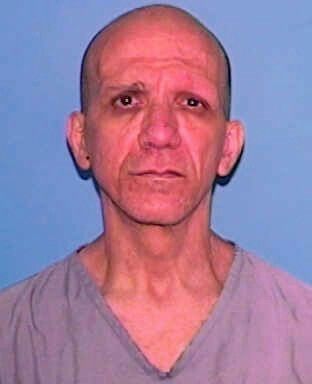
Robert Tyrone Hayes: The Daytona Beach Serial Killer
Overview
Robert Tyrone Hayes is an American serial killer convicted of murdering three women in Daytona Beach, Florida, between December 2005 and February 2006. DNA evidence also connected him to the 2016 murder of Rachel Elizabeth Bey in Palm Beach County. Hayes has been investigated in connection with the unresolved murder of Stacey Charlene Gage, while the deaths of Regan Kendall and Kelly Lanthorne have occasionally been discussed as other possible cases. However, Hayes has not been formally or forensically linked to Gage, Kendall or Lanthorne.
For more than a decade, the unidentified offender responsible for the three confirmed murders was commonly called the “Daytona Beach Serial Killer.” The victims were found unclothed in isolated outdoor locations, and each had been shot in the head with a .40-caliber firearm. The similarities in the victims’ injuries and the placement of their bodies convinced investigators that the murders were connected.
Hayes was born on March 12, 1982. At the time of the Daytona Beach murders, he was a student at Bethune-Cookman University, where he studied criminal justice and participated in the university’s cheerleading program. Investigators questioned him during the original inquiry because he had purchased a .40-caliber handgun, but the evidence then available was insufficient to arrest him.
Confirmed Victims
- Laquetta Mae Gunther, 45 — Disappeared December 24, 2005; found December 26, 2005 — Daytona Beach, Florida: Gunther disappeared on Christmas Eve after making plans to meet a friend. Her unclothed body was discovered two days later in a narrow space between commercial buildings. She was lying face down and had been shot in the back of the head. DNA evidence recovered during the investigation was later connected to Hayes. He was convicted of her murder in February 2022.
- Julie Ann Green, 34 — Found January 14, 2006 — Daytona Beach, Florida: Green’s unclothed body was found on a dirt road near a construction area. She was lying face down and had been shot in the back of the head. Tire impressions were discovered near the body. The location and condition of Green’s remains closely resembled the circumstances of Gunther’s murder. Hayes was convicted of killing Green in February 2022.
- Iwana Patton, 35 — Found February 24, 2006 — Daytona Beach, Florida: Patton’s unclothed body was found beside an isolated dirt road. She had been shot in the head, although evidence suggested that she may have struggled with her attacker. Investigators recovered a shell casing and forensic evidence that helped connect her murder to Hayes and the other Daytona Beach cases. Hayes was convicted of killing Patton in February 2022.
DNA-Linked Victim
- Rachel Elizabeth Bey, 32 — Found March 7, 2016 — Near Jupiter, Palm Beach County, Florida: Bey’s unclothed body was discovered beside a highway approximately ten years after the Daytona Beach murders. She had been strangled and severely beaten, suffering injuries that included a broken jaw and damaged teeth. Evidence indicated that she fought with her attacker. DNA recovered from Bey’s body matched genetic evidence associated with the earlier Daytona Beach cases. Hayes was arrested and charged with Bey’s murder in September 2019. Her case was separate from the three Volusia County murders for which he was convicted.
Suspected or Possible Victim
- Stacey Charlene Gage, 30 — Disappeared December 11, 2007; found January 2, 2008 — Daytona Beach, Florida: Gage disappeared after leaving her home in Holly Hill, reportedly to purchase ice. Her unclothed and decomposed body was discovered several weeks later in a secluded area near an abandoned church. She had been shot in the head. The condition and location of her body closely resembled the three confirmed Daytona Beach murders. Investigators examined the possibility that the same killer was responsible, but no publicly established DNA, ballistics or other physical evidence has conclusively connected Hayes to Gage’s death. Her murder remains unresolved, and she should be described as a suspected or possible victim rather than a confirmed victim.
Other Cases Discussed as Possible Connections
- Regan Kendall, 48 — Found in July 2007 — Near Osceola Parkway and Boggy Creek Road, Osceola County, Florida: Kendall’s dismembered remains were discovered near a roadway in Osceola County. Her death was mentioned during reporting about a wider group of unsolved Central Florida murders involving vulnerable women. The dismemberment of her body differed substantially from the methods used in Hayes’s confirmed murders. Authorities have not publicly identified DNA, ballistics or other physical evidence connecting Hayes to Kendall’s death. She should not be described as a confirmed or strongly suspected victim.
- Kelly Lanthorne, 37 — Found July 14, 2007 — 3750 Trovali Street, Orlando, Florida: Lanthorne’s unclothed body was discovered behind an apartment complex near South Orange Blossom Trail. She had suffered a fatal gunshot wound. Because she was found unclothed and had been shot, her murder attracted attention as a possible part of the wider series of killings involving women in Central Florida. However, the location was outside Daytona Beach, and no publicly reported DNA, ballistic comparison or other forensic evidence has connected Hayes to her death. Lanthorne is best classified as an unconfirmed possible case.
The Daytona Beach Murder Series
The confirmed series began when Laquetta Gunther disappeared on December 24, 2005. Her body was found two days later. Julie Green was discovered on January 14, 2006, and Iwana Patton was found on February 24, 2006. Three women had therefore been killed under similar circumstances within approximately two months.
Each confirmed victim was found unclothed in an isolated part of Daytona Beach. Gunther and Green were placed face down and shot in the back of the head. Patton had also been shot in the head, although indications of a struggle made her crime scene somewhat different. The killer did not bury the victims or make a serious effort to conceal their bodies.
Investigators believed the women may have willingly approached or entered the killer’s vehicle before being transported to the locations where they were attacked or abandoned. The offender appeared to target women living in vulnerable circumstances, possibly believing that their disappearances would not immediately receive significant attention.
The Original Investigation
The Daytona Beach Police Department formed a task force with assistance from the Florida Department of Law Enforcement. Detectives interviewed numerous people, reviewed firearm purchases, examined tire impressions and compared physical evidence recovered from the different crime scenes.
Hayes became known to investigators because he had purchased a .40-caliber handgun shortly before the murders. This was consistent with the type of weapon used against the victims. He was questioned, but investigators did not possess a direct forensic match sufficient to charge him.
An early behavioral profile reportedly suggested that the killer was probably a white man. Hayes is Black. The inaccurate profile may have caused investigators to focus attention elsewhere despite his relevant firearm purchase and presence in Daytona Beach during the murders. The case demonstrated how an unverified behavioral theory can misdirect an investigation when it is given too much importance.
Rachel Bey and the DNA Breakthrough
The killing of Rachel Bey eventually provided the evidence needed to identify Hayes. DNA recovered from Bey’s body was entered into forensic databases. In December 2016, investigators learned that the genetic profile matched evidence associated with the earlier Daytona Beach murders.
The difference in killing methods initially made the connection less obvious. Gunther, Green and Patton had been shot, while Bey had been beaten and strangled. Nevertheless, the DNA evidence indicated that the same man had been involved in both sets of crimes.
Investigators later used genetic genealogy to search for people who shared portions of the unknown offender’s genetic ancestry. By examining family relationships and comparing possible relatives with information about the murders, detectives developed Hayes as a suspect.
Identification and Arrest
Detectives placed Hayes under surveillance and collected items that he discarded in public, including a cigarette. DNA obtained from the discarded material matched the genetic profile associated with the murders.
Hayes was arrested at his West Palm Beach home on September 15, 2019, on a first-degree murder charge in connection with Rachel Bey’s death. Authorities announced the following day that he had also been linked to the three Daytona Beach murders. He was later indicted in Volusia County for killing Gunther, Green and Patton.
The breakthrough occurred more than thirteen years after the confirmed Daytona Beach murders. Advances in forensic testing and genetic genealogy allowed investigators to obtain information that had not been available during the original inquiry.
Trial and Sentencing
Hayes’s Volusia County trial began in February 2022. Prosecutors presented DNA findings, ballistics evidence, information about Hayes’s firearm purchase and testimony describing the similarities among the three confirmed crime scenes.
The prosecution argued that Hayes had deliberately selected the women, killed them and left their bodies in secluded areas. The defense challenged the handling and interpretation of the forensic evidence and argued that the state had not proved that Hayes was the killer.
On February 22, 2022, the jury found Hayes guilty of the first-degree murders of Laquetta Gunther, Julie Green and Iwana Patton. Prosecutors sought the death penalty, but the jury did not unanimously recommend a death sentence. On March 2, 2022, Hayes received three consecutive terms of life imprisonment without the possibility of parole.
Understanding the Different Victim Classifications
The seven women discussed in connection with Hayes do not have the same legal or evidentiary status. Laquetta Gunther, Julie Green and Iwana Patton are confirmed victims because Hayes was convicted of their murders. Rachel Bey is directly linked to Hayes through DNA evidence, and he was charged with killing her, but her case was separate from the Volusia County trial.
Stacey Gage is considered a possible or suspected victim because her murder strongly resembled the confirmed Daytona Beach killings. However, investigators have not publicly established a conclusive forensic connection between Hayes and her death.
Regan Kendall and Kelly Lanthorne were among other Central Florida homicide victims whose cases were discussed as possible parts of a wider pattern. Neither woman has been publicly linked to Hayes through DNA, ballistics, a criminal charge or a conviction. Their inclusion in a list of his victims must therefore be accompanied by a clear warning that the suggested connection is speculative.
Legacy of the Case
The Robert Tyrone Hayes investigation demonstrates the importance of preserving forensic evidence in unsolved murder cases. Evidence collected in 2005 and 2006 remained useful for more than a decade and eventually allowed investigators to compare the Daytona Beach crimes with the killing of Rachel Bey.
The case also shows why confirmed victims must be distinguished from suspected or possible victims. Similar injuries, lifestyles or body-disposal locations can provide investigators with reasons to compare cases, but those similarities alone do not prove that the same offender was responsible.
Hayes was held accountable for the murders of Laquetta Gunther, Julie Green and Iwana Patton. DNA evidence connected him to Rachel Bey’s death. Questions remain concerning Stacey Gage, while the suggested connections to Regan Kendall and Kelly Lanthorne remain unproven. Presenting these distinctions accurately preserves the individual histories of the women and avoids describing unresolved cases as solved crimes.