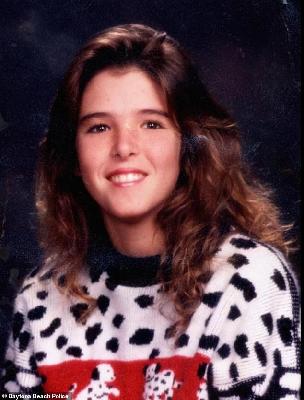
Iwana Patton, a 35-year-old African American woman, was found dead on February 24, 2006, in Daytona Beach, Florida. Her body was discovered along a dirt road, lying face down and nude, with a gunshot wound to the head. This tragic incident was part of a series of murders that caused widespread panic among the local community, particularly among sex workers, as Patton was one of three women killed in a similar manner within a short period.
The investigation into Iwana Patton's death
revealed that she, along with Laquetta Gunther, 45, and Julie Green, 34, had been targeted by a serial killer. All three women were found in desolate locations, shot in the head, and left nude. The similarities in the cases led investigators to believe that the murders were premeditated and carried out by the same individual. The Daytona Beach Police Department worked tirelessly to solve these cases, but it wasn't until years later that a breakthrough occurred.
In 2019, Robert Tyrone Hayes, a former college cheerleader and criminal justice major, was arrested and charged with the murders of Iwana Patton, Laquetta Gunther, and Julie Green. Hayes, who was 39 years old at the time of his arrest, had been living a seemingly normal life as a chef in West Palm Beach. The key to solving the case was DNA evidence that linked Hayes to the murders. Investigators had collected DNA from the crime scenes and, through genetic genealogy, were able to match it to Hayes.
During the trial, prosecutors presented evidence that Hayes had purchased a .40-caliber handgun shortly before the first murder. They argued that Hayes targeted sex workers because they were vulnerable and more likely to accompany him to isolated locations. The prosecution emphasized the premeditated nature of the killings, noting that all three women were found in similar conditions, with no signs of a struggle.
In February 2022, Hayes was found guilty of the murders of Iwana Patton, Laquetta Gunther, and Julie Green. The jury deliberated for less than a day before returning a guilty verdict. Although prosecutors sought the death penalty, the jury could not reach a unanimous decision on this matter. Consequently, Hayes was sentenced to three consecutive life sentences without the possibility of parole. This sentence ensured that Hayes would spend the rest of his life in prison, unable to harm anyone else.
The conviction of Robert Hayes brought some measure of justice to the families of the victims. Iwana Patton's family, along with the families of the other victims, expressed their relief that the killer had been caught and would no longer pose a threat to society. The case highlighted the importance of DNA evidence and the advancements in forensic technology that made it possible to solve cold cases and bring perpetrators to justice.