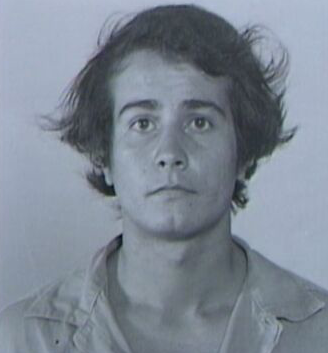
Joseph Roy Metheny: The Baltimore Serial Killer
Overview
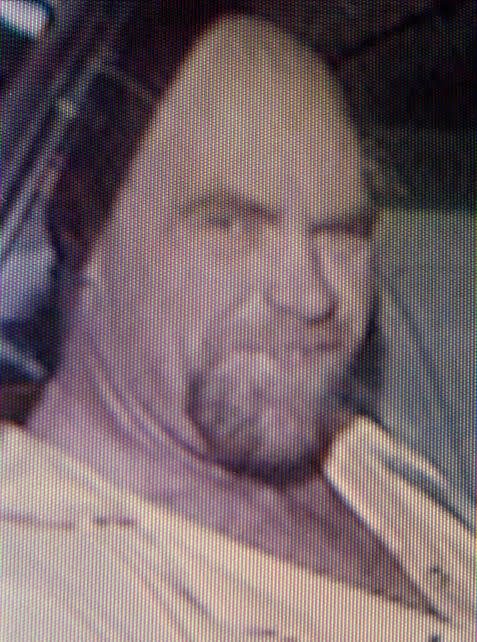
Joseph Roy Metheny was an American murderer, rapist and suspected serial killer whose crimes centered on Baltimore, Maryland, during the 1990s. Born on March 2, 1955, Metheny spent much of his adult life drifting between unstable living arrangements, heavy substance abuse and criminal activity. By the time police arrested him in December 1996, he had become a physically imposing figure who lived in a trailer on the grounds of a pallet-manufacturing company in southwest Baltimore.
Metheny confessed to numerous killings and sometimes claimed that he had murdered as many as thirteen people. Investigators, however, could substantiate only a small portion of his statements. He was ultimately convicted of murdering Cathy Ann Magaziner and Kimberly Lynn Spicer. He was acquitted in the killings of two homeless men, while a separate murder charge involving Toni Lynn Ingrassia was dismissed because prosecutors lacked sufficient evidence.
Many of Metheny’s later stories were deliberately shocking and may have been exaggerated to increase his notoriety. His most infamous claim was that he dismembered some victims, mixed their flesh with pork and beef, and sold the meat in sandwiches from a roadside food stand. No physical evidence established that unsuspecting customers were actually served human remains. That allegation should therefore be treated as an unverified confession rather than a proven part of his crimes.
Background and Descent into Violence
Metheny was raised in the Baltimore area and joined the United States Army in 1973. He later claimed that he served in Vietnam and became addicted to heroin while in the military, but his family disputed that account, and reports of his Vietnam service were never verified. After leaving the Army, he developed serious problems involving alcohol, heroin, cocaine and other drugs.
During the 1990s, Metheny associated with people living in homeless encampments beneath and around the bridges and industrial areas of South Baltimore. Despite his unstable personal life, he maintained employment, including work as a forklift operator at a pallet company. Coworkers sometimes described him as polite, intelligent and humorous. That outwardly sociable personality concealed a violent man who targeted people living under extremely vulnerable circumstances.
Metheny’s victims and alleged victims included women affected by addiction and homelessness, as well as men living in makeshift camps. His crimes were committed in neglected industrial locations where victims could disappear without attracting immediate attention. He hid bodies on or near the grounds of his workplace and later relied on the isolation of those areas to avoid detection.
Confirmed Murder Victims
- Cathy Ann Magaziner — June 4, 1994 — Baltimore, Maryland: Magaziner was 39 years old when Metheny killed her. He admitted strangling her and burying her body in a shallow grave near the pallet company where he worked. According to his confession, he returned approximately six months later, removed her skull and attempted to dispose of it. After his 1996 arrest, Metheny led investigators to her burial site. Although much of her skull was missing, authorities identified her remains through dental records. Metheny pleaded guilty on September 25, 1998, to her first-degree murder and robbery.
- Kimberly Lynn Spicer — November 29, 1996 — Baltimore, Maryland: Spicer was 23 years old when Metheny stabbed her to death. Her body was concealed near his trailer on the pallet-company property. Metheny kept her remains hidden there until shortly before his arrest. A person whom he approached for help disposing of the body reported the situation to police. Investigators recovered Spicer’s remains, and Metheny was convicted of her murder. He later received a death sentence for the crime, although that punishment was eventually reduced to life imprisonment without parole.
The Murder of Cathy Ann Magaziner
Cathy Ann Magaziner’s disappearance remained unresolved until Metheny began confessing after his arrest. He described meeting Magaziner in Baltimore and bringing her to an isolated area connected to his workplace. There, he strangled her and concealed her body in a shallow grave. Because the grave was located on industrial property where Metheny had regular access, he was able to monitor the burial place without immediately attracting suspicion.
Metheny later claimed that he returned to the grave after decomposition had begun. He removed Magaziner’s head, placed it in a container and discarded it with ordinary trash. When investigators finally recovered her remains, most of the skull was gone. Dental evidence nevertheless provided the identification that connected the recovered skeleton to Magaziner.
The Magaziner prosecution became an important part of the legal proceedings against Metheny. He admitted committing the killing for personal gratification rather than as part of a robbery. Prosecutors nevertheless argued during sentencing that the murder occurred in connection with robbery because he had taken some of her possessions. That distinction later became central to the appeal of his death sentence.
The Murder of Kimberly Lynn Spicer
Kimberly Lynn Spicer encountered Metheny during the final weeks of 1996. Metheny brought her to the isolated trailer where he lived on the pallet-company grounds. He stabbed her to death and concealed her body near the property. Unlike Magaziner, whose remains had been buried for years, Spicer’s body was still hidden at the site when Metheny’s criminal activities began to unravel.
Metheny eventually asked an acquaintance to assist him in burying or moving Spicer’s body. Instead of helping, the person contacted authorities. On December 15, 1996, police arrested Metheny and began searching the property. The discovery of Spicer’s remains gave investigators direct physical evidence linking him to murder.
During his sentencing proceedings, Metheny admitted that he killed because he enjoyed the sense of power and excitement. His statements showed little effort to deny responsibility. A jury sentenced him to death for Spicer’s murder, but the sentence was later reduced to life imprisonment without the possibility of parole.
Suspected and Alleged Victims
- Toni Lynn Ingrassia — February 22, 1994 — Baltimore, Maryland: Ingrassia was 28 years old. Metheny was indicted for her murder after claiming responsibility and providing information to investigators. Her family had reportedly not seen her since November 1993. Prosecutors eventually dismissed the charge because they could not obtain enough independent evidence to prove that Metheny killed her.
- Randall Brewer — August 2, 1995 — South Baltimore, Maryland: Brewer was one of two homeless men found murdered in a makeshift encampment known as Tent City beneath the Hanover Street Bridge. The victims had been attacked with an axe. Metheny was prosecuted for the killings but was acquitted in July 1996 after jurors concluded that the evidence did not prove his guilt beyond a reasonable doubt. Metheny later claimed that he had committed the murder, but the confession did not change the acquittal.
- Randy Piker — August 2, 1995 — South Baltimore, Maryland: Piker was found dead with Randall Brewer in the Tent City encampment. Both men had suffered fatal axe wounds. Metheny was tried for Piker’s murder alongside Brewer’s but was acquitted because of insufficient evidence. He subsequently included Piker among the people he claimed to have killed.
- Three unidentified women — dates unknown — Washington Boulevard and the Patapsco River area, Baltimore: Metheny claimed that he killed several additional women, dismembered or disposed of their bodies, and threw some remains into the Patapsco River. Searches did not uncover evidence sufficient to identify these alleged victims or confirm that the murders occurred as he described them.
The Tent City Axe Murders
On August 2, 1995, the bodies of Randall Brewer and Randy Piker were discovered in a homeless settlement beneath Baltimore’s Hanover Street Bridge. Both men had been attacked with an axe. Metheny, who was familiar with the encampment and its residents, became a suspect and was charged with the killings.
The investigation was complicated by conflicts among different groups living in the area and by the later use of the same or a related weapon in another homicide. A man named Larry Amos was accused of stealing the axe and using it to kill another homeless man, Everett Dowell. Amos eventually pleaded guilty to manslaughter in Dowell’s death.
When Metheny was placed on trial for killing Brewer and Piker, prosecutors could not present enough reliable evidence to establish that he had wielded the axe. In July 1996, a jury acquitted him of both murders. Metheny later claimed responsibility, but his history of exaggeration and the absence of conclusive physical evidence left the cases legally unproven against him.
The Attack on Rita Kemper
Rita Kemper survived an attack that exposed Metheny’s violence and helped bring his crimes to the attention of authorities. On December 8, 1996, Kemper was inside Metheny’s trailer after the two had used drugs. When she rejected his sexual advances, Metheny attacked her, beat her and dragged her back into the trailer after she attempted to escape.
Metheny pulled at Kemper’s clothing and attempted to sexually assault her. Kemper later testified that he threatened to kill her and bury her with other women. She managed to escape through a window and reached police officers in the surrounding area. Her account provided investigators with a living witness who could describe Metheny’s behavior and the isolated property where he operated.
In 1997, Metheny was convicted of kidnapping and attempted sexual assault in connection with the attack. He received a 50-year prison sentence. The jury acquitted him of attempted murder, but Kemper’s survival ensured that Metheny could no longer operate without scrutiny.
Arrest and Confessions
Metheny was arrested on December 15, 1996, after police learned that a woman’s body was hidden near his workplace. Following his arrest, he began making extensive confessions. He admitted killing Spicer and directed officers to the remains of Magaziner. He also claimed responsibility for other disappearances and murders throughout Baltimore.
Investigators attempted to test each confession against missing-person reports, recovered bodies and available forensic evidence. Some details matched known crimes, while others could not be verified. Metheny sometimes changed the number of people he claimed to have killed. Reports attributed totals ranging from seven to thirteen victims to him.
His willingness to confess did not necessarily make every statement reliable. He appeared to enjoy the fear and publicity generated by his descriptions. Detectives therefore treated his claims cautiously and distinguished between murders supported by physical evidence and crimes supported only by Metheny’s own words.
The Cannibalism and Roadside Food Stand Claims
Metheny became internationally notorious after claiming that he cut flesh from some victims, mixed it with pork and beef, and sold the resulting meat in sandwiches at a roadside stand. He reportedly said that customers could not distinguish human flesh from pork. The allegation became one of the most frequently repeated stories associated with his name.
Despite its notoriety, investigators did not recover preserved meat, customer remains, business records or forensic evidence proving that Metheny served human flesh to the public. No customer was identified as having knowingly or unknowingly eaten a victim. The story originated primarily from Metheny’s own statements.
Because Metheny repeatedly exaggerated his victim count and appeared to seek infamy, the cannibalism story remains unconfirmed. His proven crimes were already exceptionally violent, but the claim that he sold human meat should not be presented as an established forensic fact.
Trials, Convictions and Sentences
Metheny’s criminal proceedings involved several separate cases. His first major murder trial concerned the deaths of Brewer and Piker. He was acquitted of those killings in July 1996. After the attack on Rita Kemper, he was convicted of kidnapping and attempted sexual assault and sentenced to 50 years in prison.
Metheny was convicted of murdering Kimberly Lynn Spicer and received a death sentence in 1998. He also pleaded guilty to the first-degree murder and robbery of Cathy Ann Magaziner. A jury imposed another death sentence in the Magaziner case after determining that the killing occurred during a robbery.
On July 24, 2000, Maryland’s highest court overturned the death sentence connected to Magaziner’s murder. The court concluded that the evidence did not establish robbery as the motive or qualifying circumstance required to support that death sentence. His punishment was reduced to life imprisonment without parole. Metheny ultimately remained incarcerated under multiple lengthy and life sentences.
Death in Prison
Joseph Roy Metheny spent the remainder of his life in Maryland’s prison system. On August 5, 2017, a correctional officer found him unresponsive in his cell at the Western Correctional Institution in Cumberland, Maryland. He was pronounced dead at the age of 62.
Metheny died without providing investigators with enough verifiable information to resolve all of the murders he claimed to have committed. Cathy Ann Magaziner and Kimberly Lynn Spicer remain his two legally established murder victims. Toni Lynn Ingrassia, Randall Brewer, Randy Piker and several unidentified people have continued to be described as alleged or possible victims, but Metheny was never convicted of causing their deaths.
Legacy of the Case
The crimes of Joseph Roy Metheny illustrate the difficulty of separating documented murder cases from the self-serving claims of a confessed serial killer. He unquestionably murdered at least two women and violently attacked a survivor. His knowledge of isolated industrial areas and vulnerable communities allowed him to conceal his actions for years.
His unverified stories about cannibalism and the sale of human flesh often overshadow the lives of the victims. Those sensational claims received widespread attention, while the women and men connected to the investigation were frequently reduced to names in accounts about Metheny. The proven evidence establishes a pattern of predatory violence even without accepting every confession he made.
Metheny’s complete victim count remains unknown. Investigators confirmed two murders, developed suspicions in several others and received confessions that could not be independently supported. His case therefore remains a combination of solved homicides, disputed accusations and unresolved claims left behind by a killer who frequently blurred the line between confession and deliberate exaggeration.