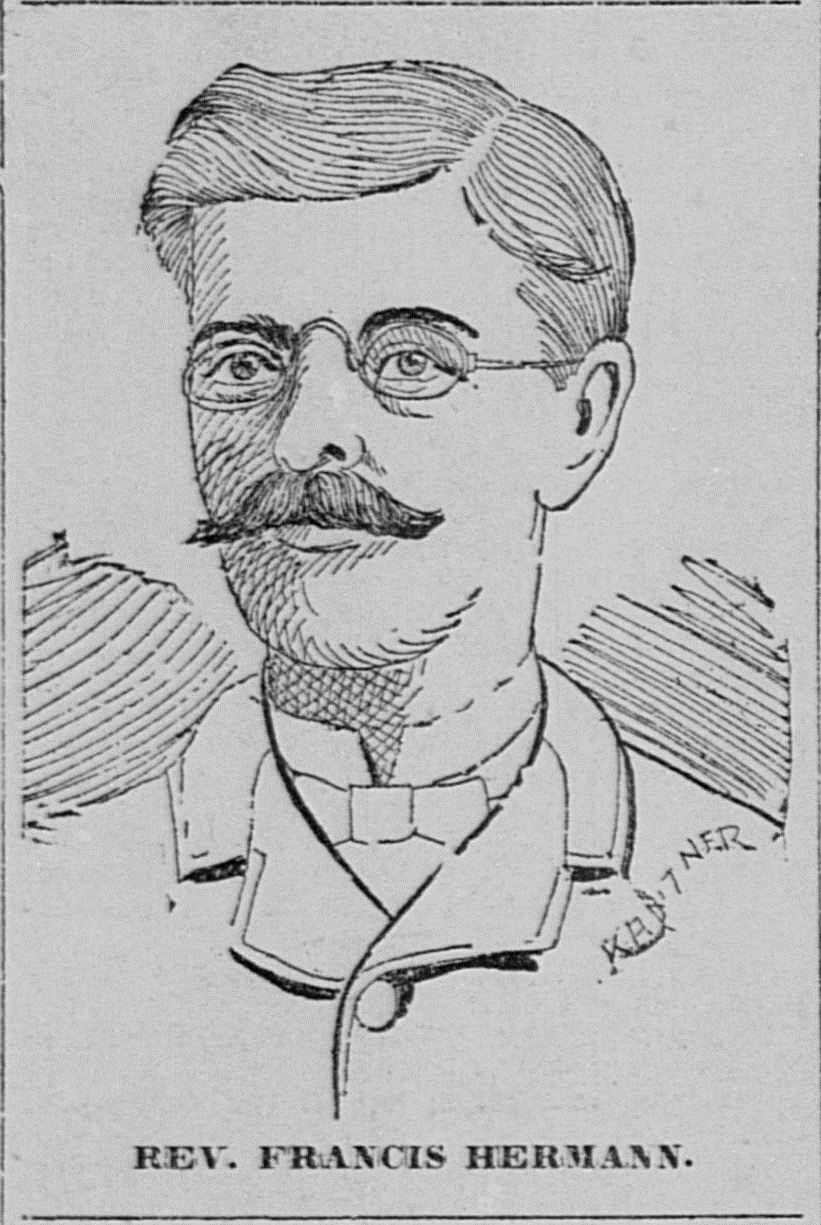
Francis Hermann: The Fugitive Pastor Suspected of Serial Murder
Background
Francis Hermann, whose surname was also reported as Hermans, was an English-born Methodist Episcopal minister who became the central figure in one of Salt Lake City’s most disturbing nineteenth-century criminal investigations. Born in England around 1851, Hermann was described as educated, persuasive, and capable of earning the confidence of religious congregations. He worked as a missionary in London before immigrating to the United States in 1891. Over the following five years, several women and children closely associated with him died suddenly or disappeared. Although investigators strongly connected him to at least two suspected murders, he escaped before he could be arrested or tried.
Hermann is often described as a suspected serial killer rather than a convicted one. No court determined his guilt, and the evidence surrounding some of the deaths was circumstantial. Nevertheless, the discovery of human remains inside his church, his possession or sale of missing women’s belongings, and his flight from Utah caused investigators and newspapers to regard him as a dangerous murderer.
Suspicious Deaths in Minnesota and Wisconsin
After arriving in the United States, Hermann settled in Minneapolis, Minnesota, and married Bertha Wangen. The couple later moved to West Superior, Wisconsin, where Hermann became pastor of the First Norwegian-Danish Methodist Episcopal Church. Bertha gave birth to a child near the end of December 1891. Soon afterward, she reportedly began suffering severe emotional or mental disturbances and was scheduled to be taken to an institution.
On January 11, 1892, only hours before her planned departure, Bertha died suddenly. Ammonia was reportedly found around her mouth. Hermann claimed that she had been smelling it as a remedy during one of her attacks. Her infant also died at approximately the same time, although the child’s exact date of death has not been firmly established. No prosecution followed, but the circumstances attracted renewed suspicion after the later discoveries in Utah.
Bertha’s sister, Caroline Wangen, had been living with the family. She disappeared during the spring of 1892. Hermann reportedly offered changing explanations for her absence, but no confirmed remains were found and her date of death is unknown.
The Deaths of Martha Lommen Hermann and Her Baby
Hermann later moved to Salt Lake City, Utah, where he became pastor of the Scandinavian Methodist Episcopal Church at approximately 158 South 200 East. He married Martha Lommen, and the couple had a daughter on March 25, 1895.
The baby died suddenly on April 15, 1895. Three days later, on April 18, Martha also died under circumstances that were later regarded as suspicious. Hermann had obtained a life-insurance policy worth approximately $500 on Martha and collected the payment after her death. There was no autopsy establishing that either death resulted from murder, and Hermann was never formally charged in connection with them.
The Disappearance and Presumed Murder of Henrietta Clawson
Henrietta Clawson, whose surname appeared in contemporary reports as Clawson, Clauson, or Clausen, was a Swedish immigrant approximately twenty-five years old. She had lived in Omaha, Nebraska, before moving to Salt Lake City. Clawson became associated with Hermann’s congregation and was reportedly engaged to marry him. She also gave Hermann approximately $300 to hold or invest for her.
In September 1895, Clawson was staying at or caring for Hermann’s parsonage. She was last seen alive near the end of that month after telling an acquaintance that she planned to attend an evening church service. Her exact date of death was never legally established.
The morning after her disappearance, Hermann instructed the church janitor to clean the basement furnace and prepare it for a fire, even though the weather was warm and the heating system was not needed. Hermann then prevented the janitor from lighting it and operated the furnace himself. Witnesses later recalled that he kept it burning intensely for several hours. An unusually foul odor filled the building, and residents in rooms attached to the church complained about the heat and smell. One witness reported seeing Hermann carry sacks into the basement.
When Clawson’s friends asked about her, Hermann claimed that she had left the area. He later sold her trunk and personal possessions to a pawnshop. In May 1896, after Hermann had departed Salt Lake City, John M. Hansen searched the church basement. Inside and beneath the furnace, he found burned human bones, two razors, a butcher knife, clothing fasteners, and other objects. Investigators also found artificial teeth that reportedly matched dental work previously made for Clawson. The evidence convinced authorities that at least part of her body had been burned in the church furnace.
The Disappearance and Presumed Murder of Annie K. Samuelson
Annie K. Samuelson was a young member of Hermann’s church who worked as a governess before becoming his live-in housekeeper. Hermann allegedly promised to marry her. Samuelson gave him money, and evidence suggested that they had an intimate relationship.
Samuelson was last reliably seen on January 29, 1896. She told acquaintances that she intended to travel to Ogden, Utah, where she expected to marry Hermann the following day. On the morning of January 30, Hermann claimed that he had awakened early and taken her to the railway station. She was never seen again, and no verified date of death was established.
A letter later arrived from Ogden bearing Samuelson’s name. It stated that she had ended her relationship with Hermann and intended to travel to Chicago. Relatives and investigators doubted that she had written it. The handwriting appeared unnatural, and the letter contained language that seemed designed to protect Hermann from suspicion. Searches in Chicago found no evidence that Samuelson had arrived there.
Hermann pawned a watch and ring belonging to Samuelson. He also distributed women’s clothing and handkerchiefs to other ministers’ wives. Some of those articles reportedly carried the initials “A. K. S.” Investigators further learned that he had ordered a large wooden box shortly before Samuelson disappeared. Authorities theorized that her body might have been concealed inside it and transported away from Salt Lake City, but her remains were never conclusively identified.
Known and Suspected Victims
- Ms. Smith: Hermann’s first wife in England. She died under reportedly suspicious circumstances before his immigration to the United States in 1891. Her full name, location of death, and exact date of death have not been reliably established.
- Bertha Wangen Hermann: Hermann’s second wife. She died on January 11, 1892, in or near West Superior, Wisconsin, shortly before she was expected to enter an institution.
- Bertha Wangen Hermann’s infant: The child died around January 1892 in Wisconsin. Available historical accounts do not establish a precise date of death.
- Caroline Wangen: Bertha’s sister. She disappeared in the spring of 1892 after living with Hermann and Bertha in Wisconsin. Her body was never identified, and her date and location of death remain unknown.
- Unnamed infant daughter of Francis and Martha Hermann: Born March 25, 1895, and died April 15, 1895, in Salt Lake City, Utah.
- Martha Lommen Hermann: Hermann’s third wife. She died on April 18, 1895, in Salt Lake City, Utah, three days after the death of her infant daughter.
- Henrietta Clawson: A Swedish immigrant and member of Hermann’s congregation. She was last seen alive in Salt Lake City near the end of September 1895. Burned remains and dental evidence found in the Scandinavian Methodist Episcopal Church furnace were attributed to her, but her precise date of death was never established.
- Annie K. Samuelson: Hermann’s housekeeper and alleged prospective bride. She was last reliably seen on January 29, 1896, at the Scandinavian Methodist Episcopal Church in Salt Lake City. Her exact date and location of death remain unknown.
Discovery of the Church-Furnace Evidence
The investigation began in earnest during May 1896, when human bones and personal objects were recovered from the church furnace. Authorities searched the basement, church grounds, Hermann’s rooms, and nearby property. They discovered additional fragments of bone, some identified as human, together with knives, razors, buckles, dental material, and a collection of poisonous substances.
The furnace evidence was especially damaging because it corresponded with witness accounts from the day after Clawson disappeared. The recovery of her belongings from a pawnshop further contradicted Hermann’s claim that she had simply moved away. Samuelson’s pawned jewelry and monogrammed property created a second pattern in which a missing woman’s possessions passed into Hermann’s control after she vanished.
Investigators believed Hermann may have used poison before dismembering and attempting to burn at least one victim. However, the condition of the remains prevented authorities from determining a precise cause of death. Claims about his exact methods therefore remain investigative theories rather than proven facts.
Escape and Disappearance
Hermann left Salt Lake City on May 6, 1896, before the furnace evidence became public. He traveled toward Kansas City, Missouri, and was believed to be continuing to Decorah, Iowa. Church officials had already confronted him over missing church funds, and he had reportedly admitted financial misconduct before leaving Utah.
Once the remains were discovered, police attempted to trace him through Missouri and the Midwest. Reports placed him in St. Louis and suggested that he might be hiding near Cincinnati, Ohio, or Indianapolis, Indiana. Several men were arrested because they resembled him, but each was eventually cleared. Hermann was never conclusively located, arrested, or brought to trial.
Legacy of the Case
Francis Hermann’s confirmed fate is unknown. He disappeared after 1896 and may have lived under an assumed name. The absence of a trial left many questions unresolved, including how many people he killed and whether every suspicious death connected to him was actually a homicide.
The strongest case concerned Henrietta Clawson because human remains, dental evidence, witness statements, and her pawned property all pointed toward her death inside the Salt Lake City church. Annie Samuelson’s disappearance was also closely linked to Hermann through her jewelry, clothing, the suspicious letter, and his false account of her departure. The earlier deaths and disappearances remain less certain.
Hermann has been credited with between two and eight possible victims. A cautious historical assessment identifies Clawson and Samuelson as his principal presumed murder victims while treating the deaths of his wives, children, and sister-in-law as unresolved suspicions. His position as a trusted pastor, the use of a church basement to conceal evidence, and his successful escape made the case one of the most unsettling unsolved murder investigations in Utah history.