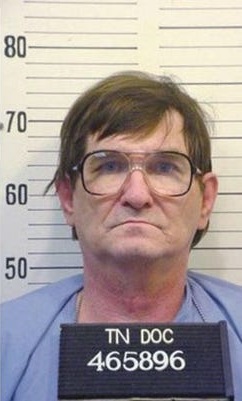
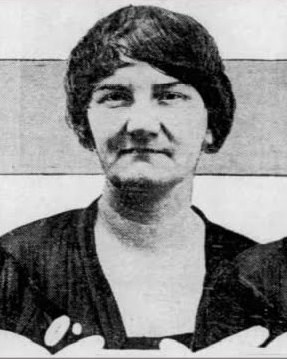
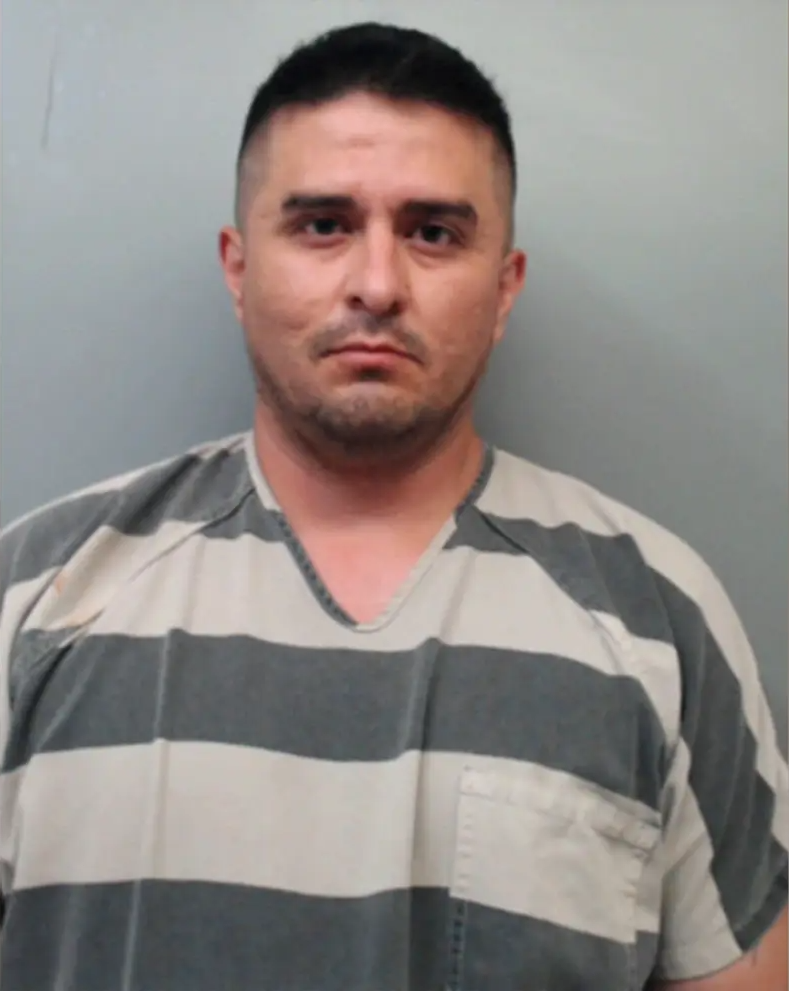
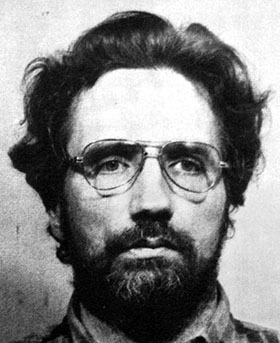
Bruce D. Mendenhall: The Truck Stop Serial Killer
Overview
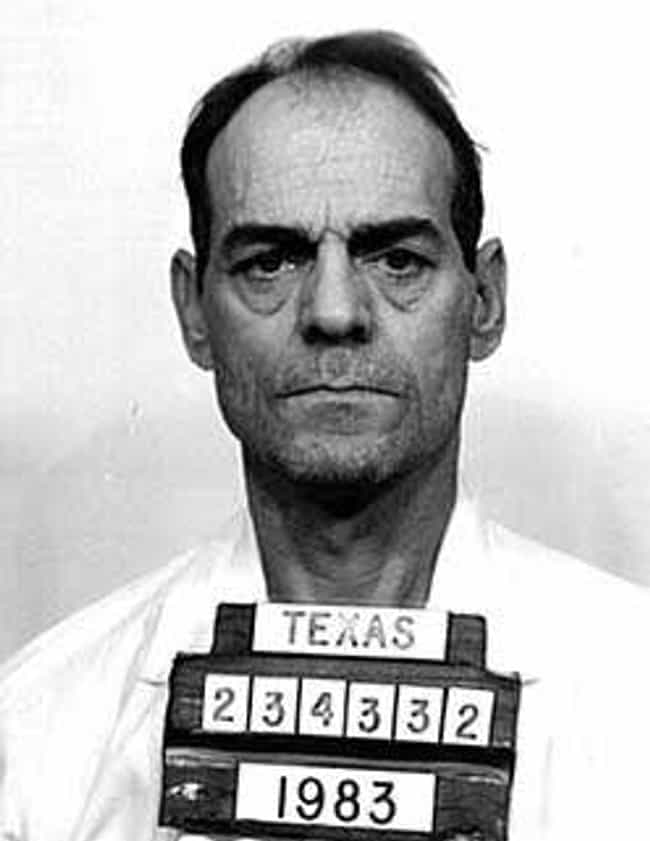
Bruce Delane Mendenhall was a long-haul truck driver whose occupation gave him access to highways, rest areas and truck stops across the United States. Investigators believe he used this mobility to approach vulnerable women, particularly women involved in sex work, and to conceal violent crimes across several jurisdictions. His case attracted national attention after detectives discovered blood, weapons, women’s clothing and personal property inside his tractor-trailer in July 2007.
Mendenhall was ultimately convicted of murdering three women: Sara Nicole Hulbert and Symantha Winters in Tennessee, and Carma Purpura in Indiana. He was also charged with the murder of Lucille “Gretna” Carter in Alabama, although that prosecution was later discontinued without a trial. Authorities examined possible connections between Mendenhall and numerous other deaths and disappearances along major trucking routes, but no additional murder convictions were obtained.
The Murder of Symantha Winters
On the morning of June 6, 2007, the body of Symantha Winters was discovered inside a trash container at a Pilot truck stop in Lebanon, Wilson County, Tennessee. She had been shot, and her body had been placed in the refuse container as though the killer intended for it to disappear with the truck stop’s garbage.
Investigators later established a connection between Winters and Mendenhall. During questioning after his arrest, Mendenhall made statements that implicated him in her death and demonstrated knowledge of circumstances surrounding the killing. Physical evidence recovered from his truck and the similarities between Winters’s death and other cases strengthened the prosecution’s case.
Mendenhall was indicted for Winters’s murder in August 2007. The case took more than a decade to reach trial, but in 2018 a Wilson County jury convicted him of first-degree premeditated murder and abuse of a corpse. He received a life sentence for the murder and an additional sentence for the abuse of Winters’s body. The sentences were ordered to run consecutively to the punishment he had already received in Davidson County.
The Murder of Sara Nicole Hulbert
In the early morning hours of June 26, 2007, 25-year-old Sara Nicole Hulbert was found dead at the TravelCenters of America truck stop on Interstate 24 in Nashville, Tennessee. She had suffered a fatal gunshot wound. Her body was discovered near the truck stop, placing the killing directly within the environment in which Mendenhall worked and traveled.
Metropolitan Nashville Police Detective Sergeant Pat Postiglione studied surveillance recordings and information collected during the Hulbert investigation. The detective identified a tractor-trailer that appeared significant to the case. On July 12, 2007, Postiglione returned to the same Nashville truck stop and spotted a truck matching the vehicle seen during the investigation.
The truck belonged to Bruce Mendenhall. What began as an investigative encounter rapidly developed into a major homicide case. Detectives observed blood evidence and discovered items suggesting that violence had recently occurred inside the cab. Mendenhall was arrested and questioned about Hulbert’s death and the deaths of other women.
Mendenhall was convicted of the first-degree premeditated murder of Sara Hulbert in 2010. The jury’s verdict resulted in a life sentence. His conviction was later upheld during the appellate process.
The Disappearance and Murder of Carma Purpura
Carma Jessica Purpura, a 31-year-old mother of two, was last seen on July 11, 2007, at a Flying J truck stop near Interstate 465 on the south side of Indianapolis, Indiana. Evidence presented years later showed that she encountered Mendenhall at the truck stop and entered his tractor-trailer.
When Mendenhall was stopped in Nashville the following morning, investigators found property belonging to Purpura inside his cab. The evidence included her cellular telephone, ATM card, clothing and other personal belongings. Some of the clothing was heavily stained with blood. DNA testing connected the blood to Purpura through samples obtained from members of her family.
Mendenhall reportedly admitted that he had picked up a woman in Indianapolis and that she had been shot inside his truck, but he denied intentionally murdering her. Prosecutors maintained that the physical evidence demonstrated a deliberate killing followed by an attempt to conceal the victim’s body and possessions.
Purpura remained missing for years. In 2011, skeletal remains were discovered at the bottom of a steep ravine near Interstate 65 in Barren County, Kentucky. The remains were identified through DNA testing in 2016 as those of Carma Purpura. Evidence indicated that she had suffered a fatal gunshot wound to the head.
Indiana authorities had charged Mendenhall with Purpura’s murder in 2008, but the case was delayed while Tennessee prosecuted him for the murders committed there. His Indiana trial was finally held in January 2025. A Marion County jury found him guilty of murder. In March 2025, he was sentenced to 65 years in prison, to be served consecutively to his Tennessee sentences.
The Arrest and Search of Mendenhall’s Truck
Mendenhall’s arrest on July 12, 2007, exposed the scope of what investigators feared could be a multistate series of murders. Police searched his tractor-trailer and catalogued hundreds of pieces of evidence. The cab contained blood in multiple locations, including areas around the driver’s compartment. Officers also recovered bloodstained clothing and personal items belonging to women.
Among the items seized were a rifle, ammunition, knives, handcuffs, latex gloves, black tape, a nightstick and other objects investigators believed could have been used to restrain, assault or kill victims. DNA testing revealed biological material from several different women. Some samples were matched to known victims or missing women, while the identities connected to other traces were not immediately determined.
The truck was especially important because it was both Mendenhall’s workplace and a movable crime scene. A long-haul driver could encounter victims in one state, commit violence in another location and dispose of a body hundreds of miles away. This mobility complicated the process of comparing cases and required police agencies in several states to exchange evidence, travel records and forensic findings.
The Death of Lucille “Gretna” Carter
Lucille “Gretna” Carter, 44, was found dead on July 1, 2007, along a service road near Finley Boulevard in Birmingham, Alabama. Her body had been left near a trash container. Investigators reported that she had been shot in the back of the head with a small-caliber weapon. A plastic bag had been placed over her head and secured around her neck with tape.
The method of killing and disposal was viewed as similar to evidence associated with Mendenhall’s other alleged crimes. Police determined that his trucking route and movements placed him in a position to have committed the murder. Birmingham authorities charged him in connection with Carter’s death in July 2007.
The Alabama case remained unresolved in court for many years while Mendenhall faced prosecutions in Tennessee and Indiana. After his 2025 conviction and 65-year Indiana sentence, Jefferson County prosecutors reconsidered whether another lengthy trial would serve a practical purpose. Carter’s murder charge was eventually withdrawn and the warrant was recalled. Mendenhall was therefore never tried or convicted for her death, and the allegation should be distinguished from the three murders established by jury verdicts.
Confirmed Victims
- Symantha Winters — June 6, 2007 — Lebanon, Tennessee: Winters was found dead inside a trash container at the Pilot truck stop in Lebanon. She had been shot. Mendenhall was convicted of first-degree premeditated murder and abuse of a corpse in 2018.
- Sara Nicole Hulbert — June 26, 2007 — Nashville, Tennessee: The 25-year-old was found fatally shot at the TravelCenters of America truck stop on Interstate 24. Surveillance evidence involving Mendenhall’s tractor-trailer helped lead detectives to him. He was convicted of her murder in 2010 and sentenced to life imprisonment.
- Carma Jessica Purpura — July 11, 2007 — Indianapolis, Indiana: The 31-year-old mother disappeared after meeting Mendenhall at a Flying J truck stop. Her bloodstained clothing, telephone and ATM card were recovered from his truck. Her remains were found near Interstate 65 in Barren County, Kentucky, in 2011 and identified in 2016. Mendenhall was convicted of her murder in January 2025 and sentenced to 65 years.
Victim Mendenhall Was Charged With Murdering
- Lucille “Gretna” Carter — July 1, 2007 — Birmingham, Alabama: Carter, 44, was found shot near a trash container along Finley Boulevard. A plastic bag had been secured over her head. Mendenhall was charged with her murder, but the prosecution was discontinued in 2025 without a trial or conviction.
Other Deaths and Disappearances Investigated for Possible Connections
After Mendenhall’s arrest, investigators across the country compared his travel history with unsolved homicides, suspicious deaths and missing-person cases near truck stops and interstate highways. A possible connection did not necessarily mean that evidence proved Mendenhall committed the crime. In several cases, he was one of many people examined, and some suspected connections were later rejected.
- Deborah Ann Glover — January 29, 2007 — Suwanee, Georgia: Glover was found shot near a motel in the Atlanta metropolitan area. Investigators reportedly established that Mendenhall was traveling in Georgia around the time of her death. He was investigated but was not charged or convicted.
- Robin Bishop — July 1, 2007 — Fairview, Tennessee: Bishop was struck and killed at a Flying J truck stop near Interstate 40. Authorities examined whether Mendenhall could have been involved because of the location, timing and his work as a truck driver. No murder charge was brought against him.
- Belinda Cartwright — 2001 — Georgia: Cartwright was reportedly struck by a vehicle at a truck stop. Investigators considered Mendenhall in part because a witness-based composite image of a possible suspect was said to resemble him. The investigation did not result in charges.
- Sherry Drinkard — Date uncertain — Indiana: Drinkard’s body was found unclothed in a snowbank. Authorities reviewed the case while examining unsolved deaths connected to trucking routes used by Mendenhall. He was not prosecuted for her death.
- Tammy Zywicki — September 1, 1992 — Missouri: Zywicki disappeared on August 23, 1992, after her car became disabled along Interstate 80 near LaSalle, Illinois. Her body was discovered approximately nine days later beside Interstate 44 in Missouri. She had been stabbed. Mendenhall was among the truck drivers examined as a possible suspect, but no conclusive evidence publicly established that he killed her.
- Latisha Yvonne Milliken — Missing since November 1, 2001 — Bowling Green, Kentucky: Milliken disappeared after leaving a motel. Authorities later reported that her blood was identified among evidence recovered from Mendenhall’s truck. Her whereabouts remain unknown, and Mendenhall has not been convicted of causing her disappearance or death.
Cases From Which Mendenhall Was Excluded
Some early reports connected Mendenhall to deaths that were later attributed to other offenders. One example was the April 2005 murder of Jennifer Smith, whose body was found near a truck stop in Bucksnort, Tennessee. Mendenhall was initially investigated because of similarities to the truck stop cases. Subsequent DNA evidence linked Smith’s murder to John Wayne Boyer, eliminating Mendenhall as her killer.
This distinction is important because the wide geographic reach of Mendenhall’s trucking routes created suspicion in many cases, but suspicion alone was not proof. Investigators had to separate genuine forensic connections from superficial similarities such as a victim being found near a highway, truck stop or motel.
Solicitation of Murder While in Custody
Even after his arrest, Mendenhall remained the subject of another serious criminal investigation. Prosecutors accused him of attempting to arrange the murders of people who could testify against him. The intended targets reportedly included witnesses connected to his pending murder cases.
A jury convicted Mendenhall of three counts of solicitation to commit first-degree murder. He received three consecutive ten-year sentences, producing an effective 30-year sentence. The convictions reinforced the prosecution’s portrayal of Mendenhall as a calculating offender willing to use additional violence to obstruct justice and protect himself from conviction.
Trials, Sentences and Appeals
Mendenhall’s first murder conviction came in 2010 for the killing of Sara Hulbert. He received a life sentence in Tennessee. His conviction and the legality of the search that uncovered the evidence in his tractor-trailer were challenged on appeal, but the conviction was upheld.
His second murder conviction came in 2018 for the killing of Symantha Winters. He received another life sentence, along with a separate sentence for abuse of a corpse. The trial court ordered the punishment to run consecutively to his earlier life sentence and his 30-year solicitation sentence.
In January 2025, Mendenhall was convicted in Indiana of murdering Carma Purpura. The court sentenced him to 65 years in March 2025. That sentence was also ordered to run consecutively, ensuring that he will remain imprisoned for the rest of his life.
Modus Operandi and Victim Selection
The murders attributed to Mendenhall centered on truck stops and women whose circumstances made them vulnerable to predatory violence. Prosecutors argued that he used his tractor-trailer as a place to isolate victims. The enclosed cab provided privacy, mobility and immediate access to interstate highways.
Several victims were shot in the head, and bodies were discarded in trash containers, near service roads or along highways. The use of bags, tape and secluded disposal locations suggested efforts to control the victim, contain evidence or delay identification. In Purpura’s case, the body was transported across state lines and left in a ravine, where it remained unidentified for years.
Investigators also believed Mendenhall may have altered his methods over time. Some possible victims were shot, while other women connected to investigations had been struck by vehicles, stabbed or had disappeared without their bodies being found. Because those cases lacked convictions, it cannot be stated with certainty that the differences represented an evolving pattern rather than unrelated crimes.
Legacy of the Investigation
The Mendenhall investigation demonstrated the difficulties law-enforcement agencies face when a suspected offender travels continuously across state lines. A homicide in Tennessee, a missing woman in Indiana and unidentified remains in Kentucky initially appeared to be separate local cases. The discovery of Purpura’s belongings inside Mendenhall’s truck allowed investigators to connect those jurisdictions and construct a broader timeline.
The case also highlighted the vulnerability of women living or working around truck stops. Victims involved in sex work may not immediately be reported missing, and their movements can be difficult to reconstruct. Offenders may exploit that isolation and assume that crimes committed in different jurisdictions will never be compared.
Bruce D. Mendenhall has been legally established as the murderer of three women. His truck contained evidence connected to additional women, and investigators considered him in numerous other cases. However, the confirmed record remains three murder convictions: Symantha Winters, Sara Nicole Hulbert and Carma Purpura. The death of Lucille Carter and the other cases associated with his name remain allegations, unresolved investigations or crimes for which he was never convicted.