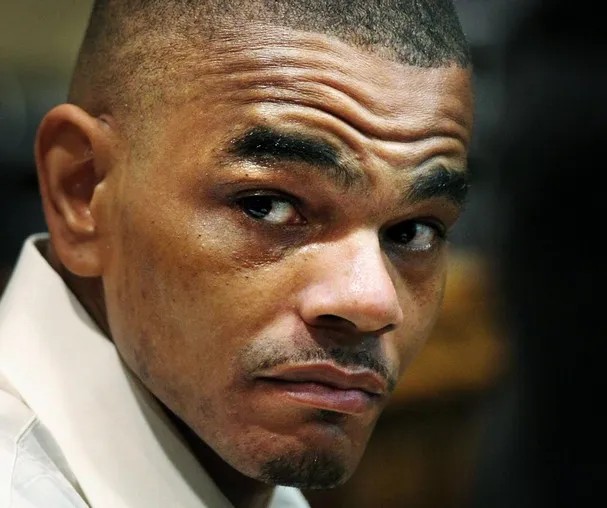
Thomas Francis Edwards: The Bethesda Butcher
Overview
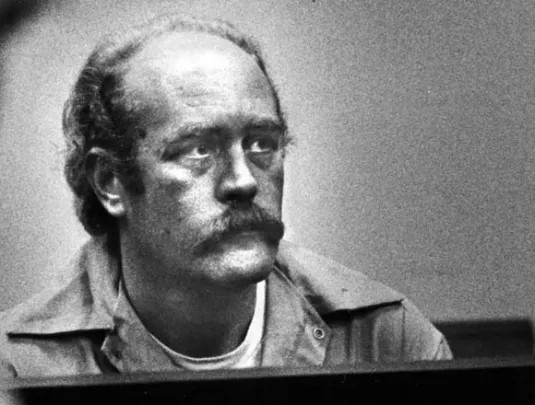
Thomas Francis Edwards was a serial killer known as "The Bethesda Butcher" who committed a series of brutal crimes in Maryland and California between 1970 and 1981. For more than a decade, the savage murders of two young women in the affluent suburbs of Washington, D.C., remained a terrifying mystery, instilling fear in the community. Edwards was eventually captured and convicted for a separate, shockingly violent attack in California that killed a 12-year-old girl and critically injured her friend. He was sentenced to death and spent over two decades on death row before succumbing to cancer in 2009. Years after his death, advances in DNA technology definitively linked him to the Maryland cold cases, finally bringing a measure of resolution to the victims' families and closing a dark chapter in the region's history.
Early Life and Troubled Background
Thomas Francis Edwards was born in 1944 in Bethesda, Maryland, and was adopted by a prosperous family. His adoptive father was a government official in Washington, D.C. After his father's death in the late 1950s, his widowed mother moved with Edwards and his brother, Terry, to a new home. It was during his teenage years that Edwards began to exhibit disturbing and violent behavior. He was known to terrorize local children, sometimes menacingly walking the streets with a black bullwhip.
His criminal tendencies escalated into adulthood. In 1963, he was involved in an attack on a man, and his criminal record grew to include parole violations. These early offenses led to periods of involuntary commitment for psychiatric evaluation. During one institutionalization, staff documented Edwards's claims of having a separate, violent personality—a "beast" that emerged, particularly around women. Despite these clear warning signs, he was eventually released and his violent trajectory continued, culminating in a series of horrific murders.
The Bethesda Butcher Murders
In the winter of 1970, a span of just twelve days saw two vicious murders that terrorized Montgomery County, Maryland, and earned their perpetrator the moniker "The Bethesda Butcher."
The first victim was 14-year-old Sherry Bristol Kennedy. On January 16, 1970, she left a friend's apartment near the Montgomery Mall to walk home after a minor disagreement. While passing through Cabin John Creek Regional Park, she was abducted by Edwards. He subjected her to a horrific attack, stabbing her seven times in the head with an ice pick, slashing her throat, and shooting her with a .22 caliber pistol. Her body was discovered later that day under a bridge in a snowy ravine, the ice pick still embedded in her skull. An autopsy found no evidence of sexual assault.
Less than two weeks later, on January 28, 33-year-old schoolteacher Catherine O'Brien Kalberer was found murdered in her Bethesda apartment. She had been reported missing after failing to show up for her new job at a junior high school. The investigation revealed she was likely ambushed in her kitchen after returning from grocery shopping. She was struck on the head, her throat was slashed, and she was stabbed multiple times in the chest and abdomen. The killer then dragged her body to the bedroom and continued to mutilate it.
The brutality of these crimes sparked widespread fear. A third murder around that time, of 18-year-old FBI clerk Donna Sue Oglesby in Alexandria, Virginia, was publicly speculated to be connected due to its ferocity. However, authorities did not officially link the case, and records later indicated Edwards was incarcerated for a parole violation at the time of Oglesby's death.
Murder in California
After being released from prison in Maryland, Edwards moved to California. On September 19, 1981, he was driving his truck in the Cleveland National Forest in Orange County when he encountered two 12-year-old girls, Vanessa Iberri and Kelly Cartier. The two friends were on a camping trip with Vanessa's mother and were walking along a dirt road.
Edwards drove past the girls, then turned his vehicle around and approached them. He called out, "Hey girls," to get their attention. When they turned towards him, he opened fire with a .22 caliber pistol. Vanessa was struck between the eyes and killed instantly. Kelly was shot in the head but miraculously survived. The attack was witnessed by a passerby who, seeing Edwards's truck speed away, followed him and managed to write down the license plate number before contacting the police.
The Victims
- Sherry Bristol Kennedy, 14 — January 16, 1970, in Potomac, Maryland. A high school freshman described by a classmate as smart, beautiful, and full of life, her kindness left a lasting impression on those who knew her.
- Catherine O'Brien Kalberer, 33 — January 28, 1970, in Bethesda, Maryland. A dedicated teacher who was about to start a new position at Takoma Park Junior High School when her life was tragically cut short.
- Vanessa Iberri, 12 — September 19, 1981, in Cleveland National Forest, California. A seventh-grade student at Lake Elsinore Junior High School, she was on a weekend camping trip with her best friend and family when she was murdered.
Investigation and Capture
The witness to the shooting in the Cleveland National Forest provided a crucial lead: the license plate number of Edwards's truck. This information quickly identified him as the suspect, and a multi-state manhunt was launched. Police departments across the country were put on alert.
The search for Edwards ended on September 28, 1981, nine days after the attack. He was located and arrested without incident at a Holiday Inn in College Park, Maryland, not far from where he had committed his first known murders over a decade earlier. He was subsequently extradited to California to face charges for the murder of Vanessa Iberri and the attempted murder of Kelly Cartier.
In the years following, detectives in Montgomery County, Maryland, continued to investigate the cold-case murders of Sherry Kennedy and Catherine Kalberer, with Edwards remaining their primary suspect. A key piece of evidence was a green army jacket seized from his home in 1970 which had a small bloodstain on it.
Trial and Sentence
Thomas Francis Edwards was convicted in March 1983 of the first-degree murder of Vanessa Iberri and the attempted murder of Kelly Cartier. The jury found true the special circumstance of "lying in wait," making him eligible for the death penalty.
The penalty phase of his trial proved to be a prolonged and complex legal battle. The first penalty trial resulted in a hung jury, unable to unanimously agree on a sentence. A second penalty trial was convened with a new jury. During this trial, Edwards fired his public defenders and refused to present a defense, telling friends he believed he deserved to die for his crimes. This jury returned a verdict of death in June 1985.
Before the sentence could be formally imposed, Edwards changed his mind and asked for legal representation again. His newly reappointed attorney successfully argued for a new penalty trial. Finally, in October 1986, a third jury returned a death sentence. On December 12, 1986, a Superior Court judge upheld the verdict, and Thomas Francis Edwards was formally sentenced to die in the gas chamber.
Aftermath and Posthumous Identification
Edwards spent the next 22 years on death row at San Quentin State Prison, his case moving through the lengthy appeals process. In December 2008, suffering from lung cancer, he was transferred to the California Medical Facility in Vacaville. On February 14, 2009, Thomas Francis Edwards died of natural causes at the age of 65. Upon hearing the news, Vanessa Iberri's father, Joseph, expressed a mixture of relief that his daughter's killer was dead and anger that the execution had never been carried out.
Meanwhile, the investigation into the Maryland murders had made a critical breakthrough. In 1985, cold-case detectives revisited the evidence. With the advent of new DNA technology, the small bloodstain on the army jacket seized from Edwards's home in 1970 was re-examined. In January 2012, three years after Edwards's death, forensic analysis confirmed the blood belonged to Sherry Bristol Kennedy. This definitive link was enough for the Montgomery County Police Department to officially close the cases of both Sherry Kennedy and Catherine Kalberer, naming Thomas Francis Edwards as their killer.