Michaiah Shobek: The “Angels of Lucifer” Killer
Background and Arrival in the Bahamas
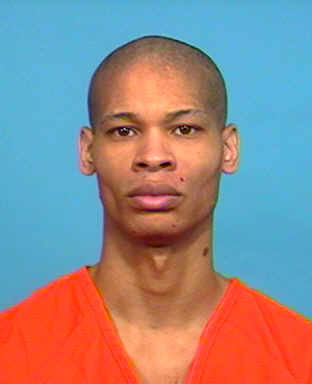
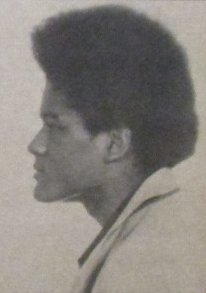
Michaiah Shobek was an American serial killer responsible for murdering three American visitors in Nassau, Bahamas, during a period lasting from December 1973 through January 1974. Born James Michael Shoffner in Milwaukee, Wisconsin, in 1954, he adopted the name Michaiah Shobek shortly before the killings. His name has also appeared in historical accounts as Michiah Shobek.
Shobek was raised by his mother, Juanita Spencer, who worked as a school cleaner in Milwaukee. He reportedly never knew his father. Accounts of his childhood describe serious behavioral and psychological difficulties. When he was approximately two years old, he contracted a viral illness that was said to have caused lasting brain damage. Members of his family also experienced significant mental-health problems, and at least two of his half-brothers were institutionalized.
During his youth, Shobek repeatedly came into contact with the authorities. He was reportedly arrested numerous times as a juvenile for offenses that included theft, assault, purse-snatching, marijuana possession, setting off false fire alarms and using vehicles without authorization. Efforts were made to place him in structured institutions, but he continued to experience instability and behavioral problems.
As a young adult, Shobek worked as a handyman and reportedly dreamed of becoming a songwriter. In November 1973, at approximately 19 years old, he traveled to the Bahamas. He began using the name Michaiah Shobek and moved among Nassau’s tourist areas. Within weeks of his arrival, American visitors began dying in attacks that initially appeared unrelated.
The Murder of Paul V. Howell
The first known victim was Paul V. Howell, a 50-year-old attorney from Massillon, Ohio. Howell had traveled to Nassau to attend a professional convention. On the evening of December 5, 1973, he was inside his hotel room when someone knocked on his door.
When Howell opened the door, he was immediately attacked. He was stabbed in the chest and throat and died from his wounds. The sudden nature of the assault left investigators with little immediate evidence concerning the attacker’s identity or motive. Police initially considered the possibility that Howell had interrupted burglars or had been targeted during an attempted robbery.
Because there was no obvious connection between Howell and his killer, the case remained difficult to explain. His body was returned to Ohio for funeral services, while the person responsible remained free in Nassau.
The Murder of Irvin Bernstein
Approximately six weeks later, Shobek encountered 44-year-old accountant Irvin Bernstein, whose name has also been reported in historical accounts as Irwin Bornstein or Irwin Borstein. Bernstein was an American businessman who arrived in Nassau from Miami on January 17, 1974.
Shobek reportedly approached Bernstein at or near the airport and offered to drive him to his destination. Bernstein accepted the ride, apparently believing that Shobek was providing legitimate transportation. Instead of taking him safely to his hotel, Shobek drove him toward a more isolated area.
During the journey, Shobek produced a knife. Bernstein attempted to escape by opening the vehicle’s door and running, but Shobek pursued and caught him. Bernstein was repeatedly stabbed and left near Yamacraw Beach in eastern Nassau.
On January 19, 1974, an employee of the Bahamas Ministry of Fisheries discovered Bernstein’s body on the beach. Bernstein had been stripped of most of his clothing and had suffered multiple stab wounds. Investigators found physical evidence that would eventually provide a direct link to Shobek.
A pen and a pair of sunglasses associated with Shobek were reportedly discovered near the body. A black bag containing some of Bernstein’s papers was found several miles away on Paradise Island. Shobek’s driver’s license was also found among the discarded property, creating a significant connection between him and the crime. After Shobek was taken into custody, investigators reportedly found an item belonging to Bernstein in his possession.
The Murder of Katie Smith
Shobek’s final confirmed victim was Katie Smith, a 17-year-old student from Detroit, Michigan. Smith was visiting the Bahamas with a supervised group of students. She was seen with Shobek shortly before she disappeared, placing him in direct contact with her during the final hours of her life.
On January 26, 1974, Smith was killed in Nassau. Her body was subsequently discovered in a ditch near a cardboard box. Unlike Howell and Bernstein, who had been stabbed, Smith had been strangled.
The murder of a teenage visitor caused particular alarm among local authorities and members of the tourist community. Witness information indicating that Smith had recently been walking with Shobek quickly drew attention toward him. Investigators began connecting him not only to Smith’s death but also to the two earlier murders.
Confirmed Victims
- Paul V. Howell, 50 — Murdered on December 5, 1973, in a hotel room in Nassau, Bahamas. Howell was an attorney from Massillon, Ohio, who was attending a convention. He was stabbed in the chest and throat after answering a knock at his hotel-room door.
- Irvin Bernstein, 44 — Murdered on January 18, 1974, in Nassau, Bahamas. His surname and first name have also appeared as Irwin Bornstein or Irwin Borstein in some accounts. Bernstein was an American accountant who accepted a ride from Shobek after arriving in Nassau. He was stabbed repeatedly, and his body was found at Yamacraw Beach on January 19, 1974.
- Katie Smith, 17 — Murdered on January 26, 1974, in Nassau, Bahamas. Smith was a student from Detroit visiting with a chaperoned group. She was strangled, and her body was found in a ditch after witnesses reported seeing her with Shobek.
Arrest and Confessions
Shobek was arrested shortly after Katie Smith’s murder. By January 30, 1974, he had appeared before a magistrate and was facing three counts of first-degree murder. The evidence surrounding Bernstein’s death was especially important because items connected to Shobek had been recovered near Bernstein’s body and among the victim’s discarded belongings.
During questioning and later legal proceedings, Shobek admitted responsibility for the killings. He made bizarre religious statements concerning the victims, describing them as “angels of Lucifer.” He claimed that God had instructed him to kill them. These statements led to extensive debate over his mental condition and whether he understood the nature and consequences of his actions.
Shobek’s defense argued that he suffered from serious mental illness, diminished mental capacity and the effects of childhood brain damage. His history of behavioral problems, family mental illness and institutional treatment was presented as evidence that he was psychologically disturbed. Nevertheless, the prosecution maintained that the physical evidence and his actions demonstrated criminal responsibility.
Trial and Death Sentence
Bahamian prosecutors did not need to secure convictions for all three murders to obtain a death sentence. Shobek was brought to trial for the killing of Irvin Bernstein, the case supported by the strongest collection of physical evidence.
Shobek was convicted of Bernstein’s murder in 1974 and sentenced to death. His admissions connected him to the murders of Howell and Smith, although his execution resulted from the conviction involving Bernstein.
Legal challenges delayed the carrying out of the sentence. American officials and attorneys acting on behalf of Shobek and his family argued that important information concerning his mental condition had not been adequately presented to the Bahamian courts. His execution was postponed while appeals and requests for intervention were considered.
Questions About Additional Victims
During psychiatric examinations and investigations, authorities learned that Shobek had traveled between the United States and the Bahamas before the confirmed killings. This raised questions about whether he might have committed other violent crimes.
No additional murders were conclusively established. Although some accounts describe him as possibly responsible for more than three victims, Paul Howell, Irvin Bernstein and Katie Smith remain the three confirmed people whose deaths were attributed to him.
Execution
After his appeals failed, Shobek was scheduled to be executed at Fox Hill Prison in Nassau. Attorneys representing his mother made a final request for American intervention, including an appeal directed toward the administration of President Gerald Ford. The effort did not stop the sentence from being carried out.
On October 19, 1976, Michaiah Shobek was executed by hanging at Fox Hill Prison. He was approximately 22 years old. His execution made him the first American citizen to be hanged in the Bahamas in approximately 15 years.
Legacy of the Case
Shobek’s crimes created fear in a country heavily dependent on international tourism. His victims had traveled to Nassau for ordinary reasons: a professional convention, a business trip and a supervised student vacation. None had any known connection to one another before they encountered Shobek.
The murders were committed within less than two months. Howell was attacked in what should have been the security of his hotel room. Bernstein was deceived into accepting transportation from a stranger and taken to an isolated location. Smith was a teenage tourist separated from her group and killed after being seen in Shobek’s company.
The case also became controversial because of Shobek’s age, reported brain damage and apparent psychiatric problems. His claims about divine commands and “angels of Lucifer” were central to his insanity defense, but they did not prevent his conviction or execution. The confirmed deaths of Paul V. Howell, Irvin Bernstein and Katie Smith left three American families grieving and made Michaiah Shobek one of the most notorious serial killers in Bahamian history.