Adolph Theodore Laudenberg: The Santa Strangler
Background
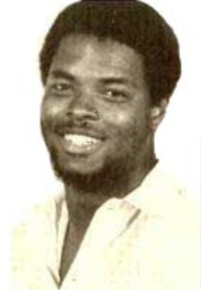
Adolph Theodore Laudenberg was an American serial killer and sexual predator whose crimes remained unsolved for nearly three decades. Born on June 13, 1926, in Lexington, Kentucky, he later settled in California and worked at several occupations, including as a security guard and a taxicab driver. His knowledge of the streets around San Pedro, a harbor community in Los Angeles, gave him opportunities to encounter vulnerable women and move through the area without attracting immediate suspicion.
Laudenberg became known as the “Santa Strangler” or “Santa Claus Strangler” because the earliest murder conclusively connected to him occurred during the Christmas holiday in 1972. Investigators ultimately associated him with four similar killings committed in San Pedro and San Francisco between December 1972 and March 1975. He was also investigated as a possible suspect in two additional San Francisco murders, although those cases were never conclusively tied to him.
Pattern of the Crimes
The women associated with Laudenberg were generally middle-aged or elderly and were often living with personal difficulties, poor health, alcohol dependency, loneliness, or financial hardship. Several were last seen in or near neighborhood bars. Laudenberg, who had worked as a cab driver, was familiar with drinking establishments and with people who depended on taxis or strangers for transportation late at night.
The known attacks followed a disturbing pattern. The victims were sexually assaulted and strangled, and several were found partially or completely unclothed. Some were killed in their homes or hotel rooms, while others were abandoned outdoors. The similarities in victim selection, sexual violence, and method of death caused detectives to believe that the murders were connected.
Known and Attributed Victims
- Lois Petrie, 43 — December 26, 1972 — San Pedro, Los Angeles, California: Petrie was a widow whose husband had recently died of cancer. She was last seen around midnight on Christmas night, December 25, after leaving a neighborhood bar. When she failed to appear for a holiday meal the following day, she was found dead in the bedroom of her apartment at 346 West Tenth Street. She was partially unclothed, had been sexually assaulted, and had died from strangulation. The evidence preserved from her body later provided the DNA profile that led directly to Laudenberg’s arrest and conviction.
- Catherine Medina, 50 — August 19, 1974 — Harbor Lake Recreational Park, San Pedro, California: Medina was drinking in a local bar on August 18 when her husband arrived and argued with her. After the couple left the establishment, Medina ran away from him and entered a vehicle driven by an unidentified man. She was not seen alive again. Her nude body was discovered the next day behind bushes in Harbor Lake Recreational Park near South Vermont Avenue. Investigators determined that she had been sexually assaulted and strangled. Laudenberg became the principal suspect, but he was never prosecuted for her death.
- Anna Felch, 54 — September 4, 1974 — Westmont Drive, San Pedro, California: Felch worked at a hot dog stand near Cabrillo Beach. She was last seen leaving a San Pedro bar at approximately 1:30 in the morning on September 4. At about 7:30 that morning, a construction worker found her nude body in the 1200 block of Westmont Drive. She had been sexually assaulted and manually strangled. The location, timing, and circumstances of the crime closely resembled the Medina murder committed less than three weeks earlier. Police considered Laudenberg the primary suspect but did not charge him.
- Leah Griffin, 60 — March 21, 1975 — Stratford Hotel, San Francisco, California: Griffin was a retired legal secretary who reportedly struggled with alcohol and had recently been diagnosed with breast cancer. She was attacked in her room at the Stratford Hotel in San Francisco. Her assailant bound and sexually assaulted her before strangling her. Laudenberg later reportedly described killing one woman in San Francisco in addition to three women in San Pedro, causing investigators to identify Griffin as the likely fourth victim in his account.
Additional Suspected Victims
- Irene Hind, 55 — March 12, 1974 — San Francisco, California: Hind operated Irene’s Domar Club, a bar on Larkin Street. She was known for assisting people who visited her establishment. Hind was found sexually assaulted and strangled. Because the crime resembled the attack on Leah Griffin and occurred during the period when Laudenberg was believed to have been active, authorities considered him a possible suspect. No physical evidence conclusively established that he killed her.
- Maude Burgess, 83 — November 1974 — San Francisco, California: Burgess was a retired woman who helped manage the apartment building where she lived. She was found sexually assaulted and strangled inside her apartment. Investigators examined Laudenberg as a possible suspect because of the similarity to other San Francisco attacks. However, a partial fingerprint recovered from the scene did not match him, and the murder was never conclusively attributed to Laudenberg.
Early Suspicions and Confessions
Laudenberg attracted police attention while the murders were still being investigated. Detectives questioned him on July 15, 1975, about the deaths of Lois Petrie, Catherine Medina, and Anna Felch. He denied responsibility, and investigators did not then possess enough physical evidence or eyewitness testimony to arrest him.
During the same period, Laudenberg reportedly made a startling admission to a woman who was becoming a member of his family. He claimed that he had killed four women, describing three murders in San Pedro and one in San Francisco as his “four sins.” The woman reported what she had heard, but investigators could not independently prove the confession. DNA profiling was not yet available, and the biological evidence collected from the scenes could not identify an individual offender using the technology of the 1970s.
The cases gradually became cold. Laudenberg continued living without a serious criminal record, making it difficult for investigators to obtain fingerprints or biological samples that could be compared with the preserved evidence. His freedom lasted because the police had suspicion and reported admissions but lacked the forensic link required to place him at a murder scene.
The Investigation Is Revived
In March 2002, another former daughter-in-law contacted authorities after Laudenberg allegedly spoke to her about the murders in greater detail. Her account closely resembled the admission he had reportedly made decades earlier. Detectives reopened the San Pedro cases and reviewed evidence preserved from the victims, particularly the biological material recovered during the investigation of Lois Petrie’s death.
Investigators faced a problem because Laudenberg had no qualifying DNA profile in a criminal database. Police therefore placed him under surveillance and arranged an undercover encounter. An officer met with him at a restaurant and engaged him in conversation. When Laudenberg finished drinking coffee and left his cup behind, officers collected the discarded item. Laboratory technicians recovered his DNA from it.
The DNA profile from the cup matched the biological evidence preserved from the sexual assault of Lois Petrie. After approximately thirty years, investigators finally had scientific evidence placing Laudenberg in direct contact with the victim during the crime.
Arrest and Prosecution
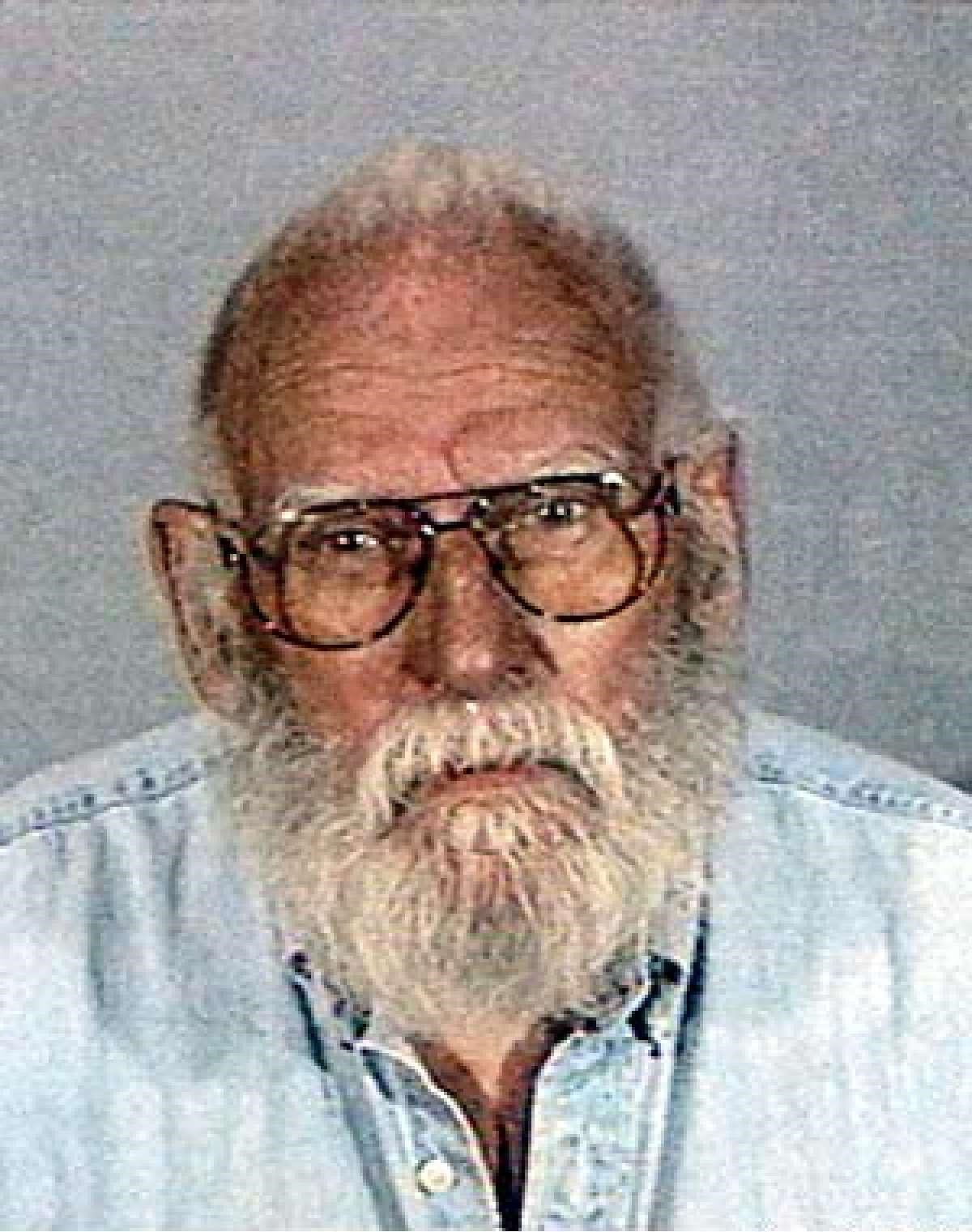
Police arrested the 77-year-old Laudenberg on September 5, 2003. At the time, he was living in a camper parked in the Los Angeles area. He was charged with the murder of Lois Petrie, and bail was set at one million dollars. Detectives continued to identify him as the primary suspect in the murders of Catherine Medina and Anna Felch, but prosecutors filed no charges in those cases.
Laudenberg denied killing Petrie and challenged the police collection of his DNA. His attorneys argued that taking genetic material from the coffee cup without a warrant violated his privacy. The courts rejected that claim, concluding that he had abandoned the cup after leaving it behind and therefore no longer had a reasonable expectation of privacy in the item.
In November 2006, a jury convicted Laudenberg of first-degree murder for the killing of Lois Petrie. He received a sentence of life imprisonment with the possibility of parole. Although investigators believed the evidence and his reported statements connected him to at least three additional murders, Petrie’s death remained the only killing for which he was criminally convicted.
Death and Legacy of the Investigation
Adolph Theodore Laudenberg died in California custody on June 26, 2015, at the age of 89. He never faced trials for the deaths of Catherine Medina, Anna Felch, or Leah Griffin, and he continued to deny responsibility after his arrest. The murders of Irene Hind and Maude Burgess also remained unproven suspicions rather than established crimes committed by him.
The Laudenberg investigation demonstrated the importance of preserving biological evidence from unsolved murders. Material collected in 1972, long before modern DNA profiling existed, eventually identified the man who had assaulted and strangled Lois Petrie. The case also illustrated how repeated private admissions, witness persistence, cold-case investigation, and advances in forensic science could combine to solve a murder decades after the crime.
Although Laudenberg was legally convicted of only one murder, investigators attributed four killings to him based on the common method of attack, the locations of the crimes, his reported confessions, and the DNA evidence in the Petrie case. His suspected victim count has sometimes been placed as high as six when the unresolved murders of Irene Hind and Maude Burgess are included. The complete extent of his crimes died with him, leaving several families without the certainty of a courtroom judgment.