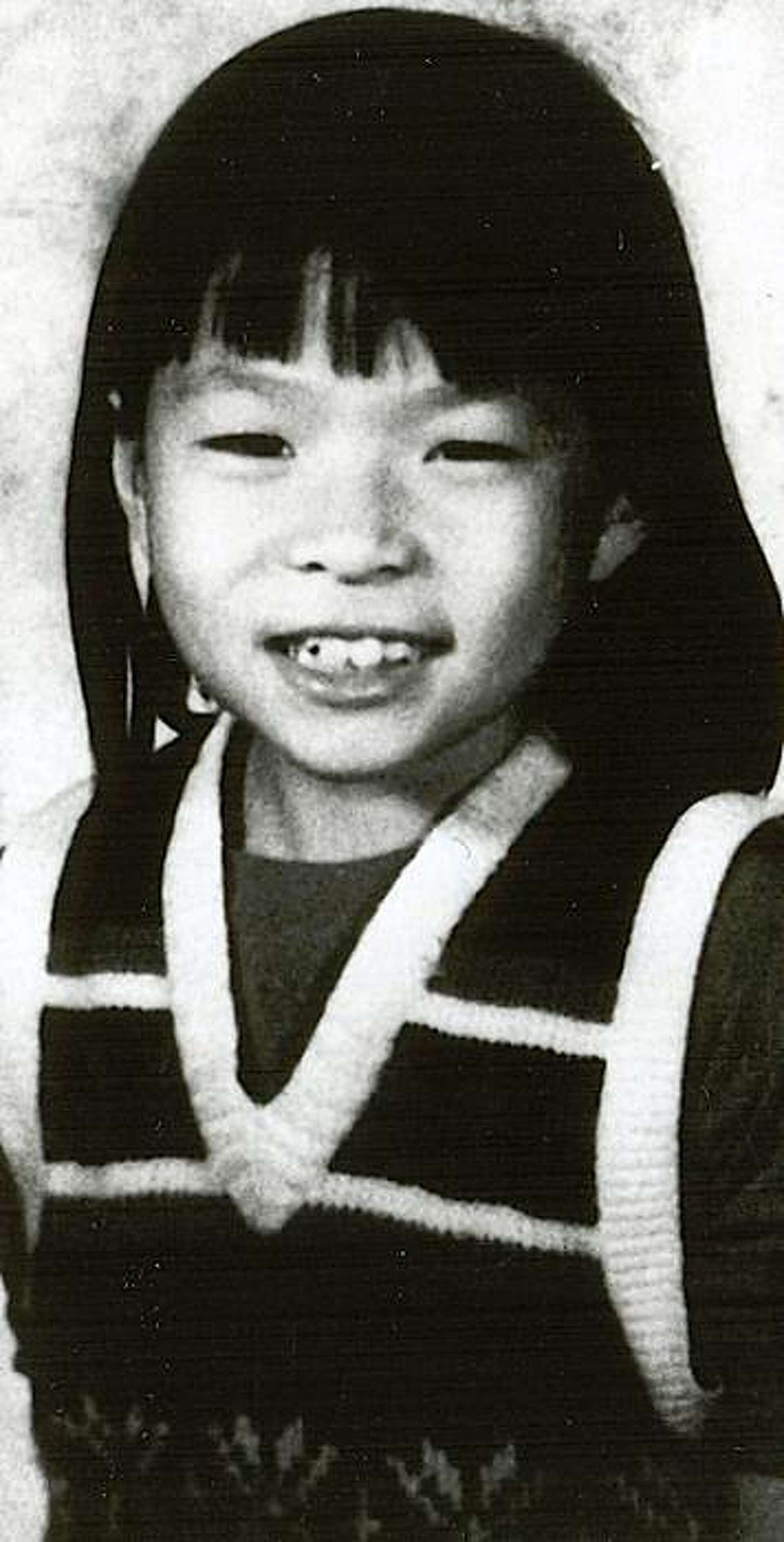
Maude Burgess, an 83-year-old woman, was found sexually assaulted and strangled inside her San Francisco apartment on November 1, 1974. She was retired but continued to play an active role in the place she called home, helping manage the apartment building where she lived. That responsibility would have made her a familiar presence to residents and visitors alike—a person who helped attend to the ordinary needs of the building and contributed to the daily life of her small community. Her murder transformed that familiar setting into a crime scene and left behind questions that would remain unanswered for decades.
The attack occurred within the private space where Burgess should have felt most secure. Someone entered or was allowed into her apartment, sexually assaulted her, and ended her life by strangulation. The available information does not reveal whether there were signs of forced entry, whether anything was taken, or whether Burgess knew the person who attacked her. It is also unclear who discovered her, how long she had been dead when she was found, or whether neighbors heard or noticed anything unusual around the time of the killing.
For the people who knew Burgess, the circumstances must have made the loss especially devastating. She had lived a long life and remained involved in the management of her building rather than withdrawing entirely into retirement. Her home was not merely the place where she slept; it was connected to her responsibilities, her neighbors, and the routines that gave shape to her days. The violence committed against her inside that home represented a profound violation of both her personal safety and the trust that naturally exists within a residential community.
Investigators recovered at least one important piece of physical evidence from the crime scene: a partial fingerprint. In an era before modern DNA profiling and computerized fingerprint systems became routine investigative tools, such a print offered the possibility of identifying or eliminating suspects. However, a partial impression can be difficult to use, particularly when it lacks enough clear ridge detail for a definitive comparison. In Burgess’s case, the fingerprint did not lead authorities to an arrest or provide the breakthrough needed to establish who had entered her apartment and killed her.
Years later, investigators examined Adolph Theodore Laudenberg as a possible suspect. Laudenberg, a former cab driver and security guard, became the focus of renewed attention in connection with a series of sexual assaults and strangulation murders committed against women in California during the 1970s. Several of those victims were middle-aged or elderly women, and the similarities between their deaths caused detectives to reconsider whether Burgess might have been attacked by the same man.
The suspicion surrounding Laudenberg was not based solely on the general method of attack. He reportedly made incriminating statements to women in his family about having killed several women, including one in San Francisco. Those statements eventually helped revive investigations into a number of long-cold murders. Advances in forensic science later connected him through DNA to the 1972 sexual assault and strangulation of Lois Petrie in San Pedro, leading to his arrest and eventual conviction in that case.
Laudenberg was also associated with other attacks involving women who had been sexually assaulted and strangled. The known or suspected cases shared disturbing characteristics, including vulnerable victims, sudden encounters, sexual violence, and death by strangulation. Burgess’s murder appeared similar enough that investigators had reason to consider whether she had become another of his victims during the period when he was moving between Southern California and San Francisco.
The physical evidence from Burgess’s apartment, however, created a serious obstacle to conclusively linking Laudenberg to her murder. The partial fingerprint recovered at the scene was compared with him and did not match. That finding meant the print could not be used to place Laudenberg inside her apartment. Although a nonmatching partial fingerprint does not necessarily establish who committed the murder or explain when the print was left, it denied investigators the direct forensic link they needed to build a case against him.
No publicly documented evidence shows that Laudenberg was arrested or charged in connection with Burgess’s death. He was never placed on trial for her murder, and no jury was asked to determine whether he was responsible. His later conviction for another woman’s killing did not legally resolve the Burgess case. Similarities between crimes can direct investigators toward a possible suspect, but similarities alone cannot substitute for evidence proving that a particular person committed a particular murder.
Laudenberg’s conviction came from the killing of Lois Petrie, who was found partially nude, sexually assaulted, and strangled in her San Pedro apartment after Christmas in 1972. Investigators obtained his DNA decades later from a discarded coffee cup and matched it to biological evidence preserved from Petrie’s case. He was arrested in 2003, convicted of first-degree murder in 2006, and sentenced to life in prison. That forensic success demonstrated that he had committed at least one attack bearing notable similarities to the crime against Burgess.
Despite the later evidence establishing Laudenberg as a murderer, investigators were unable to prove that he killed Burgess. No known DNA match, confession specifically corroborated by details from her apartment, eyewitness identification, or other decisive evidence tied him to the scene. The partial fingerprint instead remained an unresolved clue—one that did not belong to the man investigators had considered and that apparently did not identify another suspect.
There is no reliable public record indicating that anyone else was arrested for the murder. No alternative suspect is known to have been formally charged, prosecuted, tried, or convicted. The identity of the person who left the partial fingerprint has not been publicly established, and it is unknown whether the impression belonged to the killer, an innocent visitor, a resident, a maintenance worker, or someone who had entered the apartment before the crime occurred.
The passage of time made the investigation increasingly difficult. Witnesses moved away or died, memories faded, and physical evidence collected in 1974 may not have been preserved under conditions suitable for later forensic testing. Records from the original investigation may also remain unavailable outside police archives. Even when advances in DNA technology revived other cases connected to Laudenberg, Burgess’s murder apparently lacked the biological evidence necessary to produce the same kind of conclusive result.
Her case therefore occupies a painful place between suspicion and proof. Investigators had a plausible person to examine, and his known crimes gave them compelling reasons to look closely at him. Yet the evidence available in Burgess’s apartment did not establish his guilt. Responsible examination of the case requires recognizing both sides of that history: Laudenberg was a convicted murderer whose pattern resembled the attack on Burgess, but he was never proven to be the person who took her life.
For Burgess’s loved ones and neighbors, the absence of a resolution would have prolonged the anguish of her death. A conviction cannot restore a victim, but it can answer the central question of who was responsible and publicly acknowledge the truth of what occurred. In this case, even that limited form of closure never arrived. The person who entered her home, subjected her to a brutal assault, and strangled her was never conclusively identified.
The details that survive reveal only a portion of Burgess’s life, but they show that she was more than an entry in an old homicide record. She was a retired woman who continued to make herself useful by helping care for the building in which she lived. Residents likely knew her through ordinary encounters in hallways, near the entrance, or while dealing with the small issues that arise in apartment living. Her daily presence would have been woven into the character of the building, making her sudden and violent absence impossible to ignore.
Her age and vulnerability deepen the cruelty of the crime, but they should not define the whole of her story. Burgess had lived through more than eight decades of family experiences, personal struggles, historical change, and relationships that are largely absent from the surviving public account. The unknown assailant deprived her not only of the remaining years of her life but also of the dignity and security she deserved within her own home.
Maude Burgess’s murder remains unresolved. Adolph Laudenberg was investigated because her sexual assault and strangulation resembled attacks attributed to him, but the partial fingerprint recovered from her apartment did not match his. He was never charged, tried, or convicted for her death, and no other person has been publicly identified as her killer. The case endures as a story of a woman whose life was violently taken, an important clue that failed to reveal the attacker, and a family and community left without a definitive answer about who was responsible.