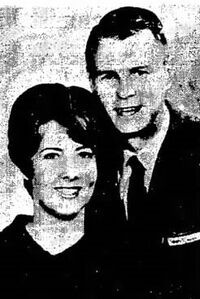
Debra Watterson Vuylsteke tragically lost her life on December 7, 1987, in a catastrophic event involving Pacific Southwest Airlines Flight 1771. The flight, en route from Los Angeles to San Francisco, was hijacked by David Burke, a disgruntled former employee of USAir, the parent company of Pacific Southwest Airlines. Burke had been terminated from his position for petty theft and suspected involvement in a narcotics ring.
In a desperate and vengeful act, he boarded the flight with a concealed firearm, which he used to kill the pilots and several passengers, including his former supervisor, before causing the plane to crash near Cayucos, California. All 43 people on board, including Debra Watterson Vuylsteke, perished in the crash.
The incident was one of the deadliest mass murders in California's history and led to significant changes in airline security protocols. Investigations revealed that Burke had smuggled the weapon onto the plane despite existing security measures, highlighting critical vulnerabilities in airport security at the time. The aftermath of the crash saw a thorough examination of security procedures, leading to stricter regulations and the eventual establishment of more rigorous screening processes for passengers and their belongings.
In terms of legal actions, the crash prompted numerous lawsuits from the families of the victims against USAir and Pacific Southwest Airlines. These lawsuits primarily focused on the airlines' failure to prevent Burke from boarding the flight with a weapon and their overall responsibility for the safety of their passengers. The legal battles were complex and drawn out, with settlements reached in many cases to compensate the families for their immense losses.
The tragic death of Debra Watterson Vuylsteke and the other victims of Flight 1771 remains a somber reminder of the importance of stringent security measures in aviation. The incident not only reshaped airline security policies but also underscored the devastating impact of workplace grievances when left unaddressed. The legacy of this tragedy continues to influence aviation safety standards to this day.