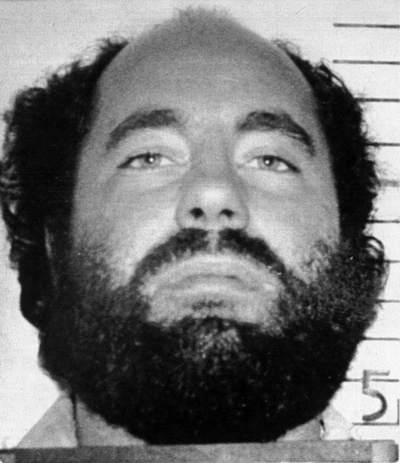
Thomas Steeples: The Nashville Computer Dealer Who Became a Serial Killer
Background and Double Life
Thomas E. “Tom” Steeples was a Nashville, Tennessee, businessman whose outwardly respectable life concealed cocaine addiction, financial problems, compulsive gambling, deception, and extreme violence. Born in Nashville in November 1944, Steeples owned a computer-related business, was married, and had children. To customers and acquaintances, he could appear confident, successful, and persuasive. Investigators later concluded that he used those qualities to gain the confidence of people he intended to exploit.
Steeples was known to spend time in Nashville bars, where he drank, gambled, used cocaine, and approached potential victims. He could present himself as a businessman with influential connections, tailoring his stories to the ambitions or financial needs of the people he met. His confirmed murder victims included a bar owner and a recently married couple who had come to Nashville hoping to build a career in country music.
Although Steeples died before he could be tried, investigators assembled physical, forensic, and circumstantial evidence connecting him to three Nashville murders committed between October 1993 and March 1994. He was also examined as a possible suspect in earlier unsolved crimes, including attacks in Georgia, but those additional cases were never conclusively attributed to him.
The Murder of Ronnie Bingham
Ronald Edward “Ronnie” Bingham, commonly known as Ronnie or “Ducas,” was the 46-year-old owner of the Corral Club, a neighborhood bar in Nashville. He was remembered as a generous and well-liked man who was willing to assist people experiencing financial or personal difficulties. Steeples reportedly knew Bingham and had discussed selling computer software or other business services to him.
At approximately 5:00 a.m. on October 17, 1993, a passerby noticed smoke coming from the Corral Club and called emergency services. Firefighters entered the building and found Bingham’s burned body seated in a chair. A gasoline container was discovered nearby, but the fire had not spread throughout the bar, indicating that the flames had been deliberately concentrated around the victim.
An autopsy established that Bingham had been shot at close range in the left side of the neck with a .38-caliber handgun before his body was set on fire. The bullet remained in his body and was recovered as evidence. His wallet was found in the rear parking lot, and money was missing, suggesting that robbery or the concealment of a financial dispute may have been part of the motive.
Investigators learned that Bingham had remained at the bar after closing to clean the premises. Another customer, remembered only as a man named Tom, had also been present. Police found Steeples’s business card inside the club. When questioned, Steeples admitted that he had been playing poker machines at the bar but claimed Bingham was alive when he left.
The investigation initially lacked enough evidence to charge him. The case became stronger after a witness disclosed that he had sold Steeples a .38-caliber handgun approximately one month before Bingham’s murder. The witness had previously fired the gun into a tree stump. Investigators recovered a projectile from the stump and compared it with the bullet removed from Bingham’s body. Ballistics testing determined that both bullets had been fired from the same weapon, directly linking a gun associated with Steeples to the killing.
The Phillips Murders
In March 1994, Robert William “Robbie” Phillips and his wife, Kelli Jean Gifford Phillips, arrived in Nashville from the San Diego area. Robbie, a 24-year-old former United States Navy sailor, hoped to establish himself as a country singer. Kelli, 28, supported his musical ambitions. The newly married couple had limited money and were unfamiliar with Nashville, making them vulnerable to someone claiming to have entertainment-industry influence.
On the evening of March 7, 1994, Robbie performed at the Stagecoach Lounge on Murfreesboro Road in South Nashville. Steeples was at the bar and began talking with Kelli while Robbie performed. He allegedly represented himself as a successful figure in the music business who could introduce Robbie to important contacts, arrange studio opportunities, and help advance his career.
Steeples bought drinks for the couple and spent approximately two hours gaining their confidence. His claims appeared credible to Robbie and Kelli, who had recently reached Nashville and were eager for an opportunity. Before leaving the lounge, Steeples learned where they were staying and promised to contact them after arranging meetings with music-industry representatives.
Later that night, Steeples went to the couple’s room at an Econo Lodge in Nashville. Once inside, he attacked both victims. Robbie and Kelli were beaten to death with a blunt object. Kelli was bound, sexually assaulted, and killed alongside her husband. Money the couple had been carrying was stolen.
The victims were discovered in their motel room on March 8, although official memorial and death records list March 7, 1994, as the date of death. Investigators concluded that the killings occurred during the night of March 7, shortly after the couple met Steeples at the Stagecoach Lounge.
Witnesses at the lounge remembered seeing a middle-aged man speaking with Robbie and Kelli. Their descriptions of the stranger, including his age, appearance, and claimed occupation, matched Steeples. Detectives began comparing the double homicide with the Bingham murder and recognized that Steeples had encountered all three victims in Nashville drinking establishments.
Forensic Evidence and Arrest
When detectives attempted to question Steeples about the Phillips murders, he disappeared. A search of his business produced evidence of cocaine use and revealed that his respectable public image concealed a chaotic personal life. Authorities located him several weeks later after a brief pursuit. Crack cocaine was reportedly found in his vehicle when he was taken into custody.
The most powerful evidence in the Phillips case came from biological material recovered from Kelli Phillips. DNA testing connected Steeples to her sexual assault. The forensic match, combined with eyewitness descriptions from the Stagecoach Lounge and evidence that he had deceived the couple about his music-business connections, placed him with the victims shortly before their deaths and linked him physically to the crime scene.
Investigators also used the Phillips case to strengthen their evidence in Ronnie Bingham’s murder. The matching ballistics evidence from the .38-caliber handgun, Steeples’s presence at the Corral Club, his business card at the scene, and his connection to the later motel killings led authorities to charge him with three counts of first-degree murder. He also faced an especially aggravated rape charge and drug-related charges.
Confirmed Victims
- Ronald Edward “Ronnie” Bingham, 46 — October 17, 1993 — Corral Club, Nashville, Tennessee: Bingham was shot at close range in the neck with a .38-caliber handgun while inside his bar. His body was then deliberately set on fire. Ballistics evidence connected the murder bullet to a handgun sold to Thomas Steeples.
- Robert William “Robbie” Phillips, 24 — March 7, 1994 — Econo Lodge, Nashville, Tennessee: Phillips, an aspiring country singer and former Navy sailor, was lured into trusting Steeples after being promised music-industry assistance. He was beaten to death in the motel room he shared with his wife.
- Kelli Jean Gifford Phillips, 28 — March 7, 1994 — Econo Lodge, Nashville, Tennessee: Kelli was bound, sexually assaulted, and beaten to death with her husband. DNA evidence recovered during the investigation linked Steeples to the sexual assault and double murder.
Possible Connection to Georgia Crimes
Steeples became a person of interest in at least one earlier Georgia case involving a killer or attacker who used deception to approach victims. The most frequently discussed case was the October 1992 attack on Heather Uffelman and Jeremy Rolfs in Marietta, Georgia. The couple was approached by a man using the name “Tom Johnson,” who claimed to need help testing expensive computer equipment at a hotel. The encounter developed into a violent robbery and assault. Uffelman was killed, while Rolfs survived.
Steeples attracted suspicion because of the attacker’s use of the name Tom, the computer-related story, the targeting of a couple, and the use of a hotel or motel as the setting for the crime. The method resembled the deception used against Robbie and Kelli Phillips. Nevertheless, Steeples was never charged in the Uffelman case, and no conclusive forensic evidence publicly established that he was the man who called himself Tom Johnson.
He was also discussed in connection with the April 23, 1992, murder of 22-year-old University of Georgia student Jennifer Lynn Stone in Athens. Stone was sexually assaulted and strangled in her off-campus residence. Steeples’s possible involvement remained speculative, and authorities did not formally establish him as her killer.
Death in Jail
Steeples was confined in a Davidson County jail while awaiting trial for three counts of first-degree murder, especially aggravated rape, and drug offenses. Prosecutors appeared to have a strong case against him, particularly because of the DNA evidence in the Phillips murders and the ballistics evidence in Bingham’s death.
While incarcerated, Steeples continued seeking cocaine. On July 26, 1994, cocaine was concealed with business papers and carried into the jail by his attorney, who was apparently unaware of the hidden drugs. Guards intercepted the package after Steeples grabbed the envelope and attempted to consume its contents. He survived after receiving medical treatment.
A second quantity of cocaine was smuggled into the detention facility in August. The drug was concealed inside the repaired waistband of a pair of sweatpants sent through another inmate. On August 10, 1994, Steeples ingested a massive amount of cocaine and died from an overdose. His death was treated as a suicide carried out before he could stand trial.
Because Steeples died in custody, no jury heard the murder evidence against him, and he was never convicted of the killings. His death also prevented investigators from questioning him further about unsolved crimes in Tennessee and Georgia.
Case Against Tillie Ruth Steeples
Evidence presented in later court proceedings showed that Steeples’s wife, Tillie Ruth Steeples, participated in delivering cocaine to him while he was incarcerated. Prosecutors alleged that she purchased cocaine, concealed it in packages and clothing, and arranged for it to enter the jail.
She was indicted on four cocaine-related counts involving the July 26 and August 10 incidents. The charges included delivering cocaine, sending drugs into a detention facility, and causing her husband’s death through the unlawful distribution of cocaine. In November 1996, she entered no-contest pleas to two charges connected with the July delivery. The two counts relating directly to the fatal August delivery were dismissed under the plea agreement.
Tillie Steeples received consecutive three-year sentences for a total of six years in prison. The Tennessee Court of Criminal Appeals later upheld the sentence. Court records stated that a life insurance policy worth approximately $580,000 was in effect at the time of Thomas Steeples’s death and that Tillie collected the proceeds after he died.
Legacy of the Investigation
Thomas Steeples’s confirmed crimes demonstrated how he used ordinary social environments and professional deception to locate vulnerable victims. Ronnie Bingham knew him as a businessman and bar customer. Robbie and Kelli Phillips encountered him as a seemingly influential stranger offering the opportunity they had traveled to Nashville to pursue.
The evidence indicated that Steeples killed for a combination of robbery, sexual violence, concealment, and personal gratification. He attempted to destroy evidence in Bingham’s case by burning the victim, while the Phillips murders displayed a calculated process of befriending, isolating, assaulting, and robbing a couple.
Although he is commonly classified as a serial killer responsible for three deaths, his full criminal history remains uncertain. His suicide ended the prosecution and left open the possibility that other victims were never identified. The three Nashville murders, however, were supported by a combination of eyewitness testimony, DNA evidence, ballistics findings, and Steeples’s documented contact with each victim shortly before death.