Gary Duane Rardon: A Four-Victim Serial and Spree Killer
Background and Early Life
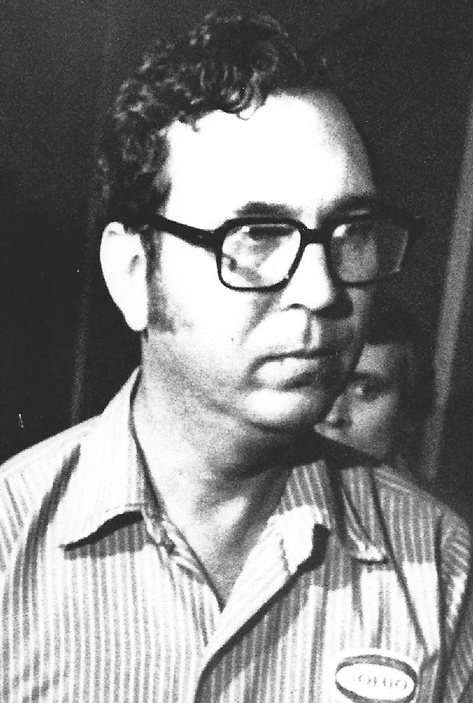
Gary Duane Rardon was born on September 4, 1943, in Wayne County, North Carolina. His father, William Harley Rardon, was a master sergeant in the United States Air Force, and the family moved as required by his military service. Rardon later attended Maconaquah High School in Bunker Hill, Indiana.
Rardon described his childhood as stable and disciplined. He claimed that his parents treated him well but said he frequently felt unable to meet their expectations. As a young man, he reportedly dreamed of becoming an FBI agent. Instead, while still in his teens, he entered the United States Navy and eventually went absent without leave. His first known killing occurred during this period and began a criminal history that would extend across several states.
The 1962 Killing of James Homer Smith
On July 7, 1962, 23-year-old James Homer Smith, a former United States Marine, entered a railroad station in Indianapolis, Indiana. Smith was preparing to drive east and asked whether anyone needed transportation. Rardon, then an AWOL sailor, accepted his offer.
During the journey, Rardon shot Smith twice in the head with a pistol. He placed the victim’s body inside Smith’s automobile and continued traveling in the stolen vehicle. Smith’s body was discovered 12 days later in Washington, Pennsylvania.
Rardon was arrested in December 1962 and charged with first-degree murder. He maintained that Smith had made an unwanted sexual advance and claimed that the shooting had been committed in self-defense. On April 19, 1963, Rardon pleaded guilty to the lesser charge of voluntary manslaughter. He received a sentence of two to 21 years in an Indiana prison.
A psychiatrist who examined Rardon during his incarceration described him in 1965 as near psychotic and extremely dangerous. Approximately two years later, however, the same psychiatrist concluded that the possibility of Rardon becoming violent again was minimal. Rardon was paroled on May 8, 1967, after serving only a portion of his sentence.
Additional Imprisonment and Return to Society
Rardon did not remain out of trouble after his release. In 1969, he was convicted of a violent robbery in Connecticut and sentenced to between three and five years in prison. After completing that sentence, he returned to civilian life, remarried and obtained employment as a machinist.
Rardon reportedly earned nearly $250 per week, a respectable wage at the time, but eventually became dissatisfied with his routine. He quit his job, separated from his wife and accumulated financial problems. He then obtained a shotgun belonging to his father-in-law and cut down its barrel, creating a concealable weapon that he carried during a series of robberies in Chicago.
The November 1974 Chicago Murder Spree
Between November 14 and November 18, 1974, Rardon murdered three working men during separate robberies in Chicago, Illinois. Each victim was alone or isolated when approached. Rardon used the sawed-off shotgun to shoot them at close range even after he had gained control of the situation and could have escaped with the stolen money.
The three Chicago killings occurred within five days. The victims were not known to Rardon and appear to have been chosen because they were accessible and vulnerable. The total amount of cash taken from the three men was approximately $161, along with clothing, identification documents and credit cards.
Confirmed Victims
- James Homer Smith, 23 — July 7, 1962 — Indianapolis, Indiana: Smith was a former Marine who offered Rardon a ride east from an Indianapolis railroad station. Rardon shot him twice in the head, concealed his body in Smith’s automobile and drove away in the vehicle. Smith’s remains were found 12 days later in Washington, Pennsylvania.
- Gene R. Ravenscraft, 28 — November 14, 1974 — Chicago, Illinois: Ravenscraft was working an evening shift alone in an office when Rardon entered with a sawed-off shotgun. Ravenscraft had been working additional hours to support his pregnant wife, Cynthia, and their children. Rardon shot him once in the left side of the neck, stole approximately $23 and took his coat.
- Herbert Noakes, 31 — November 16, 1974 — Chicago, Illinois: Noakes was a taxicab driver from Hammond, Indiana. He was preparing to marry his fiancée approximately one week later. Rardon entered his cab while concealing the shotgun beneath his clothing and demanded money. When Noakes turned toward him, Rardon shot him in the left side of the neck and escaped with approximately $63.
- Asher Gruenberg, 50 — November 18, 1974 — Chicago, Illinois: Gruenberg was a World War II veteran and a husband and father living in Skokie, Illinois. He was seated at his desk in a sales office when Rardon entered and shot him in the neck. Rardon stole Gruenberg’s wallet, approximately $75, his identification and several credit cards. Gruenberg’s son was scheduled to celebrate his bar mitzvah less than two weeks later.
The Evidence That Led to Rardon
After killing Asher Gruenberg, Rardon began using the victim’s credit cards while traveling south through Indiana and Kentucky in a stolen Chevrolet Corvette. At a gasoline station only a short distance from the murder scene, he signed a receipt using Gruenberg’s name. The station attendant recorded the Corvette’s license number on the receipt.
Additional credit-card receipts were mailed to Gruenberg’s widow, Rena, who turned them over to investigators. Federal agents traced the transactions and followed Rardon’s movements through several states. The receipts created a documentary trail that connected him to Gruenberg and the stolen automobile.
On January 16, 1975, FBI agents located Rardon at a Sears store in Louisville, Kentucky. When he was arrested, he was reportedly wearing Gene Ravenscraft’s stolen coat and carrying Asher Gruenberg’s identification and credit cards. Investigators also connected him to the stolen Corvette and the illegal sawed-off shotgun.
Confession and Criminal Charges
After his capture, Rardon confessed to all three Chicago murders. Illinois authorities charged him with three counts of murder and three counts of armed robbery. Federal prosecutors separately charged him with transporting a stolen vehicle across state lines and possessing an unregistered firearm.
In 1976, Rardon pleaded guilty to the federal charges and received a 12-year prison sentence. On February 17, 1977, he pleaded guilty to the Illinois murder and armed-robbery charges. He received three concurrent sentences of 40 to 100 years, which were ordered to run consecutively to his federal sentence.
At sentencing, prosecutors emphasized that the victims had been killed for small amounts of money even though none had posed a meaningful threat to Rardon. The judge described the crimes as among the worst he had encountered. Rardon turned toward the victims’ relatives in court and apologized, although his words provided little comfort to families who had lost husbands, fathers and loved ones.
Motive and Pattern of Violence
Rardon’s crimes were primarily associated with robbery and financial gain, but the murders went far beyond what was necessary to complete the thefts. In the Chicago cases, he approached isolated workers, displayed or concealed the shotgun, demanded money and then shot the victims despite their apparent compliance.
The victims were selected for convenience rather than because of personal disputes. Ravenscraft was alone in an office, Noakes was working alone in a cab and Gruenberg was seated alone at his desk. The similar circumstances, weapon and shot placement demonstrated a clear pattern during the 1974 spree.
Rardon later acknowledged that the killings had been cold-blooded. He also spoke of anger problems, excessive drinking and emotional detachment. None of these explanations accounted for his decision to execute unresisting victims after obtaining their money.
Years in Prison and Parole Hearings
Rardon served much of his state sentence in Illinois correctional facilities, including Danville and Graham. While incarcerated, he learned computer skills, received training in cooking and completed college-level business courses. His institutional behavior reportedly improved, and he avoided major disciplinary violations for many years.
Rardon became eligible for parole in 1987 but was repeatedly denied release. During later hearings, he expressed remorse and claimed that he had changed significantly beginning in the mid-1980s. He admitted that the Chicago murders were senseless and acknowledged the permanent suffering he had caused.
The Illinois Prisoner Review Board recognized his improved conduct but concluded that good behavior and remorse could not outweigh the severity of the crimes. Board members emphasized that Rardon had already killed James Smith and served a prison sentence before choosing to murder three additional men. They also noted that the Chicago victims had been successfully robbed and had not attempted to stop him from leaving, yet Rardon deliberately shot each of them.
Release and Death
Rardon completed his Illinois sentence on September 30, 2016. He was then transferred to federal custody to complete the sentence imposed for the stolen vehicle and unregistered firearm. He was released from federal prison on December 17, 2020, after spending nearly five decades incarcerated for his crimes.
Gary Duane Rardon died in Indianapolis, Indiana, on March 16, 2024. He was 80 years old. His criminal record included four known victims killed in Indiana and Illinois between 1962 and 1974.
Classification and Legacy
Rardon is commonly classified as both a serial killer and a spree killer. The 12-year separation between the killing of James Homer Smith and the Chicago murders supports his classification as a serial killer, while the three murders committed during a five-day period in November 1974 constitute a concentrated robbery and killing spree.
His case also illustrates the consequences of an inaccurate risk assessment. After his first homicide, Rardon was initially described as extremely dangerous, but a later evaluation suggested that he presented little likelihood of future violence. Following his parole and another prison sentence for robbery, he returned to society and ultimately murdered three additional men.
The lives lost to Rardon cannot be reduced to the modest amounts of money he stole. James Homer Smith was a young former Marine offering a stranger a ride. Gene Ravenscraft was working overtime for his growing family. Herbert Noakes was preparing to be married, and Asher Gruenberg was anticipating his son’s bar mitzvah. Their deaths left families permanently altered by a series of calculated and unnecessary acts of violence.