William Devin Howell: The New Britain Serial Killer
Overview
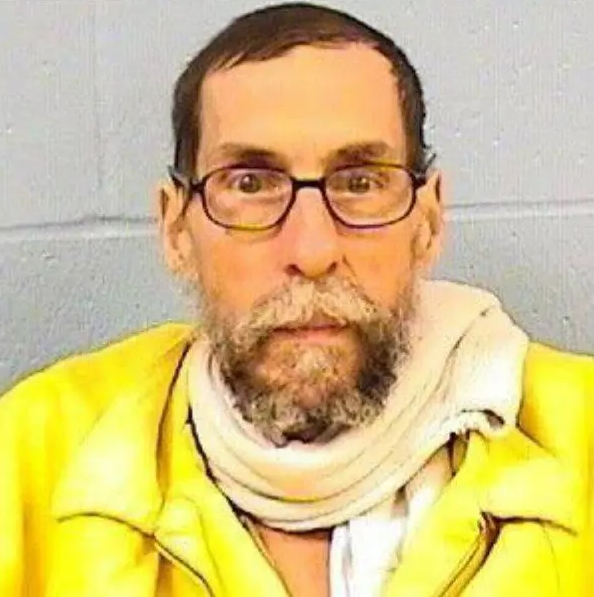
William Devin Howell, born February 11, 1970, is an American serial killer responsible for the deaths of seven people in Connecticut during 2003. Howell lived a transient lifestyle and supported himself through temporary jobs, including landscaping and lawn care. He frequently traveled in an old blue van, which became an important location in the crimes and later provided investigators with critical forensic evidence.
Howell targeted people who were vulnerable because of substance-use problems, unstable housing, poverty, or involvement in sex work. He approached victims in several central Connecticut communities, including Waterbury, Wethersfield, New Britain, and East Hartford. Investigators concluded that he brought victims into his van, assaulted them, and killed them, generally by strangulation. He then transported most of their bodies to a wooded and marshy area behind a shopping plaza on Hartford Road in New Britain.
Howell privately referred to the burial area as his “garden.” Its thick vegetation, wet ground, and distance from ordinary foot traffic allowed the remains to remain concealed for years. The location eventually became one of the largest serial-murder crime scenes in Connecticut history.
The Victims
The exact medical dates of death could not be established in every case because the victims’ remains were discovered years later. The dates below are verified last-seen or disappearance dates and represent the closest documented dates to their deaths.
- Melanie Ruth Camilini — last seen January 1, 2003, in the Waterbury area: Camilini was 29 years old and a mother of two from Seymour who had recently been staying in Waterbury. She was last seen on New Year’s Day with two men. Because she had previously gone out of contact for extended periods, her disappearance did not immediately reveal that she had been killed. Her remains were recovered behind the Hartford Road shopping plaza in New Britain on April 28, 2015, and were identified later that year. Howell pleaded guilty to her murder.
- Marilyn Mendez Gonzalez — last seen May 16, 2003, in Waterbury: Gonzalez was 26 years old and the mother of two children. She disappeared after leaving her Waterbury residence. Her family did not know what had happened to her for more than a decade. Her remains were found in the wooded New Britain burial area on April 28, 2015. Howell later admitted responsibility and pleaded guilty to murdering her.
- Janice Roberts — last seen June 18, 2003, in Wethersfield: Roberts was a 44-year-old transgender woman from New Britain. Court and identification records also used her legal name, Danny Lee Whistnant. A witness saw Roberts enter Howell’s blue van outside a Stop & Shop in Wethersfield on June 18. She was reported missing on June 24, 2003. According to information Howell later gave an informant, he strangled Roberts after discovering that she was transgender. Her remains were recovered from the New Britain burial site on April 28, 2015, and identified in June 2015.
- Diane Cusack — last known alive July 9, 2003, in New Britain: Cusack was approximately 55 years old and lived in New Britain. Police last had documented contact with her on July 9 during a landlord-and-tenant dispute. She had been out of regular contact with relatives and was never formally reported missing. Her skeletal remains were among those discovered behind the shopping plaza in 2007. DNA testing identified her in January 2011. Howell pleaded guilty to her murder in 2017.
- Nilsa “Coco” Arizmendi — last seen July 25, 2003, in Wethersfield: Arizmendi was 33 years old and had been living with her boyfriend at a Wethersfield motel. Howell had stayed in their motel room, and Arizmendi’s boyfriend reported seeing her enter Howell’s van at approximately 2:30 a.m. on July 25. Her sister reported her missing on July 31. Blood later discovered beneath carpeting inside Howell’s van was matched through DNA evidence to Arizmendi’s family. Her remains were found at the New Britain burial site on April 28, 2015. Howell had already entered an Alford plea to first-degree manslaughter in her death in 2007.
- Joyvaline “Joy” Martinez — disappeared October 10, 2003, from East Hartford: Martinez was 23 years old and lived with her mother in East Hartford. She had been a talented track athlete in high school. Concern increased when she failed to attend her own birthday celebration, but she was not formally reported missing until March 29, 2004. Her remains were recovered behind the New Britain shopping plaza in 2007 and identified through forensic testing in September 2013. Howell pleaded guilty to her murder.
- Mary Jane Menard — disappeared in October 2003 from the New Britain area: Menard was 40 years old, a mother of two, and associated with Waterbury. After confronting her own substance-use problems, she had reportedly worked as a substance-abuse counselor and tried to help others. The publicly available case record does not establish an exact day in October for her disappearance or death. Her remains were discovered at the New Britain site in 2007 and formally identified in September 2014. Howell pleaded guilty to killing her.
The Blue Van and the Investigation
Nilsa Arizmendi’s disappearance provided investigators with the first major connection to Howell. Witness information placed her inside his van shortly before she vanished. Police eventually located and seized the vehicle in North Carolina. Several seat cushions had been removed, and investigators discovered blood that had soaked through carpeting and into the van’s floor. DNA testing showed an extremely strong familial match between one of the blood samples and Arizmendi’s relatives. Blood belonging to another person was also detected.
Howell was arrested in Hampton, Virginia, on May 15, 2005. Because Arizmendi’s body had not yet been found, prosecutors initially faced difficulties proving a murder charge. In January 2007, Howell entered an Alford plea to first-degree manslaughter. Under that plea, he did not formally admit guilt but acknowledged that prosecutors possessed enough evidence to obtain a conviction. He received a 15-year prison sentence.
Discovery of the Burial Site
Only weeks after Howell’s 2007 conviction, a hunter discovered human bones in the wooded area behind the Hartford Road shopping plaza in New Britain. Police conducted a large search and recovered remains later identified as Diane Cusack, Joyvaline Martinez, and Mary Jane Menard.
The difficult terrain prevented investigators from immediately locating every victim. On April 28, 2015, authorities returned to the area and conducted another extensive search. They uncovered four additional sets of remains. Those victims were identified as Melanie Camilini, Marilyn Gonzalez, Nilsa Arizmendi, and Janice Roberts.
The discoveries confirmed that seven missing people had been concealed in the same general area. Six had been placed behind the shopping plaza, while Howell admitted that he had initially transported and concealed at least one victim elsewhere before moving or disposing of additional remains. His statements indicated that he sometimes kept victims’ bodies inside his van before taking them to a burial location.
Confessions and Criminal Charges
While incarcerated, Howell spoke about the murders to another inmate. He described himself as having a violent “monster” inside him and used the expression “sick ripper,” a phrase later repeated in media coverage. He discussed strangling victims, keeping a body in his van during cold weather, and attempting to interfere with identification by removing parts of a victim’s hands and jaw. These statements provided investigators with information that supported the physical and forensic evidence.
In September 2015, prosecutors charged Howell with six additional murders. These charges involved Melanie Camilini, Marilyn Gonzalez, Janice Roberts, Diane Cusack, Joyvaline Martinez, and Mary Jane Menard. The death of Nilsa Arizmendi had already resulted in his manslaughter conviction.
Guilty Pleas and Sentence
On September 8, 2017, Howell pleaded guilty to six counts of murder. On November 17, 2017, a Connecticut judge imposed six consecutive life sentences. Connecticut treated each life sentence as 60 years, producing a total effective sentence of 360 years. The new sentence was imposed in addition to the punishment Howell had already received for Arizmendi’s death.
During sentencing, relatives described the years of uncertainty they had endured while their loved ones were missing and the additional pain caused by learning how they had died. Howell apologized in court and characterized his own actions as monstrous, cowardly, and selfish. He said that he deserved the harshest possible punishment. His guilty pleas ensured that he would remain imprisoned for the rest of his life.
Legacy of the Case
The Howell investigation demonstrated how people living on society’s margins can remain missing for long periods without their disappearances being connected. Several victims had unstable living situations or had previously lost contact with relatives, circumstances Howell exploited when selecting them. In Diane Cusack’s case, no missing-person report had been filed at all.
The case was solved through the combined use of witness accounts, DNA testing, forensic examination of Howell’s van, renewed searches of the burial site, and the identification of skeletal remains. Although the passage of time prevented medical examiners from determining precise dates of death in most cases, investigators established that the seven killings occurred between January and October 2003.
William Devin Howell is regarded as one of the most prolific convicted serial killers in Connecticut history. His crimes left seven families without answers for years and transformed an ordinary wooded area behind a shopping plaza into the center of a lengthy homicide investigation. The eventual identification of every known victim allowed their families to recover their remains, formally acknowledge their deaths, and see Howell held legally responsible.