Unknown: The Bouncing Ball Killer
Overview
Between the spring of 1959 and the summer of 1960, a palpable fear gripped the city of Los Angeles as a serial predator preyed on its most vulnerable residents. Dubbed the "Bouncing Ball Killer" by the press, this unidentified assailant was responsible for a series of brutal attacks, primarily targeting elderly women. He committed at least six murders, often involving sexual assault and strangulation. The killer earned his strange moniker after a key witness saw him calmly leaving a murder scene, bouncing a rubber ball. Despite a widespread investigation, multiple arrests, and even a confession later deemed false, the identity of the Bouncing Ball Killer remains one of Los Angeles' most disturbing and enduring mysteries.
The First Murder
The reign of terror began on the afternoon of May 28, 1959. Ruth Gwinn, a 57-year-old secretary, was walking home from work when a man ambushed her, leaping from behind a tree. He viciously beat her with a wooden plank before dragging her into a parking lot, where he raped and mutilated her. Her screams attracted the attention of passersby, causing her attacker to flee. Gwinn was able to speak to police before she was taken to the hospital, but she succumbed to her severe injuries just a few hours later. In a tragic coincidence, Gwinn had survived a previous violent attack in the same area seven years earlier in 1952, though investigators did not believe the two incidents were connected.
A Spree of Violence in 1960
After an eight-month period of silence, the killer reemerged with a vengeance in early 1960. On January 29, the body of 73-year-old Amanda E. Rockefellow was discovered in an alley just two blocks from her home; she had been strangled. Less than two weeks later, on February 10, 60-year-old nurse Ann Cotter was attacked and murdered while she was on her way to church.
The violence escalated in May. On May 2, 74-year-old Elmyra Miller, a semi-invalid, was sexually assaulted and strangled to death inside her own home. Just eleven days later, on May 13, Bessie Elva Green, a 60-year-old apartment manager, was raped and murdered in her residence, which was also burglarized and ransacked.
The final two confirmed murders occurred in June 1960. On June 20, 83-year-old Grace A. Moore was killed in her home. Six days later, on June 26, the killer claimed his last known victim, 72-year-old Mercedes Langeron. It was this murder that would provide investigators with their most significant clues and give the killer his memorable name.
The Victims
The women targeted by the Bouncing Ball Killer were predominantly elderly and living alone, making them susceptible to attack. They were mothers, grandmothers, and active members of their communities whose lives were cut short in a brutal fashion.
- Ruth Gwinn, 57 — May 28, 1959. A secretary attacked while walking home from work, she was beaten and sexually assaulted. She was able to provide a statement to police before dying from her injuries.
- Amanda E. Rockefellow, 73 — January 29, 1960. Found strangled in an alley near her Los Angeles home.
- Ann Cotter, 60 — February 10, 1960. A nurse who was attacked and killed as she walked to church in the early morning.
- Bessie Elva Green, 60 — May 13, 1960. An apartment manager who was raped, murdered, and robbed in her own flat.
- Grace A. Moore, 83 — June 20, 1960. The oldest victim, she was slain inside her home.
- Mercedes Langeron, 72 — June 26, 1960. She was raped and strangled with a bedsheet in the apartment she shared with a roommate.
Investigation and the "Bouncing Ball"
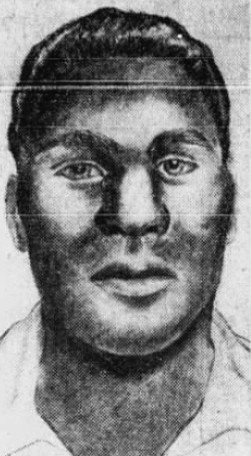
The murder of Mercedes Langeron on June 26, 1960, provided the Los Angeles Police Department with its first major break. Langeron's roommate, 62-year-old Adela Williams, returned from the store to find a man leaving their apartment. Williams later told police the man was calmly bouncing a soft, white rubber ball as he walked away. She provided a detailed description of the suspect: a Black man, approximately 30 years old, six feet tall, and weighing around 155 pounds. He was wearing what she described as "Ivy League" style clothing—gray trousers with a buckle in the back, a light-colored sport shirt, and dark glasses.
Based on Williams' testimony, police artist Ector Garcia created a composite sketch that was widely circulated in newspapers. The media seized on the bizarre detail of the toy, and the assailant was quickly nicknamed the "Bouncing Ball Killer" or the "Rubber Ball Strangler." The public, now aware that a serial killer was on the loose, flooded police with over 100 tips, but none immediately led to a breakthrough.
The moniker also seemed to play a role in subsequent attacks. On August 18, 1960, Modie Hall, 51, and her 10-year-old granddaughter, Mary Foster, were brutally attacked in their home. Hall's son-in-law, Floyd Harris, was awakened by their moans and told police he heard the distinct sound of a bouncing ball as the intruder fled. Both Hall and Foster survived the assault. On September 1, 84-year-old Lena Bensusen was beaten during a home invasion. She survived long enough to give a description of her attacker that reportedly matched the Bouncing Ball Killer before dying from her injuries five days later.
A Parade of Suspects
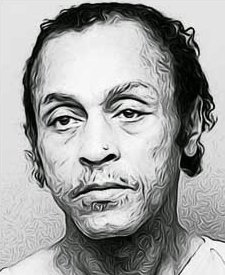
The police sketch and the killer's unique calling card led to a series of arrests, though none resulted in charges for the murders. On July 3, 1960, 38-year-old Noble Harper was arrested after being seen bouncing a rubber ball outside a market, but he was cleared the next day. A bricklayer named Ray Williams was arrested on July 10 due to his resemblance to the sketch and his consistent shoe size, but he was also released. On July 23, 23-year-old Joseph Walter Malveaux was detained after police noted his facial similarities to the sketch. During interrogation, Malveaux acknowledged that his friends teased him about the resemblance but denied any involvement. Lacking evidence, police let him go.
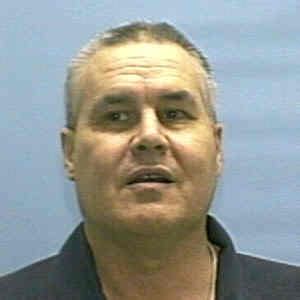
Two other men became more significant persons of interest. On July 12, 1960, police arrested 35-year-old Raymond Ward Clemmons for the strangulation murder of 19-year-old Nina T. Thoeren. During his interrogation, Clemmons confessed to being the Bouncing Ball Killer. He claimed that when he offered Thoeren a ride, she had jokingly asked if he was the notorious killer. He said he replied, "Sure, I'm the Bouncing Ball Killer. Look in the glove compartment. The ball is in there." Despite the confession, a polygraph test indicated Clemmons was being untruthful about the serial murders. He was ultimately convicted and sentenced to life in prison for Thoeren's murder alone and was never charged in the other cases.
Another significant development came on September 6, 1960, with the arrest of 28-year-old Henry Adolph Busch for the attempted murder of a coworker. In custody, Busch confessed to the murders of two other women and, more importantly, to the May 2 murder of Elmyra Miller, one of the Bouncing Ball Killer's presumed victims. Busch claimed he was inspired to kill after watching Alfred Hitchcock's film *Psycho*. He was ultimately convicted of three murders, including Miller's, and was executed in 1962. However, investigators did not believe Busch was responsible for the other five killings attributed to the Bouncing Ball Killer.
Trial and Sentence
As the Bouncing Ball Killer was never identified, no one was ever brought to trial or convicted for the string of six murders that terrorized Los Angeles. While Henry Adolph Busch was executed for the murder of Elmyra Miller, his conviction only accounted for one of the crimes in the series, and authorities were confident that the man responsible for the other attacks remained at large. Raymond Ward Clemmons, despite his confession, was never charged. Other men, such as Charles James Golston, who was convicted of a similar rape and murder of an elderly woman in Long Beach in 1961, were questioned but never definitively linked to the Los Angeles cases.
Aftermath and Legacy
After the attack on Lena Bensusen in September 1960, the wave of terror seemingly came to an end. The Bouncing Ball Killer, whoever he was, vanished as suddenly as he had appeared. The case grew cold, and with no new leads, it gradually faded from the headlines, leaving a legacy of fear and unanswered questions. The composite sketch, the chilling image of a man bouncing a child's toy after committing horrific acts of violence, and the series of unsolved murders have cemented the Bouncing Ball Killer's place in the dark annals of American true crime. More than six decades later, the identity of the man who haunted the streets of Los Angeles remains unknown, and the cases of his six victims remain officially unsolved.