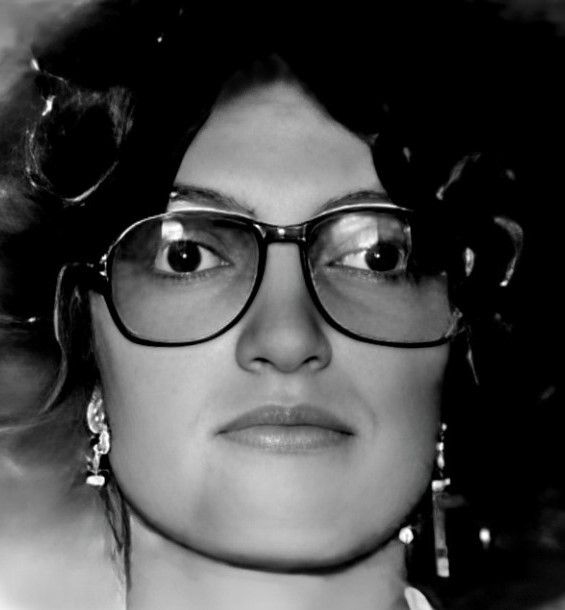
In the pre-dawn darkness of a Los Angeles morning, Ann Cotter, a 60-year-old female nurse, set out on her familiar walk to church. It was Wednesday, February 10, 1960, a day that began with quiet devotion but ended in a tragedy that would become part of one of the city’s most unnerving unsolved serial murder cases. As she made her way through the quiet streets, she was brutally attacked and killed, her life cut short in an act of shocking violence.
Ann’s death was not an isolated
incident. A shadow had been creeping over Los Angeles for months, a predator who targeted women, often elderly, in a series of vicious assaults. Police would eventually link Ann’s murder to a string of at least five other slayings that occurred between May 1959 and June 1960. The press and public gave the unidentified killer a chilling moniker: the "Bouncing Ball Killer," also known as the "Rubber Ball Strangler."
The series of murders began on May 28, 1959, with the brutal beating and rape of 57-year-old Ruth Gwinn. Eight months later, on January 29, 1960, just twelve days before Ann was killed, the body of 73-year-old Amanda Rockefellow was found strangled in an alley. The killer’s methods were savage and terrifying, a combination of beating and strangulation. The victims were often sexually assaulted, their lives taken with a chilling depravity that spread fear throughout the city.
The killer earned his strange nickname after the murder of 72-year-old Mercedes Langeron in June 1960. Langeron’s roommate returned home to find a man calmly bouncing a rubber ball in their apartment as her friend lay dead. The witness described him as a Black man, about six feet tall, wearing "Ivy League" style clothing. This bizarre, taunting detail captured the public’s imagination and became the killer's calling card, a symbol of his brazen cruelty. Another witness, the son-in-law of a woman who survived an attack with her granddaughter, also reported hearing the distinct sound of a bouncing ball as the intruder fled.
The Los Angeles Police Department launched a massive investigation, questioning numerous suspects and chasing down hundreds of leads. The city was on edge, with women, particularly the elderly, afraid to walk the streets alone. A police sketch of the suspect was circulated, based on the description provided by Mercedes Langeron's roommate. Several men were arrested in the months that followed, including some seen bouncing a ball, but all were eventually cleared of involvement in the murders.
Over the years, a few individuals confessed to one or more of the killings. One man, Henry Adolph Busch, confessed to the murder of Elmyra Miller, another victim in the series, and was executed in 1962 for that and other crimes. However, investigators did not believe he was the Bouncing Ball Killer responsible for the entire string of slayings. Another man, Raymond Clemmons, confessed to being the serial killer, but a polygraph test indicated he was lying. No one was ever definitively convicted for the murder of Ann Cotter or the other women linked to this terrifying spree.
Decades have passed since that winter morning in 1960. The file on the Bouncing Ball Killer remains open, a cold case that serves as a grim reminder of a time when a predator haunted the streets of Los Angeles. For the families of the victims, including the loved ones of the dedicated nurse who was killed on her way to worship, there has been no closure and no justice. Ann Cotter’s life of service was ended by an unknown assailant whose identity, and the eerie sound of his bouncing ball, have faded into a dark chapter of the city’s history.