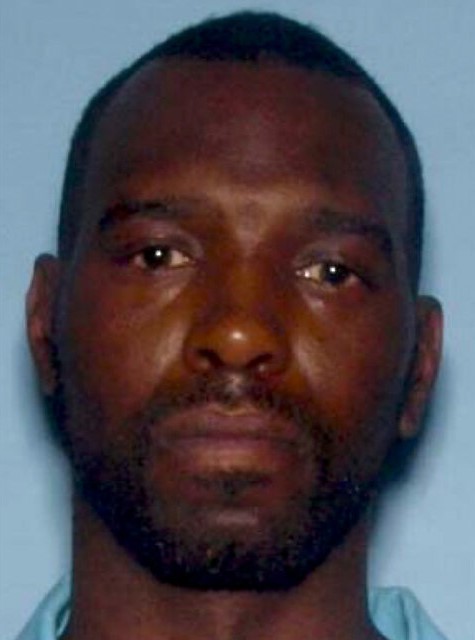
Michael Scott Magliolo: The Transient Killer Who Traveled America’s Highways
Overview
Michael Scott Magliolo was an American serial killer, rapist and robber whose crimes were connected to several states during the 1970s, 1980s and early 1990s. Born on July 8, 1960, Magliolo lived a transient lifestyle and frequently traveled by hitchhiking or accepting rides from long-distance truck drivers. This constant movement allowed him to pass through unfamiliar communities without establishing the permanent ties that might have made him easier for police to track.
Magliolo was ultimately convicted of murders committed in Tennessee and Ohio. Investigators suspected that his known crimes represented only part of a much larger series of attacks. Some accounts have attributed as many as ten or more deaths to him, potentially spanning Tennessee, Ohio, Texas, Pennsylvania, Louisiana and Arkansas. However, the identities and exact circumstances of many of those possible victims have not been publicly confirmed, and Magliolo was never convicted of ten murders.
A Predator on the Road
Magliolo’s mobility became one of the most disturbing elements of his criminal history. Rather than remaining in a single city, he traveled across state lines and moved among truck stops, roadside businesses, bars and temporary residences. He sometimes used false names when introducing himself, making it difficult for witnesses to provide authorities with accurate identifying information.
Young women were his primary targets. His crimes reportedly involved sexual violence, robbery and murder. The distances separating the suspected offenses created serious problems for investigators at a time when police departments did not have today’s computerized databases or rapid methods of sharing information. A killing in Tennessee might not immediately be compared with a similar crime in Ohio, Texas or another state hundreds of miles away.
His transient lifestyle also meant that he could disappear shortly after an attack. By the time a victim was found and detectives began gathering evidence, Magliolo could already be traveling with a truck driver toward another state. Investigators later examined unsolved murders along highways and in communities he was believed to have visited, but many possible connections could not be conclusively proven.
The Murder of Donna Naomi Chambers Bacot
Magliolo’s most clearly documented victim was Donna Naomi Chambers Bacot, a 24-year-old woman living in Nashville, Tennessee. On the night of October 3, 1991, Donna and her sister encountered a stranger at B.J.’s County Lounge, where Donna’s sister worked. The man introduced himself as “Terry,” concealing his true identity.
Magliolo later appeared at Donna’s residence, and she left with him. The two traveled north from Nashville toward Robertson County. During the encounter, Donna was sexually assaulted and killed. Her death became the central case that allowed Nashville investigators to begin uncovering Magliolo’s violent history.
Detective Pat Postiglione of the Metropolitan Nashville Police Department played an important role in identifying and apprehending Magliolo. Through careful investigation, authorities connected the man who had called himself “Terry” with Michael Scott Magliolo. The case demonstrated how Magliolo used aliases, temporary acquaintances and highway travel to isolate victims while hiding his identity.
Known and Suspected Victims
- Donna Naomi Chambers Bacot, age 24 — October 3, 1991 — Nashville and Robertson County, Tennessee: Donna encountered Magliolo at or through B.J.’s County Lounge in Nashville, where he identified himself as “Terry.” She later left with him and was taken north of Nashville. Magliolo sexually assaulted and murdered her. Her case resulted in his Tennessee murder conviction and became the best-documented crime associated with him.
- Unidentified woman — Ohio: Magliolo was convicted in Ohio in connection with the murder of another woman and received a sentence of 15 years to life in 1993. Publicly accessible summaries of his criminal history do not consistently provide the victim’s name, location or verified date of death. Those details should not be presented as established without supporting court or law-enforcement documentation.
- Additional suspected victims — 1977 through 1991 — Tennessee, Ohio, Texas, Pennsylvania, Louisiana and Arkansas: Investigators and later crime researchers suspected that Magliolo may have raped and killed additional young women while traveling through these states. Some summaries have placed the possible number of victims at ten or more, but the names, death dates and locations of most suspected victims have not been reliably identified in publicly available records.
- Magliolo’s half-brother — location and date unconfirmed: Magliolo has also been described as a suspect in the death of his half-brother. Available accounts do not provide enough independently verified information to identify the alleged victim or state conclusively that Magliolo committed the killing.
Investigation and Arrest
The investigation of Donna Bacot’s murder required detectives to reconstruct the movements of a man who had presented himself under a false name and had no obvious permanent connection to the victim. Witness interviews and the tracing of Magliolo’s travels gradually led authorities to his true identity.
Once Magliolo became a suspect, investigators began examining his movements beyond Tennessee. His history of traveling with truck drivers gave police reason to consider whether he had committed similar offenses in other jurisdictions. The possibility that he selected victims while passing through towns and then immediately left the area made him particularly difficult to investigate.
The lack of centralized information sharing during much of his suspected crime period complicated efforts to connect him with unsolved cases. Details concerning unidentified women, roadside discoveries and sexual assaults were often kept in separate local files. Detectives attempting to reconstruct Magliolo’s movements years later faced incomplete travel records, missing evidence and witnesses whose memories had faded.
Tennessee Conviction and Sentence
Magliolo was prosecuted in Tennessee for the rape and murder of Donna Bacot. On September 14, 1992, he was sentenced to life in prison plus an additional 50 years. The lengthy sentence was intended to keep him imprisoned for the remainder of his life and reflected the seriousness of the murder and associated sexual violence.
The conviction formally established Magliolo as a murderer, but it did not answer every question surrounding his years on the road. Investigators continued to believe that a man who traveled so widely and displayed such predatory behavior might have been responsible for other killings that remained unsolved.
Ohio Conviction
Magliolo was subsequently prosecuted for another murder in Ohio. In 1993, he received a sentence of 15 years to life in prison for that crime. This second murder conviction confirmed that Donna Bacot’s death was not an isolated act and placed Magliolo within the definition of a serial killer.
The Ohio conviction also strengthened investigators’ suspicions that his movements across state lines concealed a broader pattern. Nevertheless, the available public record contains limited information about the Ohio victim, and many summaries of Magliolo’s crimes repeat claims about additional victims without supplying names, court records or confirmed dates.
Possible Crimes in Other States
Magliolo was suspected of committing crimes in Texas, Pennsylvania, Louisiana and Arkansas in addition to Tennessee and Ohio. These suspicions appear to have been based largely on his travel history, the time periods during which he was present in particular regions and similarities between his known behavior and unsolved attacks on young women.
Connecting a transient offender to an old murder requires more than proof that he passed through the area. Investigators must establish a reliable timeline and locate physical evidence, witness testimony, a confession or another direct connection. In many of the cases considered in relation to Magliolo, that level of proof was apparently unavailable.
Claims that Magliolo murdered at least ten women should therefore be treated as investigative estimates rather than a confirmed judicial finding. He was convicted of two murders. Additional deaths have been attributed to or investigated in connection with him, but most remain unproven and the victims have not been publicly identified with sufficient certainty.
Modus Operandi
Magliolo’s known behavior suggests that deception and mobility were central to his crimes. He approached women in social settings, used an alias and created enough trust to persuade a victim to accompany him. Once the victim was isolated, the encounter could turn into sexual assault, robbery and murder.
His ability to obtain rides from truck drivers gave him access to major highways without necessarily leaving a conventional paper trail. He did not always need to purchase a bus ticket, rent a vehicle or register at a hotel under his real name. This allowed him to move between cities while remaining difficult to trace.
The broad geographical range of his suspected offenses has caused investigators and crime researchers to describe him as a highway predator. His case illustrates how offenders who travel extensively can exploit jurisdictional boundaries, especially when their crimes occur before modern DNA databases and nationwide law-enforcement information systems become widely available.
Unanswered Questions
The greatest unresolved issue in the Magliolo case is the true number of people he killed. His two murder convictions establish a confirmed series, but accounts describing ten or more victims have never been supported by a complete publicly available list of names, locations and verified death dates.
Investigators have continued to express concern that additional victims may remain unidentified. Reconstructing Magliolo’s travels between 1977 and 1991 could potentially place him near unsolved murders, but geographic proximity alone would not prove responsibility. Any definitive connection would require evidence capable of surviving legal and forensic scrutiny.
Advances in DNA testing may offer the strongest possibility of resolving such cases. Evidence preserved from an unsolved sexual assault or murder could potentially be compared with Magliolo’s known genetic profile. Unfortunately, evidence from older cases may have been lost, destroyed or stored under conditions that make modern testing impossible.
Legacy of the Case
Michael Scott Magliolo remains a lesser-known serial killer despite the disturbing scope of the allegations associated with him. He was not connected to a single famous city or a highly publicized series of named victims. Instead, his case was scattered across highways, states and separate police jurisdictions.
The confirmed murder of Donna Naomi Chambers Bacot and Magliolo’s additional Ohio conviction demonstrate that he was a repeat killer who used travel and deception to avoid detection. The possibility of more victims remains credible, but the available evidence does not permit every unsolved death along his route to be attributed to him.
Magliolo’s story also emphasizes the importance of cooperation among law-enforcement agencies. A transient offender may appear to be responsible for an isolated local crime until investigators compare reports from distant jurisdictions. Shared databases, DNA technology and coordinated cold-case reviews now provide tools that were not readily available when Magliolo was traveling across the country.
Although he received sentences that ensured his continued imprisonment, the full extent of his criminal activity may never be known. For the families of unidentified or unconnected victims, the possibility that Magliolo carried additional secrets into prison leaves a painful uncertainty. His confirmed convictions ended his freedom, but they did not completely resolve the trail of violence believed to have followed him across America.