Louis Bernard Gaskin: The Ninja Killer
Overview
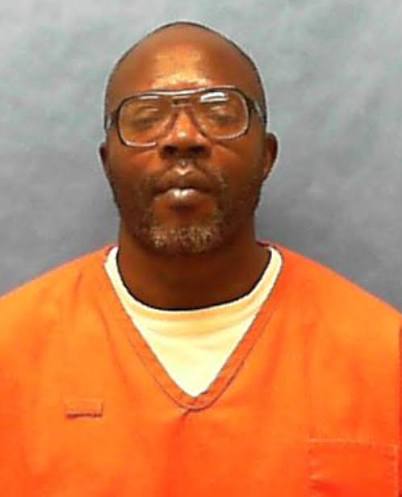
Louis Bernard Gaskin, who earned the moniker "The Ninja Killer" for dressing in all-black attire during his crimes, terrorized the quiet communities of Flagler County, Florida, in the late 1980s. His brutal crime spree culminated on the night of December 20, 1989, when he murdered Robert and Georgette Sturmfels in their Palm Coast winter home and attempted to murder another couple, Joseph and Mary Rector, nearby. The motive was robbery; Gaskin intended to give the stolen items to his girlfriend as Christmas presents. Following his arrest on December 30, 1989, Gaskin provided a full confession to the attacks and also admitted to the previously unsolved 1986 murder of Charles Martin Miller in Bunnell.
Gaskin was convicted for the Sturmfels murders and sentenced to death in 1990. He spent more than three decades on Florida's death row, where his attorneys filed numerous appeals arguing that his severe mental illness and traumatic childhood were not adequately considered by the jury. All appeals were ultimately denied. On April 12, 2023, at the age of 56, Louis Gaskin was executed by lethal injection at Florida State Prison.
Early Life and Background
Louis Bernard Gaskin was born on March 11, 1967. His life began under deeply disadvantaged circumstances. According to information presented during his appeals, Gaskin was born to a teenage mother who used drugs and alcohol, and he never knew his father. His childhood was a portrait of instability, marked by abandonment, neglect, and severe abuse at the hands of various caregivers.
His attorneys argued that he was raised in squalor by his illiterate great-grandparents, who beat him mercilessly and forced him to eat off the floor. His mother would disappear from his life for years at a time. This profound trauma, they contended, contributed to an inevitable decline into severe, untreated mental illness. A psychiatrist who evaluated Gaskin diagnosed him with schizotypal personality disorder, and another mental health expert described him as "one of the most seriously disturbed individuals he had ever encountered." His lawyers asserted that Gaskin was operating under a delusion that he was a ninja during his crimes. These details of his upbringing, however, were not fully presented to the jury during the penalty phase of his trial.
The Murder of Charles Miller
Three years before the crimes that would land him on death row, Gaskin committed his first known murder. On November 20, 1986, he killed 58-year-old Charles Martin Miller in Bunnell. Gaskin later confessed that the motive was robbery, as he believed Miller was due to receive a sum of money. Following his 1989 arrest, Gaskin admitted to this murder, and he was subsequently charged with it in addition to his later offenses.
The Palm Coast Murders
On the evening of December 20, 1989, Gaskin, then 22, put his dark fantasy into action. Dressed head-to-toe in a black ninja outfit and armed with a .22-caliber rifle, he drove from his home in Bunnell to the R-Section of Palm Coast. He spotted a light on in the home of Robert Sturmfels, 56, and his wife Georgette, 55. The couple, from New Jersey, were staying at their winter residence at 10 Ripley Place.
Gaskin parked his car in a wooded area and stealthily approached the house. He circled the property several times, peering through a window into the den where he saw Robert relaxing in a recliner and Georgette sitting on the sofa. From outside, he opened fire through the glass, shooting Robert twice. As Georgette rose to flee, Gaskin shot her and then shot Robert a third time.
His assault was not over. Georgette managed to crawl into a hallway, and Gaskin pursued her around the outside of the house until he could see her through another door, at which point he shot her again. He then broke a window, entered the home, and, to ensure they were dead, fired a final, execution-style shot into the head of each victim. He covered their bodies with blankets before ransacking the house, stealing a clock, two lamps, a videocassette recorder, cash, and jewelry.
Attack on the Rectors
Just hours later, Gaskin drove to the nearby home of Joseph and Mary Rector at 1 Ricker Place. He spied on them through a window as they sat in their den watching television. After cutting their phone lines, he tried to lure them outside by throwing rocks and a log at the house. When Joseph Rector got up to investigate the noise, Gaskin shot him from outside.
Despite Joseph's injury, the couple took cover in a closet. Hearing Gaskin break a window to enter the house, they made a desperate escape to their car. As they sped away to a hospital, Gaskin fired at them from inside the house, but they managed to get away. Joseph Rector survived the attack. Gaskin then burglarized their home as well.
The Victims
- Charles Martin Miller, 58 — Murdered on November 20, 1986, in Bunnell, Florida. Gaskin confessed to killing him in a robbery attempt.
- Robert Sturmfels, 56 — Murdered on December 20, 1989, in Palm Coast, Florida. He and his wife were attacked at random in their winter home as they relaxed for the evening.
- Georgette Sturmfels, 55 — Murdered on December 20, 1989, in Palm Coast, Florida. She was killed alongside her husband, Robert, during the brutal home invasion.
Investigation and Capture
Gaskin became a suspect almost immediately. His girlfriend's cousin, Alfonso Golden, contacted authorities after Gaskin showed up at his home with the stolen items. Gaskin bragged that he had "jacked" the items and that the victims were "stiff," telling Golden to "watch the news" if he didn't believe him. Gaskin had intended to wrap the stolen goods and give them to his girlfriend as Christmas presents.
On December 30, 1989, authorities arrested Louis Gaskin. At first, he denied everything, but he soon gave a detailed, taped confession. He admitted to the Sturmfels murders and the attack on the Rectors, stating the killings were random and that he had urges to kill. He also confessed to murdering Charles Miller in 1986. A search of his home uncovered property belonging to the Sturmfels. Gaskin then led investigators to a canal where he had discarded more evidence, including the Rectors' wallet and purse.
Before his trial, Gaskin spoke to a psychologist, showing a clear understanding of his actions. "The guilt was always there," he said. "The devil had more of a hold than God did. I knew that I was wrong. I wasn't insane."
Trial and Sentence
Louis Gaskin's trial took place in Flagler County in 1990. The jury found him guilty on nine counts, including two counts each of premeditated and felony first-degree murder for the deaths of Robert and Georgette Sturmfels. He was also convicted of armed robbery, burglary, and the attempted first-degree murder of Joseph Rector.
During the penalty phase, the defense presented limited mitigating evidence, calling only two lay witnesses and no expert witnesses to testify about Gaskin's background. His cousin, Janet Morris, testified that their great-grandparents were very strict and that Gaskin was not a troublemaker as a child. The prosecution, meanwhile, established several aggravating factors, including that the murders were cold, calculated, and premeditated, and that they were committed during a burglary.
The jury recommended the death sentence by a vote of 8 to 4. On June 19, 1990, the presiding judge, Kim Hammond, accepted the jury's recommendation and formally sentenced Gaskin to death. He also received consecutive life sentences for the other convictions.
Decades on Death Row
Gaskin spent over 32 years on death row at Florida State Prison. Throughout this time, his legal team filed a series of state and federal appeals. A central argument was that his trial counsel had been ineffective for failing to present the jury with "profound and important mitigating evidence" about his abusive childhood and significant mental illness. His lawyers argued that had the jury known the full extent of his trauma, it would have outweighed the aggravating factors in the case.
Appeals also focused on the 8-4 jury vote for his death sentence. Later changes in Florida law required a unanimous jury recommendation for capital punishment, and his attorneys argued his sentence violated the Eighth Amendment's prohibition against cruel and unusual punishment. These arguments were consistently rejected by the courts, which ruled that the unanimity requirement was not retroactive to his case.
In March 2023, years after his appeals were exhausted, one of the jurors from his trial, Janet Valentine, came forward to express her regret. "I would never make that decision again," she told a reporter, a statement his lawyers cited in a final, unsuccessful plea to the Florida Supreme Court.
Execution
On March 13, 2023, Florida Governor Ron DeSantis signed Gaskin's death warrant. The U.S. Supreme Court denied his final request for a stay on April 11, 2023.
On April 12, 2023, Gaskin had his last meal at 9:45 a.m., which consisted of barbeque pork ribs, Buffalo wings, pork and turkey neck, shrimp fried rice, and french fries. He was visited by his sister but declined to meet with a spiritual advisor. No relatives of his victims attended the execution.
When asked for a final statement, his words were partly difficult to understand, but he was heard to say, "Justice is not about the crime. It's not about the criminal. It's about the law." He concluded with, "Look at my case." The lethal injection procedure began at 6:02 p.m. Louis Bernard Gaskin was pronounced dead at 6:15 p.m. He was the 101st person executed in Florida since 1976.