Malcolm Joseph Robbins Jr.: Interstate Serial Killer
Overview
Malcolm Joseph Robbins Jr. was an American serial killer and repeat sexual offender who murdered at least four boys and teenagers while traveling across the United States between December 1979 and November 1980. His confirmed crimes occurred in Texas, Maine, California, and New Jersey. The victims ranged from six to seventeen years old. Robbins frequently approached young people in public places, gained their confidence or offered them transportation, and then isolated them before committing sexual assaults and murder.
Robbins was born on July 7, 1960, in Rockland, Maine. Long before the murders, he had accumulated a disturbing history of sexual misconduct involving children. He spent portions of his youth in institutions and underwent psychiatric treatment, but he continued to offend after his release. As a young adult, he moved between states, stayed with acquaintances, and traveled in automobiles or on motorcycles. His mobility allowed him to encounter vulnerable victims in widely separated communities and initially prevented investigators from recognizing that several murders were connected.
Confirmed Victims
- Stephen Craig Little, age 7: Murdered on December 27, 1979, in Dallas, Texas. Stephen was reportedly playing near a playground when Robbins persuaded him to enter a vehicle. Robbins later admitted sexually assaulting and strangling the child. Stephen's body was placed in a garbage container and set on fire. His burned remains were discovered the following morning. Robbins later attempted to withdraw his confession, but investigators believed it contained details that had not been publicly released, and witnesses placed him in the Dallas area during the relevant period.
- William Bryan “Brian” Lepko, age 17: Disappeared and was presumed murdered on January 29, 1980, after leaving his home in Wheeling, West Virginia. Lepko had arranged to attend a party with a man who was supposedly interested in buying his blue Chevrolet Nova. Robbins later said that the two traveled to Maine and became involved in a confrontation after Lepko rejected his sexual advances. Robbins admitted stabbing the teenager and leaving his body outdoors near Durham, Maine, after frozen ground prevented him from digging a grave. Lepko's automobile was registered in Robbins's name on February 4, 1980. After Robbins identified the location, Lepko's remains were recovered in Maine in February 1981.
- Christopher Michael Finney, age 6: Murdered on June 15, 1980, after disappearing in Isla Vista, California. Christopher was walking home from his father's store when witnesses saw him riding away on a red motorcycle operated by a blond young man. His skeletal remains were found approximately three months later near the lagoon on the University of California, Santa Barbara campus. Medical evidence showed that his neck had been violently broken. Robbins admitted taking Christopher to an isolated area, sexually assaulting him, and killing him. Investigators also recovered Christopher's T-shirt from an apartment where Robbins had lived.
- Evan Bailey, age 9: Abducted and murdered on November 17, 1980, in the Vineland area of New Jersey. Robbins sexually assaulted, beat, and repeatedly stabbed the child in the neck before concealing his body. After Robbins was taken into custody, he confessed and directed investigators to the place where Evan had been left. The discovery of this murder led authorities to question Robbins about unsolved child killings in other states and ultimately exposed the broader series of crimes.
The Murder of Stephen Craig Little
Stephen Little's murder was the earliest killing conclusively attributed to Robbins. On December 27, 1979, Robbins was in Dallas after traveling away from California. Seven-year-old Stephen was approached while playing outside and was enticed into Robbins's vehicle. The child was taken away from the public area, sexually assaulted, and strangled.
Robbins attempted to destroy evidence by placing Stephen's body in a garbage container and setting it on fire. The child's remains were found the next morning. At first, investigators had no obvious connection between the murdered boy and the young drifter who would later be arrested in New Jersey. After his arrest, however, Robbins described the Dallas crime in detail. Although he subsequently claimed that he had been in Palm Springs at the time, he could not establish a reliable alibi, and witnesses reportedly placed him in Dallas. He was eventually convicted of Stephen's murder.
The Disappearance and Murder of William Lepko
Seventeen-year-old William Bryan Lepko, often identified in court records as Brian Lepko, disappeared from Wheeling, West Virginia, on January 29, 1980. Before leaving, he told his family that he was going to a party with a man who had expressed interest in buying his Chevrolet Nova. The teenager never returned home.
Robbins later possessed Lepko's car and registered it in Maine under his own name only days after the disappearance. During questioning, Robbins claimed that he made sexual advances toward Lepko while the two were in the Durham, Maine, area. According to his account, Lepko resisted, a fight followed, and Robbins stabbed him in the abdomen. Robbins tried to conceal the body but said the winter ground was too hard to dig. He therefore abandoned Lepko outdoors and took possession of the teenager's automobile and personal property.
For more than a year, Lepko's family did not know where he had been taken. Robbins eventually provided information that led investigators to the remains in February 1981. The condition of the body and the circumstances surrounding the stolen car supported the prosecution's case, and Robbins was convicted of the killing.
The Murder of Christopher Finney
Christopher Finney disappeared from Isla Vista on the afternoon of June 15, 1980. Witnesses remembered seeing the six-year-old riding on a red motorcycle driven by a blond man wearing shorts. That description became important after Robbins emerged as a suspect because he had access to a red motorcycle and had been living in the Santa Barbara area.
Christopher's remains were discovered about three months later near the UC Santa Barbara lagoon. A medical examiner concluded that the child's cervical vertebrae had been forcefully separated, indicating that his neck had been broken. Robbins admitted enticing Christopher onto the motorcycle and transporting him to a secluded location. He sexually assaulted the child and then killed him after becoming angry.
Robbins took clothing belonging to Christopher back to his residence. When investigators later searched an apartment associated with Robbins and a former companion, they found Christopher's T-shirt. The physical evidence, witness descriptions, and Robbins's own statements formed the foundation of the California prosecution. A Santa Barbara County jury convicted him of first-degree murder, kidnapping, and special-circumstance allegations connected to the sexual assault of a child. On May 12, 1983, Robbins was sentenced to death.
The Murder of Evan Bailey and Robbins's Arrest
The investigation that ended Robbins's freedom began with the disappearance of nine-year-old Evan Bailey in Vineland, New Jersey, on November 17, 1980. Evan was abducted, sexually assaulted, beaten, and stabbed. Robbins was arrested in Millville on November 26, nine days after the murder.
During questioning, Robbins confessed and led authorities to Evan's body. He then began discussing other children and teenagers he claimed to have killed while traveling around the country. His statements prompted law-enforcement officials from multiple states to compare missing-person reports, recovered bodies, automobile records, witness accounts, and items found in places where Robbins had lived.
Robbins pleaded guilty in New Jersey to charges arising from Evan's kidnapping and murder. In August 1981, he received a life sentence with a lengthy period of parole ineligibility. The New Jersey case did not end the prosecutions, because authorities in California, Texas, and Maine also sought to hold him responsible for the killings committed in their jurisdictions.
Suspected and Unconfirmed Cases
Robbins made additional statements about possible victims, but not every claim was proven. He reportedly said that he had killed a boy near Minden, Nevada, during the fall of 1980. A body discovered in that area on November 10, 1980, was later identified as fifteen-year-old John Edward Powers of Sunnyvale, California. Robbins was associated with the case through his statements, but the killing was not included among his four confirmed murder convictions.
Authorities in Arizona also examined whether Robbins could have killed thirteen-year-old Robert Craig Stevens. Stevens disappeared from Tucson on September 30, 1979, and his body was found approximately two weeks later south of the city. He had been strangled. Robbins was known to have traveled through the region during the general period, but he refused to cooperate fully with investigators, and no conclusive evidence established that he murdered Stevens.
Robbins was investigated in connection with the murders of five-year-old Teresa Lynn Flores and four-year-old Martha Joanne Mezo, whose bodies were found near the Salinas River outside San Miguel, California, on May 29, 1980. Despite similarities between those crimes and the murder of Christopher Finney, investigators ultimately eliminated Robbins as a suspect. He was also briefly examined in relation to the Atlanta child murders because he had spent time in Georgia, but authorities found no evidence connecting him to those cases.
Prosecutions and Sentences
Because Robbins had committed murders in several jurisdictions, officials had to determine the order in which he would be prosecuted. New Jersey proceeded first because he had been arrested there and had confessed to Evan Bailey's murder. California later prosecuted him for kidnapping and murdering Christopher Finney. Evidence concerning the other murders was introduced to demonstrate the repeated and sexually motivated nature of his violence.
Robbins received a death sentence in California in 1983. He was also convicted in proceedings connected to Stephen Little's murder in Texas and William Lepko's murder in Maine. Legal disputes followed over which state would retain custody and whether California could carry out its death sentence after Robbins had already received a life term in New Jersey.
His California conviction and sentence were upheld on appeal. Robbins spent decades under a sentence of death, becoming one of California's longest-serving condemned prisoners. The state did not execute him. California halted executions under a gubernatorial moratorium in 2019, and Robbins was eventually transferred from San Quentin to California State Prison, Corcoran.
Death in Prison and Legacy
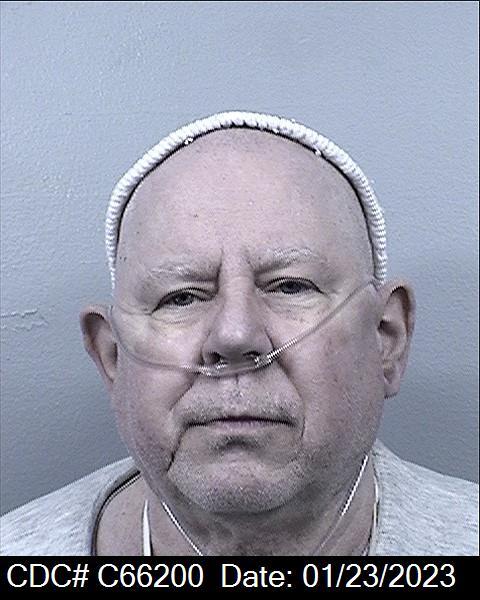
Malcolm Joseph Robbins Jr. was found unresponsive in his prison cell at Corcoran on January 27, 2023. Medical personnel pronounced him dead that morning. Prison officials reported that his death appeared to have resulted from natural causes. He was sixty-two years old and had spent more than four decades in custody.
Robbins's confirmed crimes demonstrate how a mobile offender could exploit the limited exchange of information between distant police departments during the late 1970s and early 1980s. The murders initially appeared to be isolated cases: a child killed in Texas, a teenager missing from West Virginia and found in Maine, a six-year-old taken in coastal California, and a nine-year-old murdered in New Jersey. Only after Robbins's arrest and confession did investigators begin assembling the pattern.
Four victims were ultimately connected to Robbins through confessions, physical evidence, witness testimony, property records, and criminal convictions. Questions remain about whether he committed additional murders during his travels. His unproven claims and his presence near other unsolved cases generated suspicion, but the confirmed record consists of the murders of Stephen Craig Little, William Bryan Lepko, Christopher Michael Finney, and Evan Bailey between December 27, 1979, and November 17, 1980.