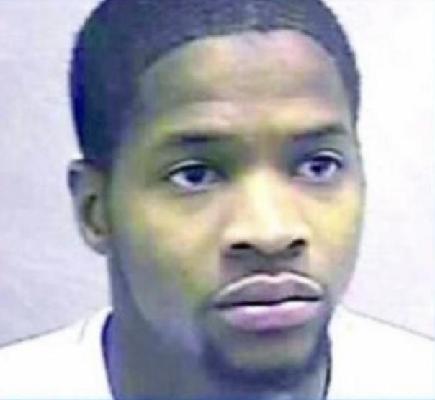
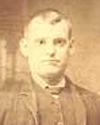
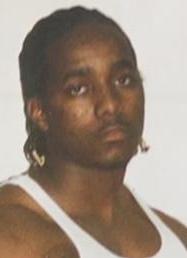
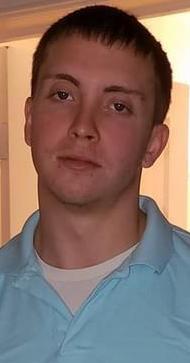
William Bryan “Brian” Lepko was a 17-year-old White male from Wheeling, West Virginia, whose disappearance on January 29, 1980, became connected to Malcolm Joseph Robbins, a man later convicted of other murders. The California Supreme Court record refers to the victim as Brian Lepko and states that on the day he vanished, Lepko left home to attend a party with a man who was supposed to buy his blue Chevrolet Nova.
What initially looked like a disappearance eventually became part of a much larger multistate murder investigation.
Within days of Lepko vanishing, the Nova had changed hands in a way that would later become important evidence. On February 4, 1980, the vehicle was registered in Maine to Malcolm Robbins. Witness testimony introduced later in California also placed Robbins driving a car matching the Nova’s description in California during early 1980. Lepko remained missing for months, however, and authorities did not know what had happened to him until Robbins was taken into custody in New Jersey in November 1980 in connection with another killing.
While Robbins was being questioned after his New Jersey arrest, he admitted responsibility for a number of crimes in different states and confessed to killing Lepko. According to the account preserved by the California Supreme Court, Robbins claimed that he had stabbed Lepko in the stomach while acting in self-defense. He said he then transported Lepko’s body to Maine and tried to bury it, but the frozen ground prevented him from digging a grave. Robbins also said he took Lepko’s wallet and gave it to a man named Freeman, one of his mother’s former boyfriends whom Robbins believed to be his father. After hearing what Robbins said had happened, Freeman allegedly advised Robbins to register Lepko’s car in his own name.
The physical evidence ultimately raised serious doubts about Robbins’s description of the stabbing. With Robbins’s assistance, Maine authorities located Lepko’s remains in February 1981, more than a year after he had disappeared. A pathologist later testified that Lepko had died from stab wounds to the head and back, not a wound to the front of the abdomen as Robbins had claimed. That finding was significant because it conflicted directly with Robbins’s version of a defensive stabbing. Prosecutors later characterized Lepko’s killing as sexually motivated when they presented it during the penalty phase of Robbins’s California murder trial, although the court opinion’s summary of Lepko’s case does not describe a specific sexual assault against him.
Robbins’s arrest that broke open the Lepko case came after the November 1980 killing of Evan Bailey in New Jersey. New Jersey authorities arrested Robbins in connection with Bailey’s sexually motivated murder, and the investigation produced confessions to other crimes, including the Lepko killing and the murder of Christopher Finney in California. On August 7, 1981, Robbins pleaded guilty in New Jersey to murder, kidnapping, aggravated sexual assault and other offenses arising from Bailey’s death. He received an aggregate sentence of life imprisonment with a forty-year period before parole eligibility.
Robbins was subsequently transferred to California to face charges for the kidnapping and murder of Christopher Finney. A California jury convicted him, and he was sentenced to death; California corrections records give May 12, 1983, as the date he entered the state system under the death judgment for first-degree murder. During the penalty proceedings, prosecutors introduced Lepko’s killing as evidence of an additional homicide attributed to Robbins. Lepko’s mother testified about the circumstances of the disappearance and the planned sale of the Nova, while the prosecution presented the vehicle registration, Robbins’s confession, recovery of the remains and the pathologist’s findings. The California Supreme Court ultimately affirmed Robbins’s conviction and death sentence in 1988, and the United States Supreme Court declined further review in January 1989.
The available authoritative online court records do not establish that Robbins was separately tried and convicted in West Virginia or Maine specifically for Lepko’s murder. Instead, the clearest primary legal record shows that his confession and the evidence surrounding Lepko’s death were introduced against him in the penalty phase of the California case. Some later secondary accounts claim that Robbins received an additional conviction connected with Lepko, but the readily available appellate decisions documenting Robbins’s New Jersey and California prosecutions do not substantiate such a separate judgment, so that claim cannot be treated as established. What is firmly documented is that Robbins became the identified killer, supplied information that led authorities to Lepko’s remains, possessed and registered Lepko’s automobile soon after the disappearance, and gave an account of the stabbing that conflicted with the medical evidence.
Robbins remained under a California death sentence for decades. He was one of the state’s longest-serving condemned prisoners when he was found unresponsive in his cell at California State Prison, Corcoran, on January 27, 2023. Prison medical personnel pronounced him dead, and the California Department of Corrections and Rehabilitation reported that his manner of death was believed to be natural. He therefore died in custody without being executed, more than four decades after the investigation of another murder led authorities back to the disappearance and killing of William Bryan Lepko.