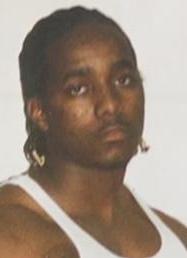
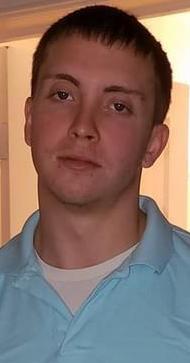
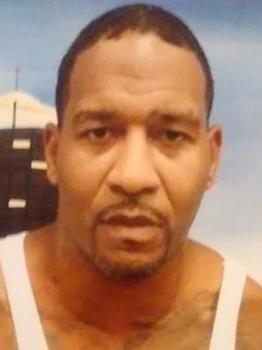
Lemroy Coleman, a 33-year-old Black/African American man from Wheeling, West Virginia, was fatally shot during a burst of gunfire outside the American Legion Post 89 in East Wheeling during the early morning hours of October 9, 2015. Police were dispatched at about 1:20 a.m. after receiving reports of multiple shots near Jacob Street. Officers ultimately found Coleman lying face down and critically wounded in Lane E, an alley running between Jacob and Eoff streets near 15th Street.
He had suffered a gunshot wound to his torso and was taken to Ohio Valley Medical Center, where he was pronounced dead. The medical examiner later classified his death as a homicide and testified that the gunshot caused extensive internal bleeding.
The events leading to Coleman's death were captured in significant part by surveillance cameras at and around the American Legion. According to later court records, Coleman and his friend Norman Banks were inside the bar when Dallas Michael "Dal" Acoff arrived. Coleman and Banks left shortly afterward, and Acoff followed them outside. The surveillance footage showed Acoff firing toward the two men from the area of the Legion's stairs. Coleman returned fire, prompting Acoff to retreat back inside the building. Coleman and Banks then ran toward Lane E. Banks was struck in the leg but managed to make his way to the nearby Wheeling Police Department. Before entering the station, he discarded his own firearm in bushes outside and urgently told officers that his friend was still in the alley and might have been killed. Police then located Coleman mortally wounded.
Investigators quickly focused on Acoff. Police said surveillance footage appeared to show him confronting Coleman and Banks, producing a handgun and firing, retreating into the Legion and later firing additional shots. A murder warrant was issued for Acoff, who left the area and was eventually arrested by the U.S. Marshals' Northern Ohio Violent Fugitive Task Force in Cleveland on December 16, 2015. He waived extradition and was returned to West Virginia. An Ohio County grand jury subsequently indicted him on charges including murder, malicious assault in connection with Banks' shooting, three counts of wanton endangerment involving a firearm, and a firearms offense.
Authorities also pursued two other men in connection with the aftermath of the shooting. Michael Angelo Johnson was initially charged with aiding and abetting after investigators alleged that he remained near the scene and drove Acoff and Rocco Pasquale Pandoli away following the gunfire. Johnson eventually pleaded guilty to the lesser misdemeanor offense of accessory to murder and was sentenced to one year of house arrest. Pandoli, who was accused of aiding and abetting murder, remained a fugitive for months before U.S. Marshals arrested him in Steubenville, Ohio, in April 2016 after surveillance of a residence associated with a woman he knew. An Ohio County grand jury later indicted Pandoli on the felony aiding-and-abetting charge. Available online reporting establishes his arrest and indictment in Coleman's case, but does not clearly document a final disposition of that homicide-related charge.
Acoff went to trial in Ohio County Circuit Court in September 2016. He acknowledged firing a gun but maintained that he acted in self-defense, telling jurors that Coleman had threatened to kill him and that he fired because he feared for his life. Prosecutors argued that Acoff had initiated an unjustified confrontation. After a four-day trial, the jury convicted Acoff of second-degree murder in Coleman's death, malicious assault involving Banks and three counts of felony wanton endangerment. Because Acoff also had qualifying prior felony convictions, prosecutors pursued West Virginia's recidivist procedure, and a jury subsequently determined that he was the same person previously convicted of those offenses, exposing him to a life sentence.
The case changed dramatically after Norman Banks, the surviving eyewitness who had not testified at Acoff's original trial, later came forward. Banks testified that Acoff was not the person who fired the shots that actually struck him and Coleman after they fled toward the alley, instead identifying another person as the shooter. Circuit Judge David Sims concluded that the new testimony was significant enough to undermine the murder and malicious-wounding verdicts and, in December 2017, vacated those convictions and granted Acoff a new trial. Prosecutors attempted to block that decision, but the Supreme Court of Appeals of West Virginia refused to overturn the trial judge's ruling, describing the situation as extraordinary because a surviving victim and eyewitness had subsequently offered testimony exonerating Acoff as the person who shot the victims. The three wanton-endangerment convictions stemming from Acoff's admitted gunfire remained intact.
Rather than face another murder trial, Acoff resolved the case in January 2019 by pleading guilty to first-degree attempted murder. Judge Sims sentenced him to three to fifteen years in prison, with that term running concurrently with the five-year sentences associated with his three surviving wanton-endangerment convictions. The plea brought Acoff's state prosecution arising from the shooting to an apparent close, but it did not restore the second-degree murder conviction that had been vacated. As a result, although Acoff was originally convicted of murdering Coleman, that murder conviction was later set aside after Banks' testimony raised substantial doubt about who fired the fatal shot.