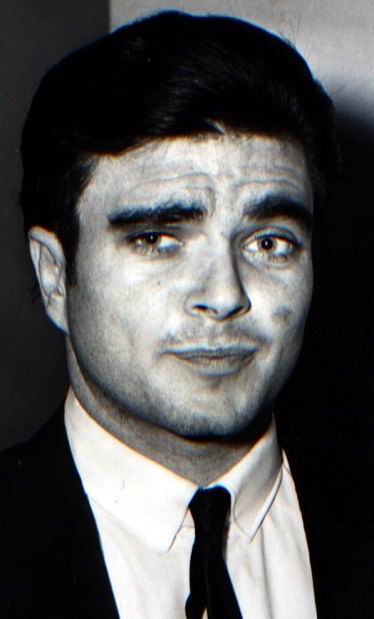
Edward Harold Bell: Convicted Murderer and Self-Confessed Serial Killer
Overview
Edward Harold Bell was a Texas murderer, sex offender, fugitive, and self-described serial killer who became one of the most troubling suspects in a series of unsolved murders involving girls and young women along the Houston-Galveston corridor during the 1970s. Bell was conclusively convicted of only one murder: the August 24, 1978 killing of 26-year-old Larry Dean Dickens in Pasadena, Texas. Years after his imprisonment, however, Bell began claiming that he had murdered numerous girls before Dickens' death. He eventually placed the number at eleven, referring to the victims with the disturbing phrase "Eleven that went to Heaven."
Bell's claims attracted particular attention because several details appeared consistent with genuine unsolved cases from the period. He knew the Houston-Galveston region, owned property near locations associated with missing girls, drove vehicles resembling those described in some investigations, and had a documented history of exposing himself to girls and young women. Investigators nevertheless never obtained enough evidence to prosecute Bell for any of the eleven additional murders. Some of the victims associated with him were specifically named by Bell, while others were identified by investigators because their disappearances appeared to correspond with descriptions he supplied.
A Pattern of Sexual Offending
Long before Bell publicly claimed to be a serial killer, authorities knew him as a persistent sexual offender. He repeatedly exposed himself to girls and young women. In April 1974, Bell was arrested after allegedly exposing himself to two girls near Bacliff in Galveston County and pursuing them as they tried to get away. He was also arrested that year in connection with the alleged sexual assault of a woman associated with John Sealy Hospital. Those cases did not result in murder convictions, but they established a pattern of sexually aggressive and predatory conduct.
By 1978, Bell was driving through the Pasadena area in a red-and-white GMC pickup and exposing himself to children. On June 26, 1978, he exposed himself to two girls, ages 11 and 12. Several weeks later, another incident involved a group of girls practicing cheerleading. Bell's behavior finally led directly to the confrontation that resulted in the one homicide for which his guilt was established in court.
The Murder of Larry Dean Dickens
On August 24, 1978, Bell stopped his pickup in a Pasadena neighborhood and exposed himself while masturbating in the presence of a group of girls. Twenty-six-year-old Larry Dean Dickens, a former Marine who lived nearby, became aware of what was happening and confronted Bell. Dickens took the keys from Bell's vehicle in an effort to keep him from driving away.
Bell armed himself and shot Dickens repeatedly. Evidence later presented in court established that Dickens suffered gunshot wounds to his head, both elbows, his right thigh and his back. Bell used more than one firearm during the attack. Dickens managed to reach the vicinity of his family's garage, but the injuries were fatal. His mother witnessed portions of the shooting from her home and immediately called for help.
Pasadena police apprehended Bell shortly afterward and recovered firearms from his vehicle. Bell later portrayed the shooting as an act of self-defense following his confrontation with Dickens, but a jury rejected that explanation. The murder of Dickens remains the only killing legally proven against Bell.
Flight From Justice
Bell was released after posting a substantial bond while awaiting prosecution for Dickens' murder. Rather than remain in Texas and face trial, he disappeared. His flight began a lengthy international manhunt that continued for approximately fourteen years.
Bell moved through Mexico and Central America and eventually established himself in Panama. He reportedly worked around boats, diving and coastal communities and used an assumed identity connected to a deceased relative, Cecil Boyd. He was also known as "Wally." His ability to live abroad for years kept the Dickens case unresolved even though authorities already knew the identity of the accused killer.
Bell's fugitive case received national attention in 1992 when it was featured on the television program Unsolved Mysteries. Information generated by the broadcast helped authorities locate him in Panama. Bell was arrested at a Panama City yacht club on February 14, 1993 and returned to the United States.
Conviction and Sentence
Bell was tried in Texas for the murder of Larry Dickens in 1993. Prosecutors relied on eyewitness testimony, physical evidence and the circumstances surrounding the shooting. Bell testified and attempted to portray Dickens as the aggressor, but jurors found Bell guilty of murder. He received a sentence of seventy years in prison. His conviction was subsequently upheld on appeal.
The "Eleven that Went to Heaven" Confessions
While imprisoned, Bell began sending extraordinary letters to prosecutors. In 1998, he contacted officials in Harris and Galveston counties and claimed responsibility for a series of killings of girls during the 1970s. His statements evolved over time. Bell initially discussed fewer murders but eventually claimed that he had killed eleven girls between approximately 1971 and 1977.
Bell directly identified some victims, including Debbie Ackerman, Maria Johnson, Colette Wilson and Kimberly Pitchford. For other killings he supplied descriptions rather than names, including information about where girls had supposedly been abducted, their appearance and whether they had been killed alone or in pairs. Investigators compared those descriptions with unresolved homicide and missing-person files from southeastern Texas.
Bell also made bizarre claims that he had been subjected to a secret "program" or brainwashing operation that compelled him to expose himself, rape and kill. Investigators did not find evidence supporting those explanations. His changing accounts and unusual claims made it difficult to distinguish genuine information from exaggeration, fantasy or attempts at manipulation. At the same time, investigators believed that portions of his statements were sufficiently consistent with real cases to warrant serious examination.
Victims and Cases Associated With Edward Harold Bell
The following victims have been associated with Bell's confessions or with later investigations attempting to identify the eleven girls he claimed to have murdered. Bell was never convicted of these killings, and in several cases he did not personally identify the victim by name. Where an exact medical date of death was not established, the disappearance and recovery dates are provided rather than presenting the disappearance date as a proven date of death.
- Larry Dean Dickens, 26 - August 24, 1978 - Pasadena, Texas: Bell's only legally confirmed murder victim. Dickens confronted Bell after Bell exposed himself to neighborhood girls. Bell shot Dickens repeatedly with firearms taken from his vehicle. Bell was convicted of the murder in 1993 and sentenced to seventy years.
- Colette Anise Wilson, 13 - disappeared June 17, 1971 - Alvin, Texas: Colette disappeared after being dropped near a bus stop at County Road 99 and Highway 6 following summer band activities. Her skeletal remains were discovered near the Addicks Reservoir on November 26, 1971. She had suffered a gunshot wound to the head. Her precise date of death could not be established. Bell specifically claimed responsibility for Colette's murder.
- Brenda Kaye Jones, 14 - July 1-2, 1971 - Galveston, Texas: Brenda disappeared on July 1 while reportedly walking to a Galveston hospital to visit her aunt. Her body was discovered the following day in Galveston Bay near Pelican Island. Her precise time of death was not conclusively established. Brenda became one of the victims examined by investigators attempting to determine whether Bell's claim of eleven murders corresponded with actual cases, although Bell did not clearly identify her by name in his original confessions.
- Rhonda Renee Johnson, 14 - disappeared August 4, 1971 - Galveston/Harris County, Texas: Rhonda disappeared with her friend Sharon Shaw after the girls had been in the Galveston area. Their remains were recovered months later around Clear Lake. The condition of the remains prevented investigators from establishing a precise date of death. Bell later claimed to have murdered two girls from the Webster/Galveston area whose circumstances appeared to investigators to resemble the Johnson-Shaw case.
- Sharon Lynn Shaw, 13 - disappeared August 4, 1971 - Galveston/Harris County, Texas: Sharon vanished with Rhonda Johnson. A human skull discovered in Clear Lake on January 3, 1972 was eventually identified as Sharon's, and additional remains were subsequently recovered. Michael Lloyd Self was convicted of Sharon's murder, although the validity of his confession and conviction later became highly controversial. Bell's statements caused investigators to reconsider whether he might instead have been involved. Bell was never charged with Sharon's death.
- Gloria Ann Gonzales, 19 - disappeared October 28, 1971 - Houston, Texas: Gloria disappeared from the area of her west Houston apartment. Her skeletal remains were discovered near Addicks Reservoir on November 23, 1971, close to where Colette Wilson's remains were later recovered. Evidence indicated Gloria suffered fatal blunt-force trauma to the head. Her exact date of death was not established. She became a possible match for one of the unnamed Houston victims described by Bell.
- Debbie Catherine Ackerman, 15 - disappeared November 15, 1971 - Galveston, Texas: Debbie and her friend Maria Johnson disappeared after they were seen accepting a ride while attempting to travel from Galveston toward Houston. Witnesses described the girls entering a white van. Their bodies were recovered from Turner Bayou near Texas City within several days. They had been restrained, partially undressed and shot. Bell specifically confessed to killing Debbie and described aspects of the crime and disposal site. Bell was known to have owned a white van during this general period.
- Maria Talbot Johnson, 15 - disappeared November 15, 1971 - Galveston, Texas: Maria disappeared together with Debbie Ackerman and was found with her in Turner Bayou. The girls were killed shortly after disappearing, although available public records do not establish a more precise medical time of death. Bell specifically claimed responsibility for both murders and provided descriptions that investigators considered significant, but prosecutors never established enough independent evidence to charge him.
- Kimberly Rae Pitchford, 16 - January 3-5, 1973 - Houston/Brazoria County, Texas: Kimberly disappeared on January 3 after attending driver's education activities at J. Frank Dobie High School in Houston. Her body was found two days later, January 5, in a ditch or thicket in Brazoria County near Angleton. She had been strangled. Bell referred to a reddish-blond girl named "Pitchford" when discussing his victims, making Kimberly one of the strongest named connections between his confessions and an actual unsolved homicide.
- Brooks Bracewell, 12 - disappeared September 6, 1974 - Dickinson, Texas: Brooks disappeared with her friend Georgia Geer after the two were last seen near a convenience store close to Interstate 45 in Dickinson. Partial skeletal remains were recovered in the Alvin area in 1976 but were not correctly connected with the missing girls until years later. Bell owned property only a short drive from the location associated with their disappearance. He described killing a pair of girls from the Dickinson area, leading investigators to examine him as a suspect. The exact date of Brooks' death remains undetermined.
- Georgia Caroline Geer, 14 - disappeared September 6, 1974 - Dickinson, Texas: Georgia vanished with Brooks Bracewell. The girls had skipped school and were last reported near a Dickinson convenience store. Their disappearances were initially treated as possible runaway cases, delaying the homicide investigation. Remains associated with the girls were later recovered in the Alvin area. Bell's ownership of nearby property and his claim of killing two Dickinson girls made the case an important component of the investigation into his confessions. Her precise date of death was never established.
- Suzanne Bowers, 12 - disappeared May 21, 1977 - Galveston, Texas: Suzanne disappeared while walking from her grandmother's home toward her own residence in Galveston. She intended to retrieve a bathing suit before going to the beach but never arrived home. Skeletal remains discovered near Alta Loma on March 25, 1979 were identified as Suzanne. A skull injury was reported, although the precise cause and date of death could not conclusively be established. Her case was later included among murders examined by investigators attempting to determine the identities of Bell's claimed eleven victims.
The Strongest Connections to Bell
The cases of Debbie Ackerman, Maria Johnson, Colette Wilson and Kimberly Pitchford attracted particular attention because Bell actually supplied their names or identifying information. His statements about Ackerman and Johnson were especially significant. The girls had disappeared together in November 1971, and Bell described killing them and referred to details surrounding the location where their bodies were left.
Investigators also discovered circumstantial connections. Bell lived in the Galveston area and had associations with a surf and diving business frequented by young people. He owned a white Ford van similar to the vehicle witnesses reported seeing when Ackerman and Johnson disappeared. Bell was arrested in that van in Louisiana in February 1972 after exposing himself to a teenage girl. The vehicle was later repainted and was eventually destroyed by fire.
The Dickinson disappearances of Georgia Geer and Brooks Bracewell also interested investigators because Bell owned rural property only minutes from where the girls were last seen. According to his later account, some of his victims were killed in pairs, and he specifically described a pair associated with Dickinson. These circumstances strengthened suspicion but did not provide the physical evidence necessary for prosecution.
Why Bell Was Never Charged With the Eleven Murders
Despite the apparent similarities between Bell's statements and several genuine cases, enormous evidentiary problems remained. Decades had passed. Many crime scenes had been outdoors or in water, where physical evidence deteriorated or disappeared. Some remains were skeletal by the time they were recovered. Records were scattered among multiple police departments and counties, and investigative practices during the early 1970s were far different from modern cold-case procedures.
Bell was also an unreliable narrator. His accounts changed, and he mixed potentially verifiable information with bizarre stories of conspiracies and brainwashing. At times he appeared to offer information only if prosecutors would grant him immunity. Investigators therefore faced the possibility that Bell genuinely knew details because he committed some murders while falsely claiming others that he had learned about from newspapers, investigators or other sources.
Authorities found circumstances that made Bell a plausible suspect, but suspicion is not the same as proof. No jury ever determined that Bell murdered any of the girls associated with his "Eleven" claim. For that reason, the eleven cases must be distinguished from the conclusively established murder of Larry Dickens.
The Johnson and Shaw Controversy
The murders of Rhonda Johnson and Sharon Shaw were particularly complicated because another man, Michael Lloyd Self, had been prosecuted. Self was convicted of Sharon Shaw's murder after giving a confession, but serious questions later emerged about how that confession had been obtained. Allegations of abusive interrogation practices and inconsistencies in Self's statements fueled longstanding claims that he had been wrongfully convicted.
Bell's later admissions introduced an alternative suspect whose documented behavior and geographic connections appeared to fit aspects of the case. Retired investigators examining Bell's letters came to believe his involvement deserved serious consideration. Nevertheless, Bell was never prosecuted for either girl's murder, and the controversy surrounding the case remained unresolved.
Death in Prison
Edward Harold Bell remained incarcerated for the murder of Larry Dickens for the rest of his life. On April 20, 2019, he collapsed and died at the Wallace Pack Unit near Navasota, Texas. Authorities reported no indication that his death involved foul play.
Bell's death ended any realistic possibility that he could be prosecuted for the additional murders he claimed. It also removed the person who might have been able to answer lingering questions concerning the girls who disappeared throughout southeastern Texas during the 1970s.
Legacy and Unanswered Questions
Edward Harold Bell occupies an unusual position in American serial-murder history. He was unquestionably a murderer and a persistent sexual offender, but the much larger series of crimes attributed to him was never proven in court. His conviction establishes beyond reasonable doubt that he murdered Larry Dean Dickens on August 24, 1978. His claimed responsibility for eleven additional deaths remains a combination of confession, circumstantial evidence, investigative theory and unresolved cold cases.
Some investigators who studied Bell became convinced that portions of his confessions were truthful. His proximity to the victims, history of predatory sexual behavior, ownership of vehicles and properties relevant to several investigations, and knowledge of certain crimes made him far more than a casual suspect. Yet the absence of conclusive forensic evidence prevented authorities from transforming those suspicions into murder charges.
The most accurate description of Edward Harold Bell is therefore that of a convicted murderer and self-confessed suspected serial killer. Larry Dickens is his confirmed murder victim. The girls and young women associated with Bell's "Eleven that went to Heaven" remain victims of individual homicide investigations whose responsibility cannot simply be assigned to Bell without qualification. His death in 2019 left their families with many of the same questions that had existed for decades: which of Bell's confessions were true, which were false, and whether evidence capable of conclusively identifying their killers may still exist.