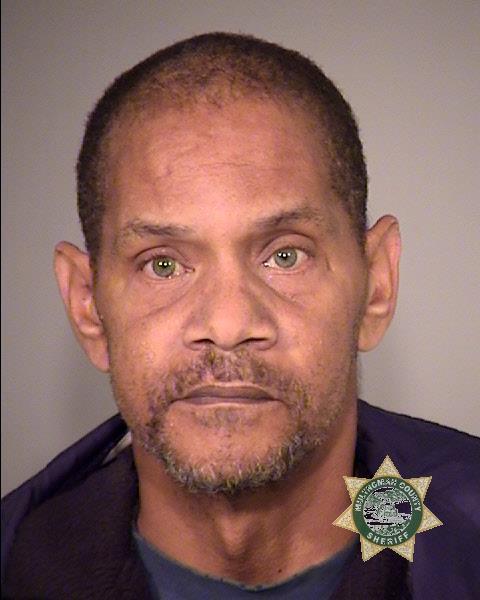
Homer Lee Jackson III: The Portland Serial Killer
Overview
Homer Lee Jackson III was an American serial killer responsible for the deaths of four women and girls in Portland, Oregon, between 1983 and 1993. The cases remained unresolved for decades before advances in forensic testing connected Jackson to evidence recovered from the crime scenes.
Jackson was arrested in October 2015 and initially charged with aggravated murder. After years of disputed forensic evidence, suppressed interrogation statements and pretrial appeals, he accepted a plea agreement in January 2022. He pleaded guilty to four counts of criminally negligent homicide in the deaths of Tonja Harry, Angela Anderson, Latanga Watts and Lawauna Triplet.
Jackson received a sentence of six years and three months. Because he had already spent more than six years in custody while awaiting trial, he was released with credit for time served. The outcome was strongly criticized by relatives of the victims, who believed the punishment did not reflect the seriousness of the crimes.
Early Life and Criminal History
Homer Lee Jackson III was born on December 18, 1959, in Berkeley, California. His family later moved to Portland, Oregon, where he spent most of his life. Publicly available information about his childhood is limited, although court proceedings later documented serious intellectual, psychological and medical problems.
Jackson reportedly experienced learning difficulties and left school before graduating. As a young adult, he accumulated a criminal record that included arrests and convictions for burglary. He also spent time in areas of Portland associated with street-level drug activity and commercial sex work.
During the period in which the killings occurred, Jackson reportedly abused alcohol and crack cocaine. He later claimed that his drug use and memory problems left him unable to remember large portions of his life. Those assertions became important during his prosecution because investigators attempted to obtain admissions from him despite knowing that he had significant cognitive and psychiatric limitations.
Jackson was eventually diagnosed with schizophrenia and experienced serious physical illnesses. His mental condition, suggestibility and impaired memory became central issues in the legal battle over whether statements he made during police questioning could be used against him.
The Victims
The four victims included in Jackson's final criminal case were killed over a period of approximately ten years. Their bodies were discovered in isolated or abandoned locations in North Portland. Several of the victims had been strangled, and prosecutors argued that forensic evidence connected Jackson to each scene.
- Tonja Nannette Harry, 19 — July 9, 1983 — West Delta Park, Portland, Oregon: Harry's body was discovered partially submerged in water in the West Delta Park area of North Portland. She had suffered injuries to her face and neck, and investigators determined that she had been strangled. Evidence collected near or on her body was preserved for later forensic examination. Her first name has also appeared as “Tonya” in some official records, but she is widely identified as Tonja Nannette Harry.
- Angela Dina Anderson, 14 — September 22, 1983 — Vacant house in North Portland, Oregon: Anderson was the youngest known victim. Her body was found inside a room in an unoccupied house. A ligature was wrapped around her neck, and she had additional injuries to her wrists. Physical evidence, including cigarette butts and other materials from the house, was collected and preserved. Jackson later made statements about Anderson during questioning, although portions of what he said were inaccurate and his interrogation was ultimately ruled legally inadmissible.
- Latanga Lee Watts, 29 — March 18, 1987 — Near a pedestrian bridge in North Portland, Oregon: Watts was found in a grassy area near a pedestrian bridge. She had been strangled. Biological material and fingernail evidence recovered during the investigation were later subjected to modern DNA analysis. Prosecutors considered the forensic evidence from Watts's case particularly important because testing produced a DNA profile consistent with Jackson.
- Lawauna Janelle Triplet, 29 — June 15, 1993 — Near North Concord Avenue and North Going Street, Portland, Oregon: Triplet's body was discovered near a pedestrian bridge crossing North Going Street. She had been beaten and strangled. Her killing occurred almost six years after the death of Latanga Watts and approximately ten years after the 1983 victims. Jackson was not publicly charged in Triplet's death until 2019, when prosecutors filed a superseding indictment that added her case and removed the previously charged death of Essie Jackson.
The Death of Essie Carrie Jackson
Homer Lee Jackson was also investigated in connection with the death of Essie Carrie Jackson, who was not related to him. She was 23 years old when her body was found on March 23, 1983, near the western edge of Overlook Park in North Portland.
Essie Jackson had been strangled and sexually assaulted. Her clothing and the positioning of her body shared similarities with some of the other cases. When Homer Jackson was arrested in 2015, her death was one of the four killings listed in the original indictment.
Questions later emerged about the evidence in Essie's case. DNA found beneath her fingernails did not match Homer Jackson, and other biological material recovered from her clothing was also inconsistent with his profile. Because the remaining evidence was considered insufficient, prosecutors dismissed the charges involving Essie Jackson in 2019.
Authorities continued to consider Homer Jackson a suspect in her death, but he was never convicted of or allowed to plead guilty to killing her. Lawauna Triplet's 1993 death replaced Essie's case in the final prosecution.
Similarities Between the Crimes
The victims were found in different parts of North Portland, but investigators identified several recurring features. The victims were young women or girls from vulnerable circumstances, and several had connections to street-level commercial sex work. Their bodies were left in parks, vacant buildings, grassy areas or locations near pedestrian bridges.
Strangulation was a major similarity. Tonja Harry, Angela Anderson, Latanga Watts and Lawauna Triplet all suffered fatal neck compression or ligature injuries. Several scenes also contained indications of sexual activity or assault. Clothing had been disturbed in a number of the cases, and biological evidence was recovered from the victims or the surrounding areas.
Despite those similarities, the defense emphasized important differences. The victims varied in age, the bodies were found in different environments, and some had injuries that did not appear in the other cases. Forensic testing also revealed biological material from several unidentified individuals. These complications made it difficult for prosecutors to present the killings as the work of a single offender without relying heavily on disputed DNA evidence and Jackson's interrogation statements.
The Cold-Case Investigation
For many years, the killings remained separate cold cases. Investigators had collected bodily fluids, hairs, cigarette butts, fingernail scrapings and other physical evidence, but the forensic technology available during the 1980s and early 1990s could not produce the detailed genetic profiles later made possible by DNA analysis.
As testing methods improved, detectives revisited the evidence. A DNA profile consistent with Homer Jackson was identified in material associated with the crime scenes. Prosecutors eventually argued that the combined forensic evidence created a pattern connecting him to multiple victims.
The evidentiary picture was not simple. Some samples matched Jackson, some produced inconclusive results and others belonged to unidentified people. Defense attorneys maintained that Jackson's DNA could have been present because he had engaged in consensual sexual contact with women involved in commercial sex work. They argued that the presence of his biological material did not prove that he was the person who killed them.
Arrest and Original Charges
Homer Jackson was arrested on October 15, 2015. A Multnomah County grand jury charged him with multiple counts of aggravated murder relating to the deaths of Essie Jackson, Tonja Harry, Angela Anderson and Latanga Watts.
Because Oregon prosecutors alleged different legal theories for each death, the indictment contained multiple aggravated-murder counts for the four victims. Jackson entered pleas of not guilty and was held in the Multnomah County jail while the case proceeded.
The arrest generated considerable attention because the killings had remained unsolved for more than thirty years. Prosecutors described Jackson as a serial offender who had targeted vulnerable women, while his attorneys argued that the forensic case was inconsistent and that the police had obtained unreliable statements from a mentally ill man.
The Police Interrogation
After his arrest, Jackson was questioned over two days. He initially denied killing the victims. Detectives then discussed the evidence, described possible versions of the crimes and repeatedly encouraged him to accept responsibility.
Jackson eventually made statements that appeared to acknowledge involvement, but his answers were inconsistent. At times he said he might have committed crimes that he could not remember. At other times he repeated information that had first been supplied by detectives.
Some of Jackson's descriptions did not match the known evidence. While discussing Angela Anderson, for example, he referred to injuries that she had not suffered. His inability to provide consistently accurate details raised concerns that he was agreeing with investigators rather than recalling genuine memories.
The detectives also appealed to Jackson's religious beliefs and suggested that confessing could bring emotional or spiritual relief. Courts later concluded that the questioning included improper inducements and created a serious danger of producing false or unreliable admissions.
Suppression of Jackson's Statements
In 2017, a trial judge ruled that Jackson's statements to investigators could not be introduced at trial. The judge found that the interrogation methods were coercive and that Jackson's mental illness and memory impairments made him particularly vulnerable to suggestion.
Prosecutors appealed the decision. In 2018, the Oregon Supreme Court upheld the suppression of the statements. The ruling was a major setback for the prosecution because Jackson's alleged admissions had been expected to support forensic evidence that was otherwise open to competing interpretations.
Without the interrogation, prosecutors had to rely more heavily on DNA evidence and similarities among the crime scenes. The defense continued to challenge whether evidence from one death could legally be used to demonstrate Jackson's responsibility for another.
The Revised Indictment
In May 2019, prosecutors announced a major change in the case. The counts involving Essie Jackson were dismissed because the available evidence was no longer considered sufficient for prosecution. At the same time, a grand jury indicted Homer Jackson in the previously uncharged death of Lawauna Triplet.
The revised prosecution therefore involved Tonja Harry, Angela Anderson, Latanga Watts and Lawauna Triplet. Investigators said that evidence connected Jackson to all four women, whose deaths occurred between July 1983 and June 1993.
The addition of Triplet's case extended the known series of killings from a period of approximately four years to a period of almost ten years. It also demonstrated how the cold-case investigation continued to change as old evidence was retested and reviewed.
Dispute Over Crime-Scene Evidence
Another important legal issue concerned whether jurors considering one killing could hear evidence from the other three crime scenes. Prosecutors argued that the similarities among the cases, together with the DNA findings, made each crime relevant to the others.
The defense argued that combining the cases would encourage jurors to assume that Jackson was guilty based on the number of accusations rather than the strength of the evidence in each individual death. Jackson's attorneys requested separate trials and challenged the cross-admission of evidence.
The courts imposed significant restrictions on the prosecution's ability to combine the cases. Those rulings weakened the argument that the crimes formed a single identifiable pattern and increased the possibility that Jackson could be acquitted in some or all of the trials.
The 2022 Plea Agreement
Jackson's trial finally began in January 2022, more than six years after his arrest. By that time, both sides faced substantial uncertainty. Prosecutors had DNA evidence, but its meaning was disputed. Jackson's interrogation had been suppressed, and the state faced limits on presenting the four cases together.
On January 31, 2022, Jackson accepted a negotiated resolution. He pleaded guilty to four counts of criminally negligent homicide, one count for each of the following victims:
- Tonja Nannette Harry
- Angela Dina Anderson
- Latanga Lee Watts
- Lawauna Janelle Triplet
Criminally negligent homicide was a far less serious offense than aggravated murder. Under the agreement, Jackson received a total sentence of six years and three months. He had already been jailed since October 2015, so the court credited him for the time he had served and ordered his release.
The agreement also placed Jackson under probationary supervision. Prosecutors explained that the plea ensured formal responsibility for all four deaths while avoiding the risk that the weakened and divided cases could result in acquittals.
Reaction from the Victims' Families
Relatives of the victims reacted with anger, disappointment and grief. Several had waited nearly four decades for a resolution and believed that Jackson should have remained in prison for the rest of his life.
For the families, the reduction from aggravated murder to criminally negligent homicide appeared to minimize intentional acts of violence. They also objected to Jackson leaving the courthouse without serving additional prison time.
The prosecution maintained that the agreement reflected the legal difficulties created by the suppressed interrogation, disputed forensic evidence and appellate rulings. The families, however, emphasized that four people had lost their lives and that the passage of time had already denied them a prompt opportunity for justice.
Release and Final Years
Jackson was released after the January 2022 sentencing. By then, his health had deteriorated considerably. He reportedly suffered from serious cardiovascular and respiratory problems, mobility limitations and the long-term effects of having only one functioning lung.
He returned to Portland following his release. His case continued to attract criticism because a man publicly identified as a serial killer had received no additional incarceration after admitting legal responsibility for four deaths.
Death of Homer Lee Jackson
Homer Lee Jackson III was found dead at his Portland home on July 18, 2023. He was 63 years old. A family member discovered him unresponsive after he had experienced severe medical problems and a period of hospitalization.
Authorities did not suspect foul play. Jackson's death occurred approximately eighteen months after his plea agreement and release from custody.
Legacy of the Case
The Homer Lee Jackson investigation remains one of Portland's most controversial serial-murder cases. It demonstrated the value of preserving physical evidence for future DNA testing, but it also showed that forensic evidence must be interpreted carefully when samples contain DNA from several people or when an alternative explanation for contact may exist.
The case also became an important example of the dangers of interrogating a mentally ill and cognitively impaired suspect. Jackson's statements appeared incriminating in isolation, but his factual errors and tendency to agree with detectives caused courts to question their reliability. The suppression of those statements reshaped the entire prosecution.
Although Jackson ultimately pleaded guilty to four homicides, the reduced convictions and immediate release left many questions unresolved. The families received an official acknowledgment of his responsibility, but not the murder convictions or lengthy prison sentence they had expected.
Essie Carrie Jackson's death also remains significant. Homer Jackson was originally charged with killing her and continued to be regarded as a suspect after the charge was dismissed. However, he was never convicted in her case, and her homicide should not be included among the four deaths for which he accepted criminal responsibility.
The known series attributed to Homer Lee Jackson began with the death of Tonja Harry on July 9, 1983, and ended with the death of Lawauna Triplet on June 15, 1993. Four vulnerable people were killed, their cases remained unresolved for decades, and the eventual legal outcome continued to divide prosecutors, defense attorneys, victims' relatives and the wider Portland community.