Ervin Elroy Cherry: The North Florida Strangler
Overview
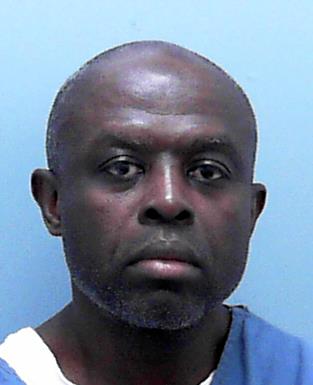
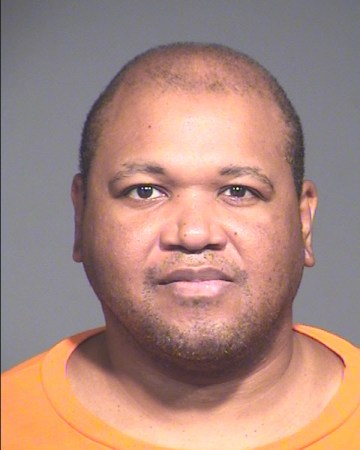
Ervin Elroy Cherry is an American serial killer who murdered three women in rural North Florida between November 1993 and March 1994. A farm laborer with a history of violence, Cherry preyed on vulnerable women in the Hastings and Palatka communities, strangling them and abandoning their bodies in remote, wooded areas. His crimes triggered a multi-jurisdictional investigation that was emblematic of the pre-digital era, relying on painstaking manual coordination between sheriff's offices. Cherry was convicted of two murders in 1995 and sentenced to two life terms. For sixteen years, he denied involvement in a third, nearly identical killing. In 2010, while already imprisoned, he confessed to the cold-case murder, leading to a third conviction and ensuring he would spend the remainder of his life behind bars.
Early Life and Criminal History
Ervin Elroy Cherry was born on March 26, 1966. He was raised in Hastings, a small, unincorporated farming community in St. Johns County, Florida, known as the "Potato Capital of Florida." Little is publicly known about his upbringing or family life, but he grew into a man who was familiar with the area's back roads and its undercurrent of poverty and drug use. As an adult, he worked as a farm laborer, a common occupation in the region.
Cherry's path into the criminal justice system began years before the murders. On October 1, 1986, he was arrested in Madison County, Florida, for a violent crime. He was convicted of aggravated battery with a deadly weapon for stabbing a man. On May 4, 1987, he was sentenced to ten years in state prison. Despite the lengthy sentence, he served only a fraction of it, gaining his release from the Florida Department of Corrections on September 13, 1990. After his release, the 24-year-old Cherry returned to his home community of Hastings, where he would remain for the next few years.
The Murders
The string of killings began in the autumn of 1993. The first victim was Wanda Gail Robinson, a 34-year-old mother of three who, like Cherry, lived in Hastings. On November 22, 1993, her body was discovered by hunters in a desolate, wooded area off Cowpen Branch Road in western St. Johns County. An autopsy determined she had been manually strangled to death.
Less than three months later, the pattern repeated itself in an adjacent county. On February 5, 1994, the body of 24-year-old Christina Demetrice Cooper of Palatka was found partially submerged in a drainage ditch alongside a rural road in Putnam County. She too had been strangled. The similarities between the two cases—the victim profile, the cause of death, and the remote disposal of the body—were immediately apparent to law enforcement.
The final murder occurred just one month after Cooper's body was found. Katherine "Kat" Walker, a 37-year-old woman from Hastings, was last seen alive in early March 1994. On March 8, her body was discovered in a potato field in her home community, not far from where Wanda Robinson's remains had been located. The cause of death was once again strangulation. Although investigators suspected a link to the other two slayings, they lacked the evidence to formally connect them, and Walker's murder would officially remain a cold case for over a decade.
The Victims
- Wanda Gail Robinson, 34 — Found on November 22, 1993, in St. Johns County. A mother of three from Hastings, she was remembered by her family as a loving person caught in difficult circumstances.
- Christina Demetrice Cooper, 24 — Found on February 5, 1994, in Putnam County. A resident of Palatka and a mother, her life was cut short, leaving a devastated family.
- Katherine Walker, 37 — Found on March 8, 1994, in Hastings. Known as "Kat" in her community, her case went unsolved for sixteen years until her killer finally confessed.
Investigation and Capture
The series of murders prompted a joint investigation by the St. Johns County and Putnam County Sheriff's Offices, with assistance from the Florida Department of Law Enforcement (FDLE). Detectives formed the Putnam-St. Johns County Homicide Task Force to coordinate their efforts. Investigators, including Sgt. Chuck West of St. Johns County, quickly recognized the emerging pattern. The victims were all Black women known to frequent areas associated with drug activity, they were all strangled, and their bodies were all dumped in rural, isolated locations.
The investigation was a laborious, pre-digital effort. Without shared databases, DNA technology in its infancy, or cell phone tracking, detectives relied on traditional police work. They manually cross-referenced files, shared physical case notes, and conducted hundreds of interviews in communities where trust in law enforcement was often low.
Ervin Cherry emerged as a person of interest early on. He was known to associate with all three women. Witnesses reported seeing him with Christina Cooper at a bar shortly before she disappeared. He had also been seen with Wanda Robinson. His name was one of many being looked at, but investigators lacked the direct evidence to make an arrest.
The break in the case came from an entirely different crime in another state. In September 1994, Cherry's girlfriend reported that he had stolen her car. A warrant was issued for his arrest. On September 22, 1994, police in Savannah, Georgia, found Cherry at a Salvation Army shelter and arrested him for auto theft. He also had a crack pipe in his possession.
His arrest was the turning point. With Cherry in custody and unable to harm anyone else, the Florida task force could focus its full attention on building a murder case against him. While he was held in Georgia, investigators in Florida worked to solidify their circumstantial case, re-interviewing witnesses and establishing a timeline that placed Cherry with the victims near the time of their deaths.
Trial and Sentencing
In late 1994, Ervin Cherry was extradited to Florida and indicted by a grand jury on two counts of first-degree murder for the deaths of Wanda Robinson and Christina Cooper. The murder of Katherine Walker remained unsolved, as prosecutors felt they did not yet have enough evidence to secure a conviction in that case.
The trial took place in January 1995 in St. Johns County. The prosecution, led by Assistant State Attorney John Tanner, presented a powerful circumstantial case. They argued that the striking similarities in the three murders—though Cherry was only on trial for two—pointed to a single killer who was engaging in serial, signature crimes. They presented witnesses who testified to seeing Cherry with the victims and highlighted his history of violence. The defense countered that there was no physical evidence—no fingerprints, no DNA—linking Cherry to the crimes and that the state's case was built on speculation.
On January 13, 1995, after a short deliberation, the jury returned a guilty verdict on both counts of first-degree murder. The judge subsequently sentenced Ervin Cherry to two consecutive life sentences without the possibility of parole. He was sent into the Florida prison system, and the communities of Hastings and Palatka breathed a sigh of relief, believing the man responsible for the string of killings was gone for good.
A Cold Case Confession
For the next sixteen years, Ervin Cherry maintained his innocence from behind bars. During that time, the murder of Katherine Walker remained officially unsolved, a lingering cold case for the St. Johns County Sheriff's Office. Though Cherry was the primary suspect, the case could not be closed without more evidence.
In March 2010, two cold-case detectives, Mike Smith and Howard "Skip" Cole, traveled to Florida State Prison in Raiford to interview Cherry. Now in his mid-40s, Cherry had spent years in the harsh reality of maximum-security prison. During the interview, the detectives confronted him with the details of the Walker case. In a stunning turn, Cherry dropped his denials and confessed to killing her.
He told the detectives that he and Walker had been together and had gotten into a heated argument over a drug deal. He claimed the killing was not premeditated, but that in a moment of rage, he strangled her. He then provided investigators with specific details about the crime that only the killer could have known, including the precise location in the potato field where he had left her body.
A Third Life Sentence
Based on his detailed confession, a St. Johns County grand jury indicted Ervin Cherry for the first-degree murder of Katherine Walker in May 2010. Rather than face another trial, he chose to plead guilty.
On August 13, 2010, Cherry appeared before a judge in a St. Johns County courtroom. Members of Katherine Walker's family were present to see the man who had taken their loved one finally face justice for his crime. Cherry, showing little emotion, was formally convicted. The judge sentenced him to a third consecutive life sentence without the possibility of parole, officially closing the final chapter in his murderous spree.
Aftermath and Legacy
Ervin Cherry's crimes left a scar on the small, tight-knit communities of North Florida. He exploited the vulnerabilities of women living on the margins, and for a terrifying four-month period, he cast a shadow of fear over the region. His case stands as an important example of the challenges that faced law enforcement in the 1990s when investigating serial crimes that crossed jurisdictional lines. The successful outcome was a direct result of inter-agency cooperation and the persistence of individual detectives who refused to let the cases go cold.
The eventual confession to Katherine Walker's murder, sixteen years after the fact, underscored the value of dedicated cold-case units and the psychological weight that guilt can place on an incarcerated killer. Ervin Elroy Cherry is currently incarcerated at the Santa Rosa Correctional Institution, where he will remain for the rest of his life.