Edgecombe County Serial Killer – The Seven Bridges Killer
Overview
The name "Edgecombe County Serial Killer," also commonly called the "Seven Bridges Killer," refers to a series of murders and disappearances involving women from the Rocky Mount, North Carolina, area. Beginning in the mid-2000s, bodies repeatedly appeared in rural sections of Edgecombe County, particularly around Seven Bridges Road between the communities of Battleboro and Whitakers. Other victims were discovered elsewhere in Rocky Mount and in neighboring Halifax County.
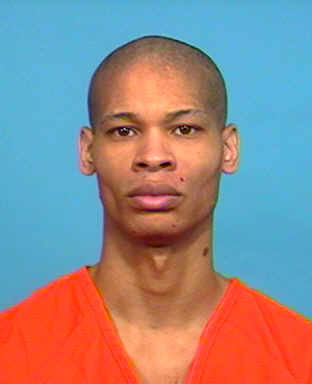
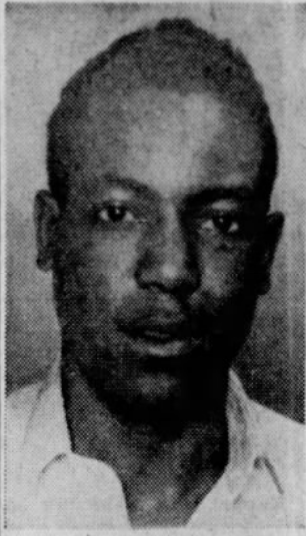
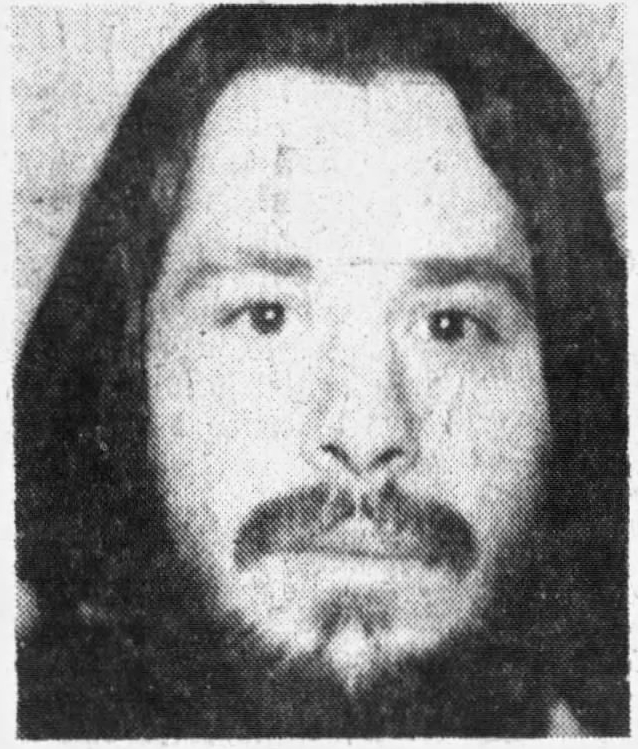
The case is unusual because the Edgecombe County Serial Killer has never been conclusively established as a single unidentified offender. Investigators suspected that a number of the deaths were connected, and one man, Antwan Maurice Pittman, eventually became the primary suspect. Pittman was convicted of murdering Taraha Shenice Nicholson, but he was never charged with any of the other deaths. Consequently, the remaining cases should be described as suspected serial-killer cases rather than murders conclusively proved to have been committed by Pittman or by one offender.
Most of the women at the center of the investigation were Black women from Rocky Mount. Authorities reported that many had struggled with substance abuse, prostitution, or both, and several of the women knew one another. Their circumstances made investigators increasingly concerned that someone might have been deliberately targeting vulnerable women who could disappear for days or weeks before relatives became alarmed.
The Bodies Around Seven Bridges Road
Seven Bridges Road is a rural road running through northern Edgecombe County between Battleboro and Whitakers. Wooded areas, fields and isolated properties along or near the road became recurring locations in the investigation. Jackie Nikelia Thorpe, Ernestine Battle, Jarniece Latonya Hargrove and Roberta Williams were among the women whose remains were recovered in this general area. Taraha Nicholson was found in another rural location nearby, and investigators eventually conducted extensive searches of the surrounding countryside.
By 2009, the repetition had become impossible to dismiss as a series of ordinary unrelated discoveries. Women from the same community, with similar circumstances, were vanishing and later turning up dead in isolated areas within a relatively small geographic region. Local police, the Edgecombe County Sheriff's Office, the North Carolina State Bureau of Investigation and eventually the FBI became involved in determining whether the cases were connected.
Victims and Suspected Victims
Because decomposition prevented medical examiners from establishing exact dates of death in most of these cases, discovery dates should not automatically be treated as death dates. The following list distinguishes between verified body-discovery dates and cases in which an exact date of death remains unknown.
- Melody LaShae Wiggins, 29 – Wiggins' decomposed body was discovered on May 30, 2005 near Nobles Mill Pond Road in rural Edgecombe County, south of U.S. Highway 64. She was identified after her boyfriend reported her missing. An autopsy determined that she suffered extensive blunt-force trauma to the head as well as numerous cutting injuries. The blunt-force injuries were determined to be the cause of death. Her exact date of death was not established.
- Jackie Nikelia Thorpe, 35 – Thorpe was reported missing from Rocky Mount on May 8, 2007. Her badly decomposed remains were discovered on August 17, 2007 behind a residence along Seven Bridges Road between Battleboro and Whitakers. The advanced condition of the remains prevented investigators from establishing an exact date of death, and a definitive cause of death was not publicly established. Her discovery was one of the first to focus attention specifically on Seven Bridges Road.
- Ernestine Battle, 50 – Battle disappeared in February 2008. A farmer discovered her remains on March 14, 2008 in woods along Seven Bridges Road between Battleboro and Whitakers. Because of the severe decomposition, the medical examiner could not determine her cause of death. Her exact date of death remains unknown.
- Elizabeth Jane Smallwood, 33 – Smallwood's skeletal remains were discovered by a cleanup crew on February 13, 2009 in the 300 block of Melton Drive near the Tar River in Rocky Mount. Smallwood had not been reported missing, making identification difficult. Investigators eventually identified her through medical records. Examiners believed she could have been dead for approximately six months to a year before discovery. Her exact date and cause of death could not be established.
- Taraha Shenice Nicholson, 28 – Nicholson was reported missing on February 22, 2009. Her body was discovered on March 7, 2009 in a wooded rural area off Marriott Road in Edgecombe County, several miles north of Rocky Mount. An autopsy determined that Nicholson had been strangled. She suffered a fractured hyoid bone, hemorrhaging and other injuries. Because her body had remained outside for several days, investigators could not determine an exact time of death. Antwan Maurice Pittman was later convicted of her murder.
- Jarniece Latonya "Sunshine" Hargrove, 31 – Hargrove disappeared during the spring of 2009 and was reported missing in early May. Her skeletal remains were discovered on June 29, 2009 in a wooded area off Seven Bridges Road near Rocky Mount. Her body had apparently been there for an extended period. Decomposition prevented the medical examiner from establishing a definitive cause or exact date of death.
- Christine Marie Boone, 43 – Boone was last known to be alive on August 25, 2006 and was reported missing on January 16, 2007. Her skeletal remains were finally discovered on March 5, 2010 in woods near Scotland Neck in Halifax County. The location was behind an abandoned mobile home where Antwan Pittman had lived in 2006. Her remains were badly deteriorated and scattered, and the medical examiner could not determine a cause or exact date of death.
- Roberta Williams, 40 – Williams was last known to have been seen in the spring of 2008. On March 27, 2010, people riding four-wheelers discovered skeletal remains approximately 20 yards inside a wooded area off Seven Bridges Road. The remains were subsequently identified as Williams. The condition of her remains prevented authorities from determining exactly when or how she died.
- Yolanda Renee "Snap" Lancaster, 37 – Lancaster was last seen in Rocky Mount on February 5, 2009. Her disappearance became one of the most publicized cases connected to the investigation. Hunters searching for deer antlers discovered human remains on January 10, 2011 in woods off Battleboro-Leggett Road near the Battleboro area of Edgecombe County. The remains were identified several days later as Lancaster. Her exact date of death was not established.
- Joyce Renee Durham, 46 – Durham was last seen in Rocky Mount on June 17, 2007. She shared similarities with the other women and became part of the investigation into a suspected serial killer. Extensive searches were conducted for her, including searches of the Seven Bridges Road area. Unlike the others, Durham has not been conclusively located, so there is no verified date of death and she should be considered a missing person rather than a confirmed murder victim.
Denise Williams – An Earlier Possible Related Homicide
Denise M. Williams, 21, is frequently included in broader discussions of the Edgecombe County murders, although she was not consistently counted among the central group in later law-enforcement descriptions of the investigation. Williams disappeared in late May 2003. Two fishermen discovered her body floating in Cokey's Creek or Cokey Swamp southeast of Rocky Mount on June 2, 2003. Her death was treated as a homicide.
Williams' case attracted renewed attention as the later murders accumulated. Authorities examined whether her death could be related, and contemporary reporting indicated that her case was considered as part of the broader investigation. However, law enforcement never publicly established that the person who killed Williams was responsible for the later Seven Bridges Road cases. For that reason, she is more accurately described as an additional possible victim rather than a conclusively linked victim.
The Murder of Taraha Nicholson
Nicholson's case became the critical breakthrough because her body was recovered before decomposition had destroyed the physical evidence investigators needed. The medical examiner determined that she had been strangled. Biological evidence recovered from her body was eventually matched through DNA testing to Antwan Maurice Pittman, a Rocky Mount man with a criminal record who had connections to the area where several victims were discovered.
Pittman admitted at trial that he had been with Nicholson shortly before her death. He testified that he picked her up on March 1, 2009, paid her for sex at a motel and later dropped her off near a library in Rocky Mount. He insisted that she was alive when he left her and denied having anything to do with her death. Nicholson's body was discovered six days after the encounter.
Prosecutors argued that the DNA was only one part of a larger circumstantial case. Two women who had previously worked as prostitutes testified about frightening encounters with Pittman and said that he had attempted to strangle them. Prosecutors portrayed those incidents as evidence of behavior strikingly similar to the manner in which Nicholson was killed.
Antwan Maurice Pittman and the Other Cases
As investigators examined Pittman's history, they found a number of geographical and circumstantial connections that increased their suspicion. Pittman had lived in and around Rocky Mount and was familiar with the rural communities surrounding Seven Bridges Road. Several body-disposal locations were within areas he had lived in, visited or had family connections to.
The Christine Boone case created another troubling connection. Boone's remains were discovered in March 2010 in a wooded area behind a Scotland Neck mobile home where Pittman had lived during 2006, around the period in which Boone disappeared. Investigators obtained a search warrant for the property and publicly identified Pittman as an important person of interest in Boone's death. Nevertheless, the evidence was never sufficient to produce a murder charge.
The circumstances surrounding Jarniece Hargrove's disappearance also drew intense scrutiny. On April 25, 2009, a North Carolina Highway Patrol trooper encountered Pittman along Seven Bridges Road after receiving a report concerning a vehicle. Pittman was found asleep in the driver's seat and was arrested on impaired-driving charges. Investigative documents later noted that this occurred during the period in which Hargrove disappeared. Her remains were found approximately two months later only a short distance from the area where Pittman's vehicle had been located.
Investigators also noted that Pittman had lived near other locations associated with the cases. At one point he resided near the area where Elizabeth Smallwood's remains were later discovered. He had grown up and spent time in the northern Edgecombe County area near several of the rural disposal sites. These circumstances did not prove he committed the murders, but they were among the reasons authorities investigated him extensively.
Conviction
Authorities charged Pittman with first-degree murder in Taraha Nicholson's death in September 2009. Because of extensive publicity surrounding the suspected serial killings, his trial was moved from Edgecombe County to Bertie County.
On September 29, 2011, after deliberating for less than an hour, a jury found Antwan Maurice Pittman guilty of first-degree murder in Nicholson's strangulation. He was sentenced to life imprisonment without the possibility of parole. Pittman maintained that he had not killed Nicholson.
The Nicholson conviction remains the only murder conviction obtained in the Edgecombe County series. Pittman was never prosecuted for the deaths of Wiggins, Thorpe, Battle, Smallwood, Hargrove, Boone, Roberta Williams or Lancaster, nor was he charged in connection with Joyce Durham's disappearance.
Was There Really One Edgecombe County Serial Killer?
That question remains one of the most important unresolved issues in the case. By 2010, Rocky Mount Police Chief John Manley publicly acknowledged that investigators believed they were dealing with a suspected serial killer. The similarities were difficult to ignore: multiple women from the same relatively small community disappeared, numerous bodies were left in rural areas around Edgecombe County, several were placed near Seven Bridges Road, and many of the victims moved within the same social circles.
At the same time, investigators did not possess forensic evidence proving that every murder was committed by the same person. Several bodies were so decomposed that even the cause of death could not be established. That meant investigators could not compare methods of killing in every case. A body discovered near another victim could suggest a common offender, but location alone could not prove it.
The prosecution of Pittman strengthened the belief that he might have been responsible for additional deaths. Authorities publicly described him as a suspect or person of interest in several cases, and investigative documents specifically connected him to multiple women. The apparent disappearance of similar killings after his arrest was another circumstance that raised suspicion. None of those facts, however, substitutes for a criminal conviction.
Other Deaths Sometimes Associated With the Case
Other Rocky Mount deaths have occasionally been mentioned alongside the Seven Bridges investigation, which is one reason published victim totals sometimes differ. One example is Travis Harrison, a man whose remains were found in Rocky Mount. Harrison's background and the circumstances of his death initially prompted questions about a possible connection. Rocky Mount police later stated that evidence suggested his death was not connected to the larger investigation. He therefore should not be presented as a confirmed Edgecombe County Serial Killer victim.
Denise Williams presents a different situation. Her 2003 homicide was examined by authorities and has repeatedly been discussed as a possible precursor to the later killings, but she was not always included in official counts of the central group. This explains why accounts of the Edgecombe County Serial Killer sometimes refer to nine victims, ten victims or an even larger group of suspected cases.
The Search for Missing Women
The investigation eventually became large enough to involve local police, sheriff's deputies, state investigators, the FBI and the North Carolina National Guard. In April 2010, Governor Bev Perdue authorized National Guard personnel to assist with an extensive search of the Seven Bridges Road area and surrounding countryside. Investigators were particularly searching for Yolanda Lancaster and Joyce Durham.
The large search did not immediately locate either woman. Lancaster's remains were discovered independently by hunters in January 2011. Durham remained missing, leaving her family without the same answers eventually obtained in Lancaster's case.
An Unfinished Investigation
The conviction of Antwan Pittman solved Taraha Nicholson's murder in the eyes of the courts, but it did not solve the larger mystery surrounding the women of Rocky Mount. The other deaths remain important unsolved homicide investigations, and Joyce Durham's disappearance remains unresolved.
The Edgecombe County cases also became an example of the difficulties surrounding crimes against vulnerable victims. Many of the women struggled with addiction, poverty or sex work, but those circumstances did not make their disappearances or deaths less important. Families repeatedly organized vigils, memorials and public events because they feared their relatives would otherwise be forgotten.
More than a collection of bodies found along one rural road, the Edgecombe County investigation represents a series of individual lives lost and families still seeking answers. The evidence proved beyond a reasonable doubt that Antwan Maurice Pittman murdered Taraha Nicholson. Investigators suspected connections to other victims, but suspicion has never resulted in additional convictions. Until stronger forensic evidence, a confession or new investigative information establishes what happened to the remaining women, the complete identity and victim count of the so-called Edgecombe County Serial Killer remain unresolved.