John Randolph Kizer: The Accused Poisoner of Randolph County
Early Life and Position in the Community
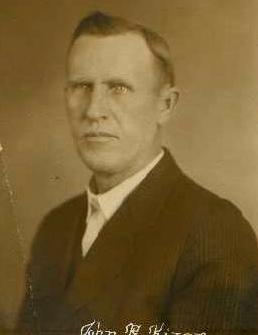
John Randolph Kizer was born on January 11, 1871, near Dalton in Randolph County, Arkansas. He grew up in a poor farming family and developed an early familiarity with livestock, medicines and the practical treatment of sick animals. As an adult, he presented himself as a veterinarian during an era when formal veterinary education and licensing requirements were limited. He later became a deputy sheriff, agricultural instructor, county agent and special agent associated with the United States Department of Agriculture.
Kizer achieved a position of considerable respect in rural northeastern Arkansas. Farmers trusted his knowledge of livestock, and local residents knew him as an educated and financially ambitious man. He could reportedly spend many hours attempting to save a sick farm animal. At the same time, stories circulated that he had little compassion for dogs and sometimes poisoned them. This knowledge of poisons, injections and animal medicines later became central to suspicions surrounding a series of human deaths.
Financial Motive and the Beginning of the Suspected Murders
Kizer’s alleged crimes were closely connected to money, insurance policies, wills and property. The disastrous Arkansas River and Mississippi River flooding of 1927 damaged the regional economy, while later financial losses reportedly placed additional pressure on Kizer. Investigators and later writers believed he began arranging the deaths of people whose money or land he could inherit.
His suspected method was subtle. A person close to him would become ill, frequently with symptoms Kizer described as malaria. Instead of immediately obtaining independent medical treatment, he allegedly offered to care for the patient himself. He administered medicines or injections using equipment associated with his veterinary practice. The victim then deteriorated and died, often after an illness that appeared sudden or difficult to explain.
Because many of the victims were elderly, already ill or living in an area where infectious diseases were common, their deaths initially attracted little official attention. Kizer also possessed social standing and enough medical knowledge to make his explanations sound believable. Death certificates commonly listed natural causes, and bodies were buried before toxicological testing could be conducted.
The Death of Birdie Brooks Kizer
Kizer married Birdie Brooks, a widow with three children, in 1902. Birdie was active in the community and worked with agricultural and home-canning programs. Shortly before her death, she reportedly obtained a life insurance policy at Kizer’s urging. When she became ill, Kizer treated her himself and resisted suggestions that a physician should take control of her care.
Birdie’s condition became increasingly painful. One of her arms swelled severely after Kizer had reportedly administered injections. She was eventually transported to St. Bernards Hospital in Jonesboro, Arkansas, where doctors amputated the affected arm in an unsuccessful effort to save her. Birdie Brooks Kizer died on December 22, 1927.
Her children were suspicious of their stepfather’s treatment, particularly because of his use of veterinary equipment and unidentified medicines. Nevertheless, no murder charge was filed. Kizer collected the financial benefits associated with her death and paid for an expensive stained-glass memorial window bearing Birdie’s name. The gesture helped quiet some of the criticism surrounding him.
Elmer Anderson and an Alleged Romantic Motive
Kizer was also accused in later accounts of killing Elmer Anderson, the husband of a woman Kizer wished to marry. Anderson lived on a cattle ranch outside Pocahontas. According to the story later published about the case, Kizer learned that Anderson’s wife would be away from the ranch overnight and traveled to the property.
The following morning, Kizer contacted an undertaker and reported that Anderson had died suddenly, apparently from heart failure. Kizer then comforted the widow and later proposed marriage. She refused, reportedly saying that she had loved her husband and did not intend to marry again. Anderson’s exact date of death has not been reliably established in surviving public accounts, although the death was reported as occurring in the mid-1920s.
The Riggs Farm Deaths
Another pair of suspicious deaths involved a woman identified in historical accounts as Kizer’s niece, Mrs. Robert Riggs, and her husband, Robert Riggs. When Mrs. Riggs became ill, Kizer moved into the couple’s farmhouse and assumed responsibility for her treatment. He allegedly diagnosed her condition as malaria and administered injections from his veterinary bag.
Mrs. Riggs died within approximately a month. Her physician had reportedly been unaware that Kizer was also treating her and certified the death as natural. Kizer remained at the farm and became increasingly close to Robert Riggs.
Kizer then announced that he intended to leave his own property to Riggs. He encouraged Riggs, who had no children, to make a reciprocal will. Riggs eventually left his farm, savings and insurance proceeds to Kizer. Soon afterward, Riggs became sick. Kizer again discouraged the expense of independent medical care and treated the patient himself. Robert Riggs died within several weeks, allowing Kizer to inherit the property and money.
Lizzie Robinson and Willa Brown
Lizzie Robinson, described as an elderly relative of Kizer, and her widowed friend Willa Brown entered into an arrangement under which Kizer would provide for them for the remainder of their lives. In return, the women transferred or promised their property to him. Kizer placed them in a cottage near his home and publicly appeared to be acting out of generosity.
Robinson later became ill with what Kizer once again called malaria. He reportedly treated her with injections and unidentified medicine. She died while under his care, and Kizer acquired her remaining estate. Brown subsequently became ill as well. Her death followed the same general pattern, leaving Kizer in possession of additional property and money.
Rosena Bonner Arnold Kizer and Her Family
In 1929, Kizer married Rosena Bonner Arnold, a widow who owned valuable farmland and other property. Only a few months after the marriage, Rosena died from an illness that was never satisfactorily explained. Kizer benefited financially from her death, adding her assets to the wealth he had already accumulated through insurance payments, wills and land transfers.
Suspicion later extended to Rosena’s parents, Mr. and Mrs. M. E. Bonner. Both died after becoming closely involved with Kizer and after property arrangements were made in his favor. Mrs. Bonner reportedly transferred hundreds of acres of farmland and city property to Kizer shortly before her final illness. Exact death dates for Rosena and her parents are not consistently documented in reliable surviving accounts.
The Death of Bonner Arnold
The death that finally brought official attention to Kizer was that of his teenage stepson, commonly identified as Bonner Arnold or Bonner Kizer. Bonner was a healthy student and football player at Pocahontas High School. He stood to inherit property from his mother and grandparents, making him a financial obstacle to Kizer’s complete control of the family estate.
Bonner died on October 21, 1935, after becoming ill while under Kizer’s influence. Kizer claimed that the young man’s condition resulted from an injury suffered while playing football. The explanation failed to satisfy members of the community, who had become increasingly alarmed by the number of people connected to Kizer who had died.
A local jury ordered Bonner’s remains examined. His body was sent to Little Rock, where testing reportedly revealed evidence of poisoning. The finding transformed years of rumors into a criminal investigation. Kizer was arrested and formally accused of murdering his stepson.
Known and Suspected Victims
- Birdie Brooks Kizer — Died December 22, 1927, at St. Bernards Hospital in Jonesboro, Craighead County, Arkansas. She was Kizer’s first wife and reportedly died after receiving injections from him. Her severely swollen arm was amputated shortly before her death.
- Elmer Anderson — Died during the mid-1920s at his cattle ranch near Pocahontas in Randolph County, Arkansas. The exact date has not been reliably established. Kizer reported finding him dead and later proposed marriage to Anderson’s widow.
- Mrs. Robert Riggs — Died at the Riggs farm near Pocahontas, Arkansas. Her exact date of death is not consistently recorded. Kizer allegedly treated her with veterinary injections after diagnosing her with malaria.
- Robert Riggs — Died at his farm near Pocahontas after making Kizer the beneficiary of his property, savings and insurance money. His exact death date is not reliably documented in accessible accounts.
- Lizzie Robinson — Died in Pocahontas, Arkansas, while being cared for by Kizer under an agreement that allowed him to inherit her remaining property. Her exact date of death is unavailable.
- Willa Brown — Died in Pocahontas after entering a property-for-care arrangement with Kizer. Her exact death date is not reliably established.
- Rosena Bonner Arnold Kizer — Died in 1929, only months after marrying Kizer, in Randolph County, Arkansas. The precise date and official cause of death remain unclear.
- Mr. M. E. Bonner — Died in Randolph County, Arkansas. He was Rosena’s father and was later identified as one of Kizer’s suspected victims. His exact death date is not consistently documented.
- Mrs. M. E. Bonner — Died in 1936 in Randolph County, Arkansas, after transferring extensive farmland and city property to Kizer. The exact date is not reliably established in available accounts.
- Bonner Arnold, also known as Bonner Kizer — Died October 21, 1935, in Pocahontas, Randolph County, Arkansas. He was Kizer’s teenage stepson. Examination of his remains reportedly found evidence of poisoning.
Arrest and Death Before Trial
After the discovery of poison in Bonner’s remains, authorities arrested Kizer. Public anger in Randolph County was intense, and officials moved him to a jail outside the county for protection. He was held in Greene County while prosecutors prepared the murder case.
On November 19, 1936, officers transported Kizer toward the courthouse in Pocahontas for his arraignment. During the journey, the group stopped in Walnut Ridge, where Kizer obtained a drink and briefly entered a restroom. By the time the vehicle reached Pocahontas, he was visibly ill and collapsed.
Kizer died that day from what authorities determined was self-administered poison. A note found in his possession denied that he had murdered Bonner and claimed that the boy had died from a football injury. Kizer also left a handwritten will dated November 19, 1936. His suicide prevented a trial, meaning that the evidence against him was never fully presented before a jury.
Questions About the Number of Victims
Kizer has often been described as a serial killer responsible for as many as eleven deaths. However, he was formally charged only in connection with the death of Bonner Arnold, and he died before he could be tried or convicted. Many accusations came from a sensational 1957 magazine article that reconstructed the suspected poisoning spree more than two decades after his death.
Later historical research has shown that some claims in that article were inaccurate. One woman described in early accounts as a poisoning victim actually survived for many years. For that reason, the exact number of people murdered by Kizer cannot be stated with certainty.
Despite these uncertainties, the recurring pattern was deeply suspicious. Victims frequently became ill while Kizer controlled their care. Several had recently purchased insurance, signed wills or transferred land to him. He repeatedly diagnosed vague illnesses, administered secret medicines, discouraged outside doctors and benefited financially after the deaths.
Legacy
John Randolph Kizer remains one of Arkansas’s most disturbing accused poisoners. His case illustrates how social standing, medical knowledge and the limitations of early twentieth-century death investigations could allow suspicious fatalities to go unchallenged. In an era before routine toxicology testing, poisoning could resemble malaria, heart disease, infection or other natural illnesses.
Kizer’s victims were not strangers chosen at random. They were wives, relatives, friends, property owners and people who trusted him to provide care. That trust gave him access to their homes, their medicines and their financial affairs. It also allowed him to occupy the role of concerned caregiver while allegedly causing the illnesses from which they died.
Because Kizer poisoned himself before trial, the full truth died with him. No jury determined the extent of his responsibility, and most of the bodies were never subjected to modern forensic examination. Nevertheless, the death of Bonner Arnold, the reported toxicology findings and the extraordinary pattern of inheritances left Kizer remembered as a suspected serial poisoner whose pursuit of wealth may have cost numerous people their lives.