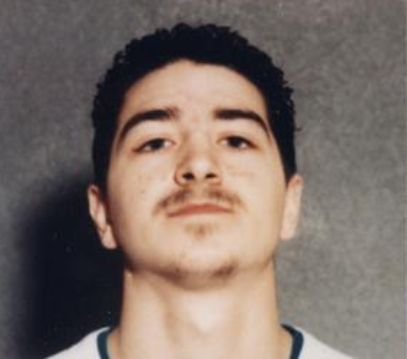
Tony Ray Amati – The Las Vegas "Thrill Killing" Case
Overview
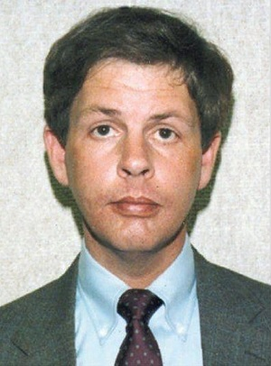
Tony Ray Amati, whose full name is Anthony Ray Amati, became associated with a short but deadly series of shootings in Las Vegas, Nevada, during 1996. Amati and two associates, Troy Sampson and Edward James, were accused of involvement in three apparently random killings committed between May and August of that year. Because prosecutors characterized the shootings as killings committed for excitement rather than robbery, revenge, or another obvious personal motive, the crimes became widely described as "thrill killings." Amati has consequently often been described as a serial or thrill killer, although an important legal distinction is that he was ultimately convicted of only one of the three murders. A jury acquitted him of murdering the other two victims.
The three men killed during the 1996 series were Michael Matta, John Garcia, and Keith Dyer. Their verified dates of death were May 27, July 28, and August 20, 1996, respectively. The shootings occurred within the Las Vegas area and were connected during the investigation through weapons and other evidence. A fourth person, Stacie Dooley, survived after being shot during the attack that killed Dyer.
Early Life
Anthony Ray "Tony" Amati was born on June 28, 1976, in Carbondale, Illinois. His family later relocated to Las Vegas, where Amati attended Clark High School. He graduated with honors in 1994. His academic background later received attention during his murder trial because it contrasted sharply with the violent crimes of which he was accused. Testimony presented during the proceedings described him as intelligent and capable of understanding the difference between right and wrong.
By 1996, Amati had become associated with Troy Sampson and Edward James. Prosecutors would later argue that the three men formed the group responsible for a succession of shootings that appeared to have little connection to the victims themselves. Rather than targeting known enemies, investigators believed the victims had largely been selected because they happened to be available targets.
The Gun Store Burglary
The events preceding the killings began on May 26, 1996, when Amati, Sampson, and James were linked to the burglary of Master Shooter's Supply in southern Las Vegas. Approximately $30,000 worth of firearms and ammunition was taken, with reports describing dozens of stolen guns.
The stolen weapons became critically important to the later homicide investigation. Authorities came to believe that members of the group began using firearms from the burglary during a succession of seemingly pointless shootings. Prosecutors portrayed the crimes as acts of experimentation and excitement, leading investigators and the news media to use the description "thrill killings."
Murder of Michael Matta – May 27, 1996
The first homicide attributed to the group occurred only one day after the gun-store burglary. On May 27, 1996, 27-year-old Michael Matta was in a Las Vegas residential area when he was attacked. Accounts of the investigation described Matta as looking through discarded material near a dumpster or trash area when the shooting began.
Matta was struck repeatedly by gunfire and died at the scene. More than twenty shots were reportedly fired during the attack. There was no established personal relationship between Matta and Amati, reinforcing the prosecution's later theory that the killing had been random rather than motivated by a dispute with the victim.
Murder of John Garcia – July 28, 1996
Two months later, another fatal shooting occurred in the same general section of Las Vegas. On July 28, 1996, 48-year-old John Garcia was shot and killed near his home. The location was reported to have been approximately a block from where Michael Matta had been murdered.
Witnesses reported seeing men fleeing from the area after Garcia was shot. The close geographical relationship between the Matta and Garcia crime scenes, combined with evidence developed during the firearms investigation, eventually caused detectives to consider the two killings part of the same series.
Amati was eventually charged with Garcia's murder as well as Matta's. He maintained that he had not participated in those two killings, and when his case went before a jury, he was found not guilty of murdering both Matta and Garcia. Their deaths therefore remain part of the series historically attributed to Amati and his associates, but Amati was not legally convicted of either homicide.
Murder of Keith Dyer – August 20, 1996
The third killing occurred on August 20, 1996. Twenty-two-year-old Keith Dyer was walking with coworker Stacie Dooley near an apartment complex in the vicinity of the University of Nevada, Las Vegas. The pair encountered the gunmen, and a burst of gunfire followed.
Dyer was shot numerous times, with reports describing approximately thirteen gunshot wounds. He died from the attack. Dooley was also shot, suffering a wound to her leg, but she survived.
The Dyer shooting ultimately provided some of the most significant physical evidence against Amati. During the incident or immediate flight from the scene, Amati reportedly cut his hand on a vehicle and left blood behind. Investigators were able to use the blood evidence in building the case linking him to the crime.
Unlike the Matta and Garcia cases, the prosecution succeeded in convincing jurors beyond a reasonable doubt that Amati was criminally responsible for Keith Dyer's murder. He was also convicted of attempting to murder Stacie Dooley.
Victims
- Michael Matta, 27 – May 27, 1996 – Las Vegas, Nevada: Matta was shot repeatedly while near a dumpster or trash area in a Las Vegas residential complex. More than twenty shots were reportedly fired. Amati was charged with Matta's murder but was later acquitted of the charge.
- John Garcia, 48 – July 28, 1996 – Las Vegas, Nevada: Garcia was shot to death near his residence, approximately a block from the location of the Matta killing. Amati was charged with Garcia's murder but was later found not guilty.
- Keith Dyer, 22 – August 20, 1996 – Las Vegas, Nevada: Dyer was fatally shot near an apartment complex in the UNLV area while accompanied by coworker Stacie Dooley. Dyer was struck numerous times. Amati was convicted of first-degree murder with a deadly weapon for Dyer's death.
Surviving Victim
Stacie Dooley survived the August 20, 1996 attack that killed Keith Dyer. She was shot in the leg during the gunfire. Prosecutors charged Amati with attempted murder and battery with a deadly weapon in connection with the attack. The jury convicted him of attempted murder but acquitted him of the separate battery count.
The Firearms Investigation
The stolen firearms became one of the central threads connecting the crimes. Investigators recovered weapons associated with Amati and his associates and linked firearms from the May burglary to evidence from the murder scenes. Authorities believed that weapons stolen from Master Shooter's Supply had been used during the subsequent shootings.
In October 1996, an attempt to sell stolen firearms to an undercover law-enforcement officer brought additional investigative attention to Amati's circle. Sampson and James were taken into custody, while Amati eventually disappeared. By the time prosecutors were prepared to pursue the murder allegations against him, he had become a fugitive.
Flight and Nationwide Manhunt
Amati remained outside Nevada authorities' reach for an extended period and reportedly used several aliases, including Anthony Ray Jones, Phillip D. Gitlitz, Debon Restivito, and Shane Wade. A federal unlawful-flight case was initiated as authorities attempted to locate him.
On February 21, 1998, the FBI placed Tony Ray Amati on its Ten Most Wanted Fugitives list as fugitive number 452. He remained on the list only briefly. A tip led federal investigators to Marietta, Georgia, where FBI agents arrested Amati on February 27, 1998. He was subsequently returned to Nevada to face prosecution.
Trial
Amati's murder trial became complicated because the prosecution alleged a three-killing series while Amati insisted that other members of the group bore responsibility for the deaths. He denied personally murdering Matta and Garcia and disputed the prosecution's portrayal of him as a remorseless thrill killer.
The state argued that the shootings represented a pattern of deliberate, essentially motiveless violence. According to the prosecution's theory, the stolen guns supplied the group with the means to carry out random shootings against victims with whom they had no meaningful connection. The physical evidence from the Keith Dyer scene was especially damaging to Amati's defense.
The jury ultimately reached different conclusions concerning the three deaths. Amati was acquitted of first-degree murder in the deaths of Michael Matta and John Garcia. He was, however, convicted of first-degree murder with a deadly weapon for killing Keith Dyer and of attempted murder for shooting at and injuring Stacie Dooley.
Sentence
Prosecutors sought the death penalty following Amati's conviction for Dyer's murder. During the penalty proceedings, however, jurors chose life imprisonment with the possibility of parole rather than execution or life without parole.
The murder sentence included Nevada's deadly-weapon enhancement. The resulting consecutive minimum terms meant that Amati would have to serve approximately forty years before becoming eligible for release on the murder sentence. The punishment ensured that the man who had been one of the FBI's most wanted fugitives would spend decades in the Nevada prison system.
The Question of Three Murders
Tony Ray Amati is frequently listed among American serial killers because authorities connected him and his associates to three separate fatal shootings over approximately three months. That description requires an important qualification. Although Amati was charged with all three murders and investigators treated the deaths as a connected series, the jury did not find him legally responsible for all three.
Michael Matta and John Garcia should therefore be identified as victims in the 1996 shooting series attributed to Amati and his associates, rather than as murders for which Amati was convicted. Keith Dyer is Amati's confirmed murder conviction. This distinction is particularly important when describing the case historically, since reports that simply state that Amati was convicted of three murders are incorrect.
Legacy of the Case
The Amati case became one of the more notorious Las Vegas homicide investigations of the 1990s because of the apparent randomness of the attacks, the theft of a large collection of firearms immediately before the killings, and Amati's later flight from prosecution. The murders took the lives of Michael Matta, John Garcia, and Keith Dyer within a period of less than three months, while Stacie Dooley narrowly survived the final known shooting.
Amati's placement on the FBI Ten Most Wanted list brought the case nationwide attention, but his time on the list was exceptionally short. Within days, information received by authorities resulted in his arrest in Georgia and return to Nevada.
His eventual conviction centered on the August 20, 1996 murder of Keith Dyer. The jury's simultaneous acquittals in the Matta and Garcia murders illustrate the distinction between investigative suspicion and proof beyond a reasonable doubt. Although all three deaths remain historically associated with the Las Vegas "thrill killing" series, Tony Ray Amati's established criminal record rests on the first-degree murder of Keith Dyer and the attempted murder of surviving victim Stacie Dooley.