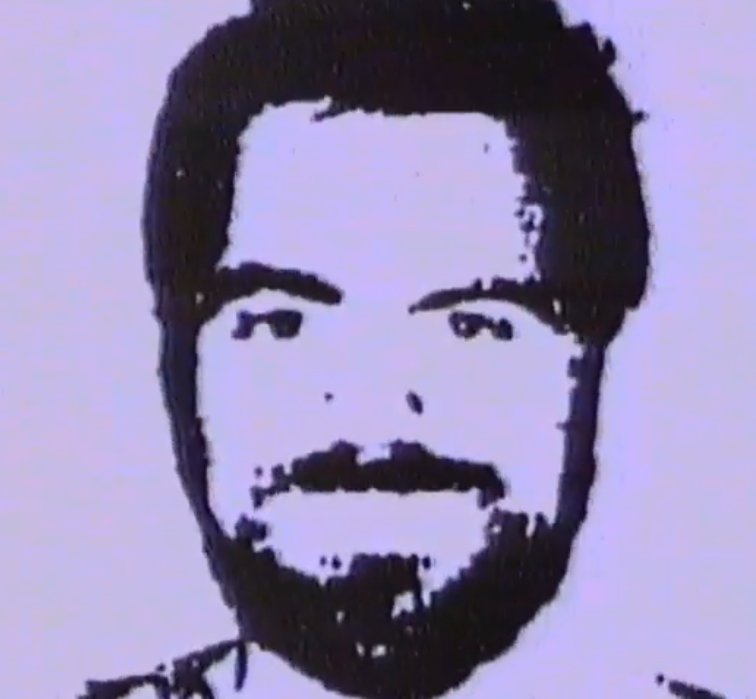
Arlie Ray Davis: Convicted Murderer and Suspected Serial Killer
Arlie Ray Davis was an Illinois murderer whose known crimes and suspected connections to other cases created fears that his violence extended far beyond the single homicide for which he was convicted. Davis was sentenced to death for the 1995 murder of Laurie Gwinn, but investigators and prosecutors also examined a disturbing series of earlier assaults and disappearances involving women in and around Peoria, Illinois. Four surviving women described attacks with striking similarities, and several missing women were investigated as possible victims. Because only the murder of Gwinn resulted in a homicide conviction, Davis is most accurately described as a convicted murderer and suspected serial killer rather than a legally confirmed multiple murderer.
A Pattern of Violence in Peoria
Long before the murder that placed Davis on death row, women in Peoria described encounters with a man who used isolation and strangulation as methods of control. During a later sentencing hearing, four women testified that Davis had attacked them between January 1993 and the summer of 1994. All four had been involved in prostitution and said they were picked up in the Madison Square area of north Peoria before being driven to isolated locations.
The women did not initially report the assaults. Their reluctance became an important part of the case because several said they feared arrest, believed police would not take them seriously, or were struggling with drug addiction at the time. Between November 1994 and January 1995, however, they separately gave statements to investigators and identified Davis as the man who had attacked them.
Their accounts shared important details. Several described being taken to remote roads, wooded areas or rural locations. Strangulation appeared repeatedly. Some also described a vehicle from which the passenger-side interior door handle or window crank had been removed, making escape difficult. When police searched Davis's older blue Dodge in February 1995, officers found an orange extension cord and handcuffs inside. They also discovered that hardware on the passenger-side door was missing, providing physical details that resembled portions of the women's accounts.
The Surviving Assault Victims
One of the earliest reported attacks involved a woman identified in court records as Maria N. She testified that in January 1993 she entered a man's vehicle in Peoria during the early morning hours. He drove her along a back road to a wooded area behind a furniture warehouse. According to Maria, the man moved behind her and tightened a belt around her neck until she lost consciousness. When she awakened, it was daylight. She escaped and eventually found transportation back to safety. She later identified Davis from a photographic lineup.
Kari B. described another attack during the summer of 1993. She said Davis drove her into the country near what she remembered as an abandoned farmhouse. She noticed that equipment on the passenger door had been removed. The encounter suddenly became violent when the driver threatened to kill her and grabbed her throat. Kari fought back, climbed through an open car window and ran. Davis allegedly chased her before another motorist stopped and gave her a ride.
Denise T. described one of the most serious surviving attacks. In late April 1994, she entered a vehicle in Peoria and was driven to a remote wooded area. She recalled becoming dazed after apparently being struck. When she regained consciousness, her hands were restrained behind her and an orange extension cord was being used to strangle her. She testified that the attack continued for hours and caused a severe eye injury that left permanent damage. Davis eventually abandoned her at a Peoria hotel. Hospital records showed that she sought emergency treatment on May 1, 1994. She later identified Davis as her attacker.
Michelle U. testified about another encounter during the summer of 1994. She said she was picked up in a blue automobile and driven to a secluded area at the end of a dead-end street. She noticed that the passenger door handle and window crank were missing. The encounter became violent, and she testified that Davis grabbed her by the throat and sexually assaulted her before throwing her from the vehicle. She later identified him to police.
These incidents did not produce separate convictions against Davis, and the court emphasized that he was being sentenced for the murder of Laurie Gwinn rather than crimes for which he had not been convicted. Nevertheless, the sentencing judge found the women's testimony believable and considered the repeated use of isolated locations, restraints and strangulation significant evidence of a continuing pattern of violent behavior.
The Disappearance of Stephanie C. Gibson
A particularly troubling case arose only weeks before Laurie Gwinn was killed. Stephanie C. Gibson disappeared from Peoria on July 8, 1995. The 48-year-old woman was last seen leaving Memories, a bar in the 800 block of Main Street, at approximately 2:30 in the morning. She was accompanied by Arlie Ray Davis.
Gibson reportedly left in Davis's light blue 1979 Dodge Dart, which carried Illinois license plate MMJ 296. Davis later claimed that he and Gibson went to the Kingston Mines area, but investigators found no evidence confirming his account. Gibson was never seen again. Her disappearance remains unresolved, and no verified date of death has been established. The fact that she was last seen with Davis shortly before his known murder of Gwinn made her case one of the most significant disappearances investigated in connection with him.
The Murder of Laurie Gwinn
The crime that finally led to Davis's murder conviction began on the evening of August 20, 1995, in Kewanee, Illinois. Davis was staying at the home of a distant relative and had been sleeping in a tent on the property. His cousin, James Linsley, was traveling with him.
That evening Davis and Linsley went to Graf's tavern in Kewanee. Davis had previously introduced himself to the bartender under the false name "Jim Smith." Laurie Gwinn arrived later in the evening and spent several hours talking and playing pool with the two men. Witnesses saw Davis and Gwinn interacting closely. At approximately 1:30 a.m. on August 21, Davis, Gwinn and Linsley left the tavern together. Gwinn's own vehicle remained behind in the parking lot.
According to Linsley's testimony, Davis offered to drive Gwinn home but first returned to the property where he and Linsley had been staying. Once there, Gwinn wanted to leave. Linsley testified that Davis grabbed her, struck her and squeezed her throat before forcing her toward the tent.
A woman living across the street was awake at about 2:00 a.m. and heard a woman's frightened voice coming from the area of the tent. What happened inside became central to the prosecution's case. Linsley testified that Davis assaulted Gwinn and that she eventually stopped moving. The medical evidence later established that she had suffered strangulation and blunt-force injuries, with additional injuries consistent with sexual assault.
During the early morning hours, Davis placed Gwinn's body in his automobile. He and Linsley traveled to the Hennepin Canal near Annawan, Illinois, an area Davis had previously visited. At approximately 6:00 a.m., according to testimony, Gwinn's clothing was removed and her body was thrown into the canal.
Later that morning, a motorist saw Davis's automobile leaving a gravel road near the canal at high speed. Suspicious of the vehicle, the witness followed long enough to record its license plate: MMJ 296. The number matched Davis's Dodge.
Discovery of Gwinn's Body
Gwinn failed to report for work on Monday, August 21, and was reported missing. Her body was discovered floating in the Hennepin Canal north of Annawan shortly after 11:00 a.m. on August 22. Dental records were used to confirm her identity.
An autopsy found evidence of a violent struggle. Gwinn had injuries to her face, scalp, shoulders, abdomen and neck. The forensic pathologist determined that she died from strangulation and blunt-force trauma. Several expensive pieces of jewelry that she normally wore were missing.
Investigators also recovered biological evidence during the autopsy. DNA testing excluded Linsley as the source of seminal material recovered from Gwinn but did not exclude Davis. The DNA evidence was combined with the witness accounts, Davis's presence with Gwinn shortly before her disappearance, the automobile seen near the canal, the missing jewelry, and Davis's sudden flight from Illinois.
Flight and Arrest
Only hours after Gwinn was killed, Davis and Linsley left the Kewanee area. They stopped at pawn shops in Davenport, Iowa, and continued south and west. According to testimony, Davis possessed a substantial amount of cash and discarded objects into trash containers at rest stops along the journey.
Police in Coffeyville, Kansas, stopped Davis's vehicle on August 21. Linsley was arrested because of an outstanding warrant from Washington state, but Davis was not detained and continued traveling.
Investigators eventually located Davis in Tucson, Arizona. At approximately 1:00 a.m. on August 29, 1995, Tucson authorities approached him and discovered that Illinois authorities wanted him in connection with Gwinn's murder. He was taken into custody and returned to face prosecution.
Trial and Death Sentence
Davis was prosecuted in Henry County on multiple charges arising from the attack on Laurie Gwinn. A jury found him guilty of first-degree murder along with offenses including aggravated criminal sexual assault, aggravated kidnapping, robbery and concealment of a homicidal death.
The jury found him eligible for execution because the murder occurred during the commission of aggravated criminal sexual assault, aggravated kidnapping and robbery. Davis received a death sentence as well as separate prison terms for several of the accompanying offenses.
The Illinois Supreme Court later affirmed his convictions but vacated his original death sentence because of an error in the consideration of mitigating evidence. Davis received a new sentencing hearing and was again sentenced to death. In February 2002, the Illinois Supreme Court upheld the second death sentence.
Davis remained on Illinois death row while legal proceedings continued. He died of a heart attack in October 2002, meaning many unanswered questions surrounding the missing women of Peoria could never be directly resolved through further questioning or prosecution.
Confirmed, Surviving and Suspected Victims
- Laurie Gwinn — August 21, 1995 — Kewanee and Annawan, Illinois: Gwinn is Davis's confirmed homicide victim. She left Graf's tavern with Davis during the early morning hours of August 21 and was killed shortly afterward. Her body was recovered from the Hennepin Canal north of Annawan on August 22. Her cause of death was strangulation and blunt-force injuries.
- Maria N. — January 1993 — Peoria, Illinois: A surviving victim who testified that Davis drove her to an isolated wooded area and strangled her with a belt until she lost consciousness. She later identified Davis to police.
- Kari B. — Summer 1993 — Rural Peoria area, Illinois: A surviving victim who testified that Davis drove her near an abandoned farmhouse, threatened to kill her and attempted to strangle her. She escaped through the vehicle's window and fled.
- Denise T. — Late April 1994 — Peoria, Illinois: A surviving victim who testified that she was restrained and repeatedly strangled with an orange extension cord during an hours-long attack. She suffered a permanent eye injury and received hospital treatment on May 1, 1994.
- Michelle U. — Summer 1994 — Peoria, Illinois: A surviving victim who testified that Davis drove her to a secluded dead-end street, choked and sexually assaulted her, and then threw her from the vehicle.
- Cheryl Louise Murray — Missing April 1, 1994 — Peoria, Illinois: Murray disappeared after being last seen in Peoria. Investigators and missing-person organizations have identified her as a possible victim in the group of disappearances examined in relation to Davis. She remains missing, and no verified date of death has been established.
- Loretta L. Tinkham — Missing November 3, 1994 — Peoria, Illinois: Tinkham disappeared from the Peoria area and has never been located. Authorities examined the possibility that she came into contact with Davis. No verified date of death has been established.
- Stephanie C. Gibson — Missing July 8, 1995 — Peoria, Illinois: Gibson was last seen leaving a Peoria bar with Davis and departing in his light blue Dodge Dart. Davis gave an account of where they allegedly went afterward, but investigators found no evidence confirming it. She remains missing and has no verified date of death.
- Sheryl A. Murwin — Disappeared in 1994 — Peoria, Illinois: Murwin was among the Peoria-area women whose disappearance was investigated while authorities considered Davis as a possible suspect. Her skull was discovered in 2001 and identified in 2003. A precise date of death has not been established, and Davis was never charged with killing her.
Why Davis Became a Suspected Serial Killer
The suspicion that Arlie Ray Davis may have killed more than once did not arise simply because several women disappeared near the same city. Investigators were confronted with a recognizable pattern. Surviving women independently described strangulation, isolated locations and a vehicle designed in a way that made escape from the passenger side difficult. Police then found restraints and an extension cord inside Davis's automobile. The women had begun identifying Davis to investigators before Laurie Gwinn was murdered.
The disappearance of Stephanie Gibson intensified those suspicions because she was directly seen leaving with Davis only weeks before Gwinn's death. Cheryl Murray and Loretta Tinkham disappeared during the same general period in which Davis was accused of attacking women in Peoria, while Sheryl Murwin was later confirmed dead after her remains were identified.
Even so, the distinction between suspicion and proof remains important. Davis was convicted of murdering Laurie Gwinn, but he was never convicted of killing Gibson, Murray, Tinkham or Murwin. Some remain legally classified as missing persons, and their dates of death cannot be verified because their remains have never been recovered. Authorities acknowledged that it was possible the cases were connected but did not establish that Davis was responsible for every disappearance.
Unanswered Questions
Davis's death in 2002 permanently closed the possibility of putting him on trial for additional murders unless overwhelming evidence had already existed. The surviving women's testimony demonstrated that violent assaults attributed to him began years before Gwinn's murder, while the unresolved disappearances raised the possibility that some intended victims may not have escaped.
Laurie Gwinn remains the only person Davis was judicially proven to have murdered. Her case nevertheless exposed a broader history of alleged violence that had previously gone largely unpunished. The accounts of Maria, Kari, Denise and Michelle showed a repeated method of isolating and strangling women, while Stephanie Gibson's disappearance created one of the strongest unresolved questions surrounding Davis because she was last seen in his company.
For that reason, Arlie Ray Davis continues to occupy an uncertain place in Illinois criminal history. Legally, he was a convicted murderer sentenced to death for the killing of Laurie Gwinn. Investigatively, the evidence surrounding his earlier assaults and his possible connection to missing women caused authorities to consider whether Gwinn was simply the one murder they were able to prove rather than his only homicide.