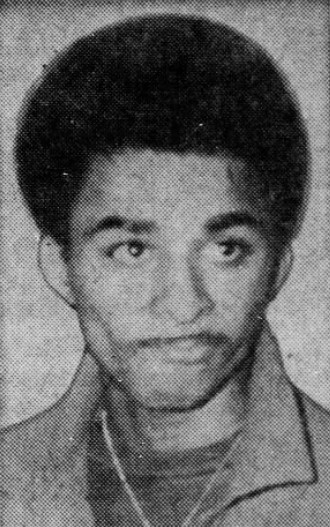
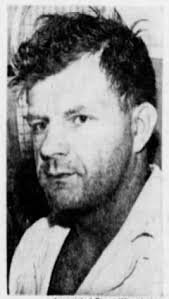
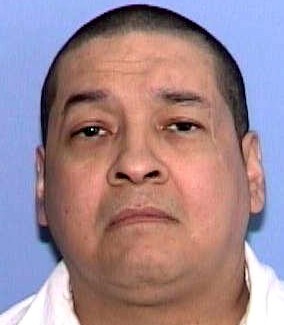
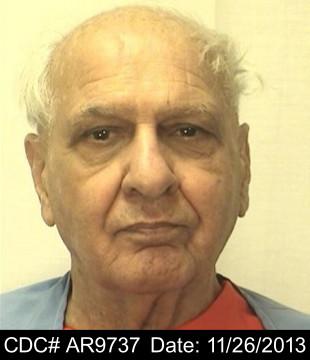
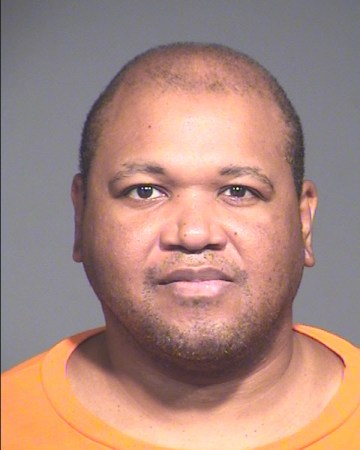
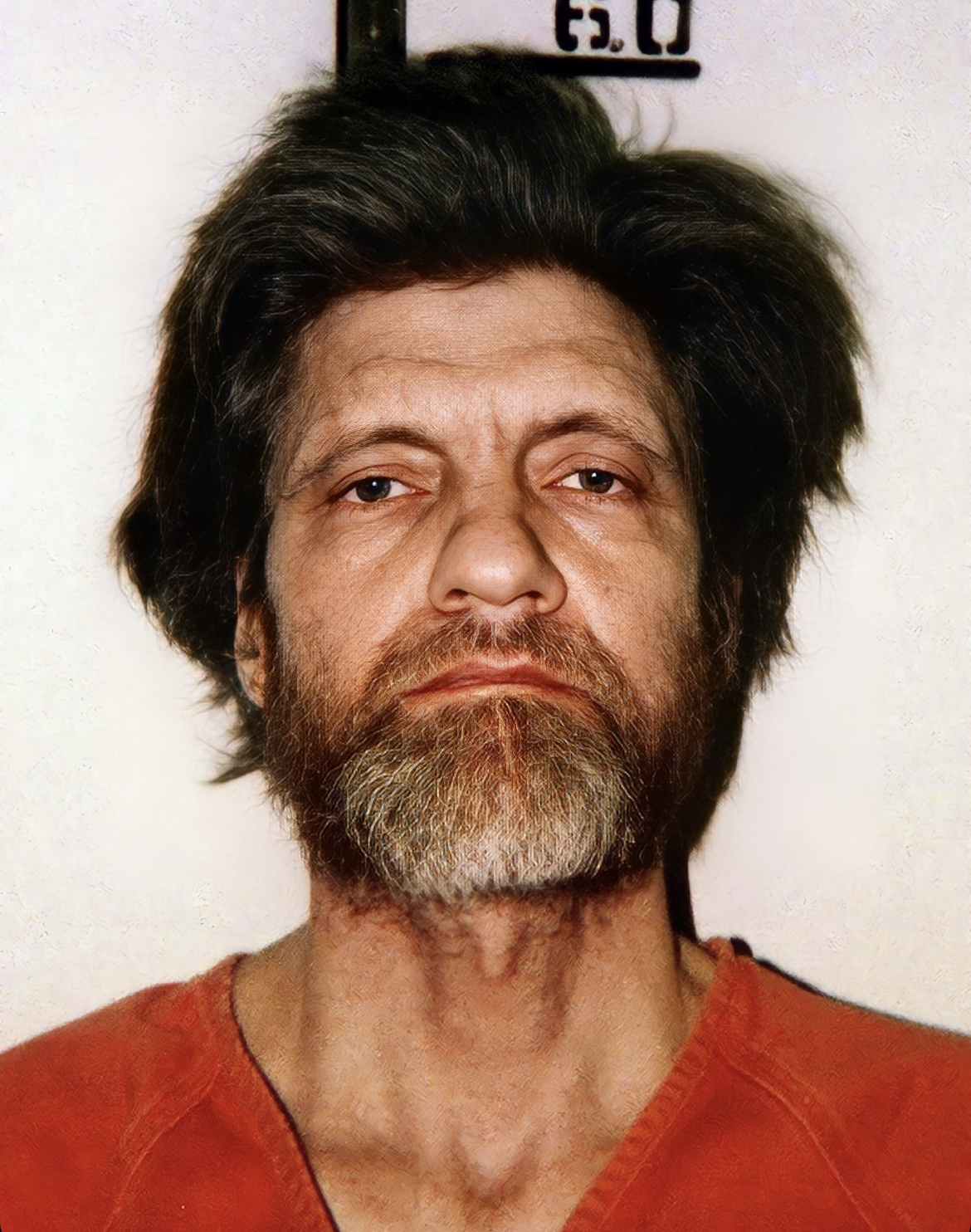
Reginald McFadden: The Parolee Killer
Overview
Reginald McFadden’s case is a chilling study of a flawed justice system and a predator who exploited a second chance. Convicted of murder as a teenager in 1969, McFadden spent 24 years in a Pennsylvania prison, where he cultivated the appearance of a reformed man. His efforts led to the commutation of his life sentence in 1994, a decision that would have catastrophic consequences. Just 92 days after his release, McFadden embarked on a violent crime spree in New York, leaving a trail of terror that included kidnapping, rape, and two brutal murders. His recapture and subsequent convictions ignited a political firestorm, leading to drastic changes in the parole and clemency systems in both Pennsylvania and New York, and leaving a legacy of pain for the families of his victims.
Early Life and Background
Reginald McFadden was born on February 23, 1953, in Philadelphia, Pennsylvania, into a large family struggling with poverty. He was one of ten children. His father left when he was young, and his mother’s new partner was reportedly abusive. This unstable environment led McFadden to spend much of his time on the streets. By the age of 12, he had his first arrest, and his criminal record escalated quickly. Along with his brothers, he joined a street gang, and by December 1969, he had been arrested at least 17 times for various offenses. In November 1969, just a month before his first murder, he was arrested in New York for car theft, but his mother bailed him out and brought him back to Philadelphia.
The Murder of Sonia Rosenbaum
On the night of December 7, 1969, a 16-year-old McFadden and three teenage accomplices—William Jones, Robert Forbes, and Curtis Woods—broke into the Philadelphia apartment of 66-year-old Sonia Rosenbaum, intending to commit a burglary. When they discovered Rosenbaum was home, they tied her up and demanded to know where she kept her valuables. After she complied, they gagged her with a washcloth, bound her with adhesive tape and cords, and left her on her bed. Sonia Rosenbaum suffocated to death.
The police quickly identified the suspects. When they arrived at McFadden's home on December 11, his mother attempted to help him escape through a window, but he was apprehended. Police found more than $600 in the house, which McFadden and his mother could not explain. He was charged with first-degree murder, burglary, aggravated robbery, larceny, and conspiracy.
First Incarceration and a Controversial Parole
In 1970, McFadden was convicted of first-degree murder and sentenced to life in prison without the possibility of parole. His three accomplices, who pleaded guilty to lesser charges, received sentences that made them eligible for parole. During his 24 years in prison, McFadden presented himself as a model inmate. He converted to Islam, earned college degrees, and even assisted guards during a prison riot in 1989. He applied for commutation of his sentence eight times between 1977 and 1992.
On August 27, 1992, the Pennsylvania Board of Pardons, chaired by then-Lieutenant Governor Mark Singel, voted 4-to-1 to recommend the commutation of McFadden’s sentence. The recommendation was supported by volunteers from an Islamic organization who pledged to provide him with housing and a job in New York. For nearly two years, the recommendation sat on the desk of Governor Bob Casey Sr., who was dealing with serious health issues. Finally, in the summer of 1994, Governor Casey signed the order. On July 7, 1994, after 24 years behind bars, Reginald McFadden was released and paroled to New York.
The 1994 Murders and Attacks
Freed from prison, the 41-year-old McFadden’s transition to life on the outside quickly fell apart. Within weeks, he lost his job and his support system cut ties with him. His freedom lasted only 92 days before he began a new wave of terror.
The crime spree began on September 6, 1994. McFadden’s car had broken down in Elmont, New York, when 42-year-old computer programmer Robert Silk stopped to help. McFadden murdered Silk and stole his car. Silk's skeletal remains would not be discovered until March 10, 1995, in a creek in Nanuet.
On September 21, 1994, in South Nyack, McFadden abducted 55-year-old social worker Jeremy Brown as she was taking out her trash. For five hours, he subjected her to a horrific ordeal, raping her three times, beating her, and forcing her to withdraw $500 from various ATMs at gunpoint. He drove her back to her home, tied her up, and left. Brown was able to free herself and call for help, becoming the only living victim to testify against him.
Six days later, on September 27, McFadden was in Floral Park, Long Island. Angry about the cost of his car repairs, he encountered 78-year-old Margaret Kierer near a train station. He stabbed and beat her to death, stealing her credit cards.
The Victims
- Sonia Rosenbaum, 66 — murdered on December 7, 1969, in her Philadelphia home during a burglary. She was a widow who was tragically killed by the teenagers who broke into her apartment.
- Robert Silk, 42 — murdered on September 6, 1994, in Elmont, New York. A computer programmer, he was killed after stopping to help McFadden, whose car had broken down.
- Margaret Kierer, 78 — murdered on September 27, 1994, in Floral Park, New York. She was attacked and killed near a train station, a victim of McFadden's escalating rage.
Investigation and Capture
The investigation into the string of violent crimes in Rockland and Nassau counties quickly focused on McFadden. The attack on Jeremy Brown provided a crucial break. McFadden had forced her to use ATMs, and the security cameras captured clear images of him. When police arrested him on October 6, 1994, he was driving Robert Silk’s car and was in possession of Margaret Kierer’s credit cards, directly linking him to all three crimes. Brown later positively identified him as her attacker after seeing the surveillance footage. Police also suspected McFadden in the murder of 39-year-old Dana Blaise DeMarco, whose remains were found in March 1996, but he was never charged in that case due to a lack of evidence.
Trial and Sentence
Prosecutors decided to try McFadden in three separate trials for his 1994 crimes. The first trial, for the kidnapping and rape of Jeremy Brown, began on August 2, 1995. In a move that horrified his victim, McFadden was allowed to represent himself, which meant he could directly cross-examine Brown on the witness stand. On August 25, 1995, the jury found him guilty on nine counts, and he was sentenced to a term of 37.5 to 75 years in prison.
In September 1995, McFadden was transferred to Nassau County to stand trial for the murder of Margaret Kierer. On September 27, he pleaded guilty to second-degree murder, claiming he had attacked her in a fit of rage. He was sentenced to 25 years to life. At his sentencing, he defiantly told the court, "Sentence me to a thousand years. It won't make any difference."
The final trial, for the murder of Robert Silk, took place in Rockland County. On March 20, 1996, a jury found him guilty of all charges. He received another sentence of 25 years to life. During this sentencing, McFadden expressed no remorse, telling the judge that he blamed society for "making [him] that way." The sentences for all his New York crimes were ordered to run consecutively.
Aftermath and Legacy
The revelation that a paroled murderer was responsible for a new crime spree just weeks before the 1994 Pennsylvania gubernatorial election created a political firestorm. Lieutenant Governor Mark Singel, who had chaired the pardons board and voted for McFadden's release, saw his comfortable lead in the polls evaporate. His opponent, Tom Ridge, used the case to portray Singel as soft on crime, a strategy that proved effective. Singel lost the election, a defeat widely attributed to the McFadden scandal.
In response to the public outcry, Pennsylvania amended its constitution. The law was changed to require a unanimous vote from the Board of Pardons for a lifer's commutation request to be sent to the governor, a much stricter standard than the majority vote that freed McFadden. The case had a chilling effect on the granting of clemency in the state for decades. New York also implemented reforms to its parole system.
Reginald McFadden spent the rest of his life in New York’s prison system. He died of an undisclosed illness at the Wende Correctional Facility on March 6, 2023, at the age of 70.