Theodore John Kaczynski: The Unabomber
Early Life and Academic Career
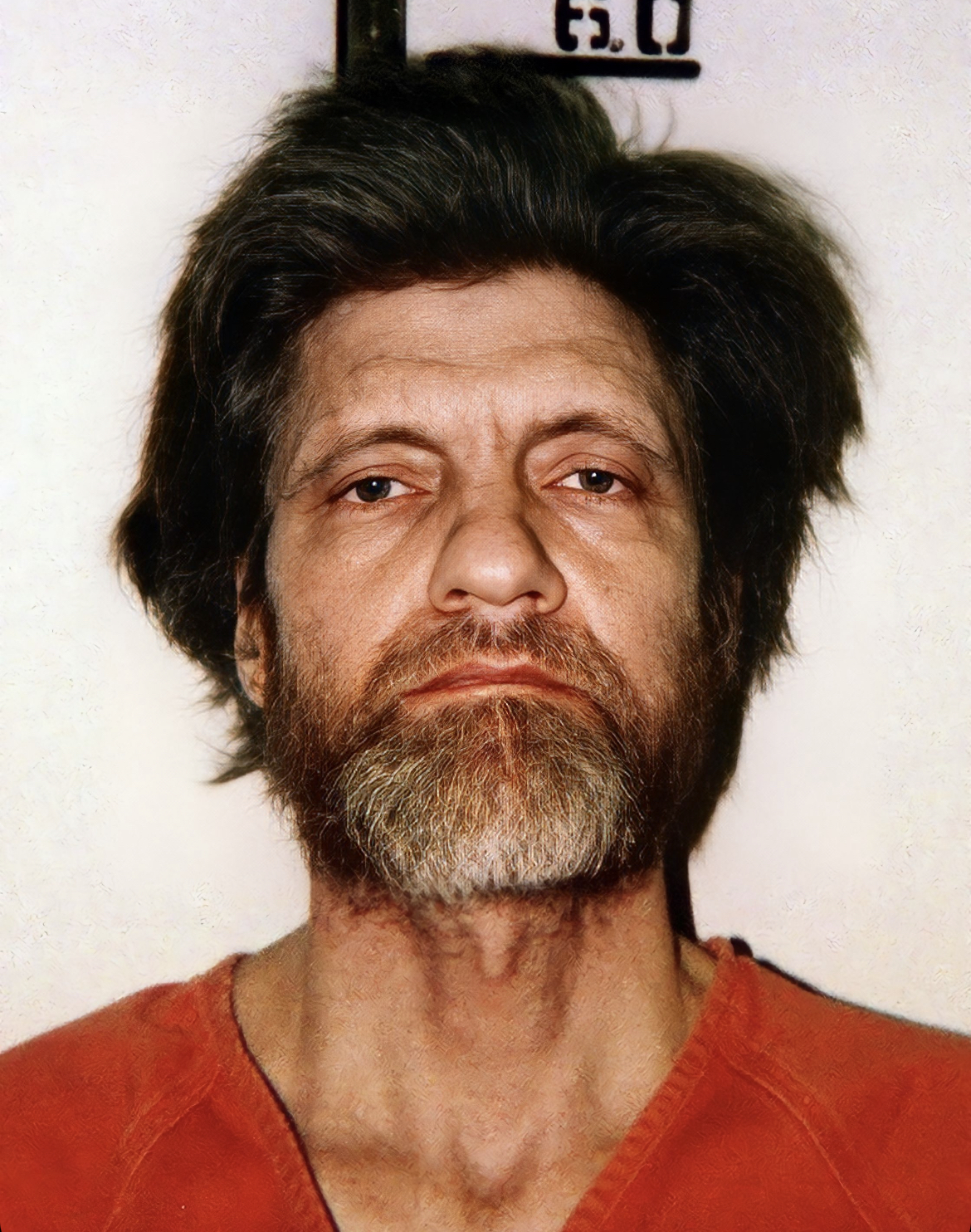
Theodore John Kaczynski, commonly known as Ted Kaczynski, was an American serial bomber and murderer who conducted a nationwide campaign of violence lasting from 1978 until 1995. His homemade bombs killed three people, injured approximately two dozen others, and created fear among university professors, scientists, airline officials, computer specialists, advertising executives, and forestry-industry representatives. The Federal Bureau of Investigation called the case “UNABOM,” a name derived from the early university and airline bombing targets. The unidentified attacker consequently became known to the public as the Unabomber.
Kaczynski was born on May 22, 1942, in Chicago, Illinois. Exceptionally intelligent from an early age, he entered Harvard University when he was only 16 years old. He later earned a doctorate in mathematics from the University of Michigan and became an assistant professor at the University of California, Berkeley. Despite his academic achievements, he resigned from Berkeley in 1969 and gradually withdrew from conventional society. In 1971, he settled near Lincoln, Montana, where he lived in a small cabin without electricity or running water.
From his isolated home, Kaczynski developed an increasingly hostile view of industrial society and technological advancement. He believed modern technology was destroying individual freedom, damaging the natural environment, and forcing human beings into lives controlled by large organizations. Instead of limiting himself to writing or peaceful protest, he began constructing explosive devices and directing them at people he associated with technology, universities, aviation, computers, genetics, advertising, and the timber industry.
The Beginning of the Bombing Campaign
Kaczynski’s first known bomb was discovered on May 25, 1978, in a parking area at the University of Illinois Chicago Circle Campus. The package carried the return address of Northwestern University professor Buckley Crist, although Crist had not sent it. The package was taken to Northwestern University in Evanston, Illinois, where campus police officer Terry Marker opened it on May 26. The device exploded, causing cuts and burns to Marker’s hands and arms.
The first bomb was crude compared with the weapons Kaczynski would later build, but it introduced several features that became central to his campaign. He used ordinary materials, planted misleading evidence, avoided leaving useful fingerprints, and attempted to make the device difficult to trace. His bombs were frequently concealed inside packages, wooden boxes, books, binders, or objects that appeared harmless.
On May 9, 1979, another device exploded at Northwestern University. Graduate student John Harris noticed a container in a room used by students and attempted to open it. The explosion caused minor injuries. Later that year, Kaczynski expanded his attacks beyond university campuses and targeted commercial aviation.
The American Airlines Bombing
On November 15, 1979, a bomb attributed to Kaczynski began burning in the cargo compartment of American Airlines Flight 444, a Boeing 727 traveling from Chicago toward Washington, D.C. The device was designed to react to changes in altitude, but it failed to explode with its intended force. Instead, it produced heavy smoke and fire inside the baggage compartment.
The pilots made an emergency landing at Washington Dulles International Airport in Virginia. Passengers suffered smoke inhalation, and the incident demonstrated that Kaczynski was willing to endanger an entire aircraft. Had the device functioned as intended, the bombing could have caused a catastrophic loss of life. The airline attack helped prompt the creation of a federal task force involving the FBI, the Bureau of Alcohol, Tobacco and Firearms, and the United States Postal Inspection Service.
Attacks on Business and University Targets
On June 10, 1980, United Airlines president Percy Wood received a package at his home in Lake Forest, Illinois. Inside was a book containing an explosive device. When Wood opened it, the bomb detonated, severely injuring him with burns, cuts, and fragments driven into his body. Investigators recovered pieces marked with the letters “FC,” initials that Kaczynski later said represented “Freedom Club.”
On October 8, 1981, a suspicious package was discovered in a business classroom at the University of Utah in Salt Lake City. Authorities safely disabled the bomb before it injured anyone. Kaczynski continued to refine his construction techniques, gradually producing more reliable and destructive devices.
On May 5, 1982, a package bomb exploded at Vanderbilt University in Nashville, Tennessee. The parcel had been addressed to Professor Patrick Fischer, a computer scientist, but it was opened by his secretary, Janet Smith. She suffered injuries to her face and arms. Fischer was not present when the explosion occurred.
On July 2, 1982, a bomb left in a faculty lounge at the University of California, Berkeley, injured engineering professor Diogenes Angelakos. The device had been disguised as an ordinary object, encouraging someone to handle it. Angelakos suffered injuries to his hand and face.
The Increasing Severity of the Bombs
After an apparent pause, the campaign resumed on May 15, 1985, when graduate student John Hauser found a device in a computer laboratory at the University of California, Berkeley. The bomb exploded when he attempted to examine it. Hauser suffered devastating injuries, including damage to his right hand, the loss of several fingers, and partial loss of vision in one eye.
A bomb mailed to a Boeing facility in Auburn, Washington, was discovered in June 1985 before it could explode. Bomb technicians safely disabled it. The choice of Boeing continued the pattern of attacks against organizations associated with aviation and advanced technology.
On November 15, 1985, a package sent to University of Michigan professor James McConnell exploded after it was opened by research assistant Nicklaus Suino. Suino suffered burns, cuts, and other injuries, while McConnell experienced hearing damage. The bomb had been placed inside a package that appeared to contain an academic manuscript.
The Murder of Hugh Scrutton
Kaczynski’s campaign became fatal on December 11, 1985. Hugh Scrutton, the owner of a computer rental business in Sacramento, California, noticed an object in the parking area behind his store. When he attempted to move it, the concealed bomb exploded. Scrutton suffered massive injuries and died shortly afterward. He was 38 years old.
The killing marked a major escalation. Kaczynski had moved from devices that injured their victims to a bomb capable of deliberately causing death. Scrutton did not know Kaczynski and had not been involved in any personal dispute with him. Like many targets in the campaign, he appears to have been selected because his occupation connected him to computers and modern technology.
The Salt Lake City Attack
On February 20, 1987, Gary Wright, the owner of a computer store in Salt Lake City, Utah, was injured by a bomb placed outside his business. The device appeared to be a piece of discarded wood containing nails. When Wright attempted to remove it, the bomb exploded, driving fragments into his body and causing serious nerve damage.
A witness reported seeing a man near the location, allowing investigators to produce one of the first widely distributed sketches of the suspected bomber. After this attack, Kaczynski stopped bombing for approximately six years. Investigators later believed that the eyewitness sighting and resulting publicity may have caused him to become more cautious.
The 1993 Bombings
Kaczynski returned to violence in June 1993 with two powerful mail bombs sent to prominent academics. On June 22, geneticist Charles Epstein opened a package at his home in Tiburon, California. The explosion severely injured him, causing the loss of several fingers, damage to his arm, and permanent hearing impairment.
Two days later, on June 24, 1993, Yale University computer science professor David Gelernter opened a package in his office in New Haven, Connecticut. The bomb exploded with tremendous force. Gelernter suffered extensive wounds to his face, chest, abdomen, and right hand. He survived but required prolonged medical treatment and was left with permanent injuries.
The nearly simultaneous attacks attracted intense national attention. Both victims were respected scholars in fields that Kaczynski associated with the technological system he despised. His bombs had become more sophisticated, more powerful, and more carefully constructed than the crude device discovered in 1978.
The Murder of Thomas Mosser
On December 10, 1994, advertising executive Thomas J. Mosser was killed at his home in North Caldwell, New Jersey. Mosser received a mailed package and opened it in the kitchen while members of his family were nearby. The bomb exploded, killing him and causing extensive damage inside the house. Mosser was 50 years old.
Kaczynski later claimed that he selected Mosser because of Mosser’s position at the public-relations firm Burson-Marsteller. Kaczynski viewed advertising and public relations as tools used to manipulate public opinion and support industrial society. His reasoning was based on his own ideological beliefs rather than any personal relationship with Mosser.
The Murder of Gilbert Murray
The final fatal attack occurred on April 24, 1995, at the offices of the California Forestry Association in Sacramento. Gilbert Brent Murray, the organization’s president, opened a mailed package addressed to a previous official. The resulting explosion killed Murray instantly and severely damaged the office. He was 47 years old.
The device was intended for someone connected to an industry Kaczynski blamed for environmental destruction. Murray had recently assumed leadership of the association and may not have been the specifically intended recipient. His death demonstrated the indiscriminate nature of Kaczynski’s campaign: whoever happened to open one of the packages could become its victim.
Fatal Victims
- Hugh Scrutton — Killed on December 11, 1985, behind his computer rental store in Sacramento, California. Scrutton was 38 years old when a disguised bomb exploded as he attempted to move it.
- Thomas J. Mosser — Killed on December 10, 1994, after opening a mailed bomb inside his home in North Caldwell, New Jersey. Mosser was a 50-year-old advertising and public-relations executive.
- Gilbert Brent Murray — Killed on April 24, 1995, when he opened a package bomb at the California Forestry Association offices in Sacramento, California. Murray was the association’s 47-year-old president.
The Manifesto and Threats
During 1995, Kaczynski sent letters to newspapers and other organizations claiming responsibility for several attacks. He also threatened further violence and claimed that his bombing campaign would end if major publications printed his lengthy essay, “Industrial Society and Its Future.” The document argued that industrial and technological development had deprived people of freedom and created a society dominated by large systems and organizations.
After extensive debate, The Washington Post published the manifesto on September 19, 1995, in cooperation with The New York Times. Authorities hoped that someone familiar with the writer would recognize his language, arguments, or personal expressions. That decision became the turning point in the investigation.
Identification by His Family
Kaczynski’s brother, David Kaczynski, and David’s wife, Linda Patrik, noticed similarities between the manifesto and letters Theodore had written over the years. Certain phrases, opinions, and writing habits appeared unusually familiar. After struggling with the possibility that Theodore was the Unabomber, the family contacted an attorney, who conveyed their concerns to federal investigators.
FBI analysts compared the manifesto with Kaczynski’s earlier writings. The similarities helped investigators obtain a warrant to search his isolated Montana cabin. Although David sought assurances that his brother would not face execution, federal prosecutors initially considered pursuing the death penalty because the bombing campaign had caused three deaths.
Arrest and Evidence
Federal agents arrested Kaczynski at his cabin near Lincoln, Montana, on April 3, 1996. The search produced an enormous amount of evidence. Investigators found bomb components, tools, chemicals, coded journals, descriptions of previous attacks, drafts of the manifesto, and a completed bomb that appeared ready to be mailed.
The handwritten journals were particularly damaging because they documented Kaczynski’s experiments and reactions to news reports about the bombings. The evidence connected him directly to attacks that investigators had spent nearly 18 years attempting to solve. His methods had initially made the devices difficult to trace, but the records inside his cabin provided a detailed account of the campaign.
Guilty Plea and Sentence
Kaczynski’s legal proceedings became complicated by disputes over his mental condition and defense strategy. Court-appointed attorneys considered presenting evidence that he suffered from serious mental illness in an effort to prevent a death sentence. Kaczynski strongly opposed being portrayed as mentally ill because he believed such a defense would discredit his ideology.
On January 22, 1998, Kaczynski pleaded guilty to federal charges covering the bombings and murders. The plea agreement removed the possibility of a death sentence. On May 4, 1998, he was sentenced to four consecutive life terms plus an additional 30 years in federal prison, without the possibility of parole.
Death and Legacy
Kaczynski spent many years at the federal maximum-security prison in Florence, Colorado. Because of declining health, he was later transferred to the Federal Medical Center in Butner, North Carolina. He died there on June 10, 2023, at the age of 81.
The Unabomber investigation became one of the longest and most expensive manhunts in FBI history. Kaczynski constructed and placed or mailed 16 known bombs over a period of approximately 17 years. His attacks killed Hugh Scrutton, Thomas Mosser, and Gilbert Murray, while leaving many other victims with burns, damaged hearing, impaired vision, missing fingers, nerve injuries, and lasting psychological trauma.
Although Kaczynski attempted to present his violence as part of a philosophical struggle against technology, his campaign consisted of calculated attacks on unsuspecting human beings. His victims were selected as symbols of institutions or industries he opposed, even though many had no knowledge of him and no opportunity to defend themselves. The publication of his manifesto ultimately exposed the writing patterns that led his own family to identify him, ending a bombing campaign that had terrorized the United States for nearly two decades.