Coleen M. Thompson: The Shady Grove Hospital Neglect Cases
Background
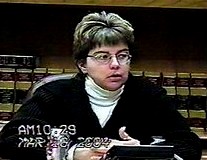
Coleen M. Thompson was an intensive care nurse whose treatment of critically ill patients at Shady Grove Adventist Hospital in Rockville, Maryland, became the subject of criminal, administrative and civil investigations. Although some crime databases have labeled Thompson a medical serial killer or an “angel of death,” that description exceeds what prosecutors proved in court. She was never convicted of murder, and authorities stated that they lacked sufficient evidence to establish that she deliberately killed any patient or that her conduct was the sole cause of a patient’s death.
What prosecutors did establish was that Thompson intentionally failed to provide necessary medical care to five vulnerable patients who died while assigned to her care in 2002 and 2003. The allegations included withholding prescribed medication, interfering with intravenous equipment, administering morphine without a physician’s authorization, failing to report a dangerous decline in a patient’s blood pressure and declaring a patient dead before cardiac activity had stopped.
Employment at Shady Grove Adventist Hospital
Thompson worked in the adult intensive care unit at Shady Grove Adventist Hospital, where many patients were already gravely ill, dependent on life-support equipment or suffering from conditions with poor prognoses. Her position gave her direct control over medications, intravenous pumps, monitoring equipment and communication with physicians.
Concerns about Thompson developed after fellow nurses and patients’ relatives reported disturbing conduct. According to allegations later presented by prosecutors, she repeatedly encouraged some families to allow their relatives to die and appeared to make decisions about continuing treatment that belonged to physicians and legally authorized family members. One colleague eventually reported suspicions that Thompson was interfering with patient care.
The hospital suspended Thompson in July 2003, and the Maryland Board of Nursing suspended her nursing license. She was later dismissed from her position. Investigators and the Maryland medical examiner’s office reviewed 211 deaths that occurred during the relevant period and selected five cases in which prosecutors believed they could prove intentional neglect. The review of 211 deaths did not establish that Thompson caused all, or even most, of those deaths.
Patients Named in the Criminal Case
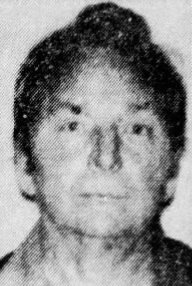
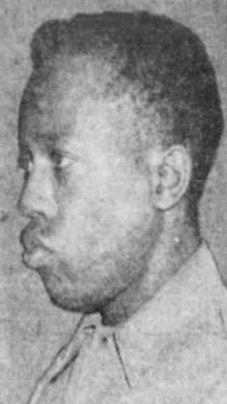
- Raymond H. McGivern, 86 — McGivern died on December 29, 2002, at Shady Grove Adventist Hospital in Rockville, Maryland. He had been admitted with prostate cancer and other serious medical problems. Prosecutors said his intravenous pump was repeatedly left in its standby position. Another nurse reportedly confronted Thompson after she attempted to have the pump turned off, allegedly saying that the patient should be allowed to die.
- Lillian Van Zandt, 82 or 83 — Van Zandt died on March 30, 2003, at Shady Grove Adventist Hospital in Rockville. Prosecutors said Thompson failed to administer medication intended to stimulate Van Zandt’s heart. Members of Van Zandt’s family also reported that Thompson repeatedly encouraged them to discontinue treatment before they were prepared to make that decision.
- Harry L. Hancock, 69 — Hancock died on July 5, 2003, at Shady Grove Adventist Hospital, five days before his 70th birthday. He had suffered a heart attack and pancreatitis and had been hospitalized for several weeks. Another nurse suspected that Thompson had turned off or interfered with Hancock’s intravenous pump before a physician formally pronounced him dead. His wife believed that Thompson’s actions shortened his life, although prosecutors did not prove that allegation as a homicide.
- Geraldine Baxter, approximately 68 or 69 — Baxter died at Shady Grove Adventist Hospital during the 2002–2003 period examined by investigators. She had been hospitalized because of complications following hip-replacement surgery. Prosecutors said Thompson administered morphine that had not been ordered by a physician. Thompson also allegedly declared Baxter dead approximately 13 minutes before monitoring equipment recorded her final heartbeats. Publicly available accounts do not consistently provide Baxter’s exact date of death.
- Adela Urbina, 63 — Urbina died at Shady Grove Adventist Hospital in Rockville in 2003 after being admitted with pneumonia. Prosecutors said her blood pressure dropped sharply while Thompson was responsible for her care, but Thompson failed to notify a physician of the dangerous change. Urbina’s case became one of the five counts of intentional neglect included in the prosecution. Public reports differ or remain unclear regarding her exact date of death, so no unverified date is included here.
Additional Patient Allegations
The criminal charges were limited to five named patients, but civil litigation connected Thompson to at least one additional death. The family of John Lieb, a 54-year-old Gaithersburg cinematographer, alleged that Thompson improperly administered morphine while he was hospitalized in October 2002 with complications from a bowel obstruction.
Lieb had undergone surgery, required a respirator and remained critically ill, but relatives said he had become responsive before Thompson assumed responsibility for his care. His children alleged that Thompson injected the contents of a large syringe of morphine into his arm even though the medication was supposed to be delivered gradually. The allegation appeared in a wrongful-death lawsuit, but Lieb was not one of the five patients included in Thompson’s criminal guilty plea, and the claim did not result in a murder conviction.
Investigation and Criminal Charges
The inquiry presented investigators with a difficult evidentiary problem. Every patient named in the prosecution was seriously ill, and several were expected to die regardless of the care they received. Prosecutors therefore had to distinguish between poor nursing, intentional neglect and an intentional act that legally caused death.
Authorities concluded that they could prove Thompson deliberately failed to perform duties required of an intensive care nurse. They could not prove beyond a reasonable doubt that she acted with the intent necessary for murder or that a particular omission or unauthorized treatment independently caused any patient’s death. As a result, the case proceeded under Maryland’s law protecting vulnerable adults rather than as a homicide prosecution.
Thompson’s defense maintained that she had been overworked in an understaffed intensive care unit. Her attorney argued that the evidence did not show that she killed anyone, harmed anyone or accelerated a death. Hospital representatives disputed the understaffing explanation and characterized the conduct as intentional neglect rather than the result of an excessive workload.
Guilty Plea
On March 8, 2005, Thompson appeared in Montgomery County Circuit Court and pleaded guilty to five misdemeanor counts of second-degree neglect of a vulnerable adult. The plea was publicly reported on March 9. Each count carried a possible sentence of as much as five years of incarceration and a $5,000 fine.
As part of the plea agreement, prosecutors agreed not to request consecutive sentences. Thompson acknowledged in court that she was pleading guilty because she had committed the offenses. The convictions established that she intentionally failed to provide care required by her position, but they did not establish that she murdered the five patients.
Sentencing
On May 17, 2005, Montgomery County Circuit Court Judge DeLawrence Beard sentenced Thompson to 18 months on each of the five counts. The judge suspended all but 45 days of incarceration and imposed 18 months of supervised probation. The concurrent structure of the sentences meant that Thompson faced only a brief period in jail despite the five separate convictions.
At sentencing, Thompson apologized for the pain caused by what she described as her nursing inadequacies. She admitted that she had been arrogant and believed she knew what was best for her patients, but she denied acting maliciously. Relatives of the deceased patients and members of the prosecution expressed disappointment with the punishment, believing that the sentence failed to reflect the seriousness of interfering with the treatment of helpless intensive care patients.
Classification and Controversy
Coleen Thompson is sometimes included on lists of medical serial killers because five patients died in cases involving her intentional neglect. That classification remains controversial and legally imprecise. She was neither charged with nor convicted of murder, and prosecutors expressly stated that there was insufficient evidence to prove that her actions caused the deaths.
The documented case is therefore one of intentional medical neglect involving deceased patients, not a proven series of murders. Thompson’s conduct was especially troubling because it occurred in an intensive care unit, where patients and families depended on medical professionals to follow treatment orders and to communicate accurately with physicians. Her willingness to disregard those responsibilities placed critically ill people at additional risk and denied their families confidence that treatment decisions were being made lawfully.
Aftermath
Thompson’s nursing license was suspended during the investigation, ending her ability to continue working as an intensive care nurse. The prosecution also led to renewed scrutiny of hospital oversight, medication procedures, intravenous equipment and the reporting of suspected misconduct by medical personnel.
The Shady Grove cases remain an example of the difficulty involved in investigating suspected deaths in medical settings. Critically ill patients may die despite proper treatment, making criminal causation extremely difficult to prove. In Thompson’s case, the evidence supported convictions for intentionally withholding or mishandling care, but it did not support murder charges. The distinction is essential when describing the case and the five patients whose final hours became the focus of the investigation.