David Villarreal: The Texas Serial Killer Who Murdered Men in Dallas and San Antonio
Overview
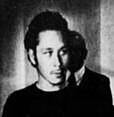
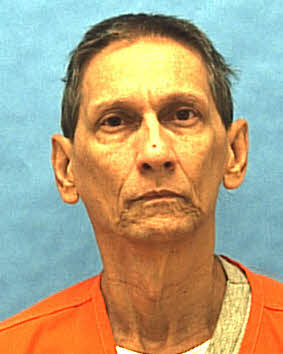
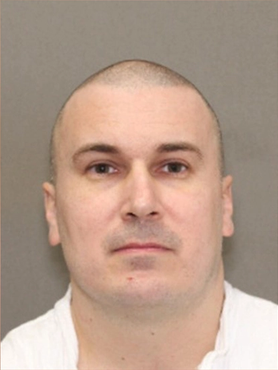
David Villarreal, born on October 12, 1955, in San Antonio, Texas, is an American serial killer responsible for the murders of at least five men in Dallas and San Antonio between 1979 and 1981. Villarreal claimed that he had killed seven people beginning as early as 1974, but investigators were able to conclusively connect him to five victims. The identities of the two additional people he claimed to have murdered were never established.
Villarreal’s crimes were marked by extreme violence, torture and deliberate mutilation. His victims were beaten, stabbed or had their throats cut, and several were subjected to additional injuries intended to disfigure their faces. Investigators believed that the murders involved a combination of personal hostility, robbery and sexual gratification. Villarreal knew or had encountered each of the five confirmed victims before killing them.
Confirmed Victims
- Ernesto Carbajal Garcia, 26: Killed on or shortly before March 17, 1979, in Dallas, Texas. His body was found on March 17 inside an abandoned building in downtown Dallas. Garcia had been struck in the head with a piece of wood, stabbed with an ice pick and beaten with a concrete block that crushed his skull.
- Tony Natal Gutierrez, 32: Murdered on April 18, 1979, inside an apartment in Dallas, Texas. Villarreal stabbed Gutierrez repeatedly in the upper chest, cut his throat and inflicted additional injuries around his eyes and nose.
- Charles Edward Moya, 30: Murdered on April 18, 1979, in the same Dallas apartment as Tony Gutierrez. Villarreal cut Moya’s throat and burned one of his eyelids with a match after the fatal attack.
- Joe Edward Duque, 18: Murdered on March 3, 1981, in San Antonio, Texas. Villarreal encountered Duque near a city park and beat him to death with a cedar post approximately three feet long. The post was abandoned at the scene.
- Robert Manley, approximately 70 to 72: Murdered on March 8, 1981, inside his San Antonio apartment. Villarreal bludgeoned Manley with a claw hammer and left the blood-covered weapon near his body. Manley’s body was discovered on March 11 after Villarreal gave police the victim’s address. Historical accounts contain conflicting versions of Manley’s middle name and exact age.
The Murder of Ernesto Carbajal Garcia
Ernesto Carbajal Garcia’s body was discovered on March 17, 1979, inside an abandoned downtown Dallas building. The condition of the remains indicated that Garcia had been subjected to a prolonged and exceptionally violent assault. He had been hit in the head with a piece of wood, stabbed with an ice pick and struck with a heavy concrete block. The final blows crushed his skull.
Villarreal became a suspect during the initial investigation and was questioned by Dallas police. Investigators, however, did not possess enough physical evidence to charge him. He was released, leaving him free to commit additional murders only weeks later.
The Double Murder of Tony Gutierrez and Charles Moya
On April 18, 1979, Villarreal entered the Dallas apartment shared by Tony Natal Gutierrez and Charles Edward Moya. He later reportedly said that he intended to kill the men because he did not like them. The attack began in the apartment’s main room, where Villarreal repeatedly stabbed Gutierrez in the upper chest before cutting his throat.
Villarreal then confronted Moya in or near a hallway and cut his throat. After both men had been fatally injured, Villarreal continued attacking and disfiguring their bodies. He stabbed Gutierrez near the eyes and forced a teaspoon into his nose before covering his head with a pillow. Villarreal also used a wooden match to burn Moya’s right eyelid.
The unusual injuries demonstrated that the attack involved more than an attempt to kill the victims quickly. The deliberate mutilation suggested rage, sadism or a desire to exert complete control over the men even after they could no longer resist.
Imprisonment for Burglary
As Dallas authorities investigated the Garcia, Gutierrez and Moya killings, Villarreal was arrested and imprisoned for an unrelated burglary committed in Austin. He spent approximately fourteen months of the following two years in state custody. His incarceration temporarily interrupted the known series of murders.
After his release, Villarreal returned to San Antonio. Within a relatively short period, two more men were dead.
The Murder of Joe Edward Duque
Joe Edward Duque was only 18 years old when Villarreal killed him on March 3, 1981. Villarreal encountered Duque near a San Antonio park and attacked him with a long cedar post. Duque was struck repeatedly until he died from the extensive blunt-force injuries.
Villarreal left the cedar post at the crime scene. The unusual weapon and severity of the beating were consistent with the excessive violence displayed in the earlier Dallas murders. Duque’s death later became one of the two San Antonio killings to which Villarreal pleaded guilty.
The Murder of Robert Manley
Five days after Duque’s murder, Villarreal entered the San Antonio apartment of Robert Manley. Manley was an older man who was described in contemporary reports as living alone and being known to Villarreal. On March 8, 1981, Villarreal attacked him with a claw hammer, repeatedly striking him in the head.
Manley was left in his bedroom, dressed only in trousers, with the bloody hammer nearby. Police did not initially discover the body. After Villarreal was arrested in Dallas, he supplied investigators with Manley’s address. San Antonio officers entered the residence and found Manley dead on March 11, 1981.
Arrest and Confession
Police arrested Villarreal in Dallas on March 10, 1981, after receiving information connecting him to the killings. He was taken into custody without a significant struggle. During questioning, Villarreal surprised investigators by admitting responsibility for multiple murders, including crimes in which he had not yet been formally identified as the principal suspect.
Villarreal claimed that he had killed seven men during a period beginning in 1974. Detectives were able to connect him to Garcia, Gutierrez and Moya in Dallas and to Duque and Manley in San Antonio. No reliable identities or locations were established for the two additional victims he claimed to have killed.
His confessions included details about the weapons, injuries and crime scenes that had not been widely released. Investigators concluded that he possessed knowledge that only the killer or someone directly involved in the crimes would have known.
Possible Motives
Villarreal did not provide a single consistent explanation for all five murders. Police believed that personal grudges and anger played a role in some of the attacks. He reportedly said that he killed Gutierrez and Moya because he disliked them, but that explanation did not fully account for the torture and mutilation inflicted upon their bodies.
Detectives also considered robbery and sexual gratification as possible motives. The excessive violence, particularly the injuries inflicted after the victims were already incapacitated, suggested that Villarreal derived psychological or sexual satisfaction from dominating and harming them. He reportedly expressed no remorse and explained that he used extreme violence because he wanted to be certain his victims were dead.
Trials and Sentencing
Villarreal was initially held in Dallas County while prosecutors prepared charges for the murders of Garcia, Gutierrez and Moya. His bail was set at a combined total of approximately $90,000. Despite having made extensive admissions to investigators, Villarreal publicly indicated that he preferred execution to spending the remainder of his life in prison.
Rather than contesting the Dallas charges at a full trial, Villarreal pleaded guilty to all three murders. He received three life sentences. He was then transferred to San Antonio to face prosecution for the deaths of Joe Duque and Robert Manley.
Villarreal also pleaded guilty to the two San Antonio murders and received two additional life sentences in November 1981. In total, he was given five life sentences for five confirmed murders. The sentences ensured that he would remain confined within the Texas prison system for decades.
Unconfirmed Victims
Villarreal’s assertion that he murdered seven men has never been completely resolved. He claimed that his killings began in 1974, approximately five years before the first confirmed Dallas murder. Investigators examined unsolved homicides in Dallas, San Antonio and other Texas communities, but they were unable to conclusively identify two additional victims.
Confessions to unverified crimes must be treated cautiously. Some offenders exaggerate their victim counts to gain notoriety, manipulate investigators or create confusion. It is also possible that Villarreal disclosed genuine murders for which evidence had been lost or the victims had never been connected to him. His confirmed victim count therefore remains five, with two additional possible victims.
Legacy of the Case
David Villarreal’s crimes demonstrated the difficulty police departments faced when comparing homicide investigations across different jurisdictions during the late 1970s and early 1980s. His first confirmed victims were killed in Dallas, while his final known murders occurred in San Antonio. His imprisonment for burglary further obscured the sequence by creating a lengthy interruption between the two groups of killings.
The case also reflected a period when murders involving gay men and other socially marginalized victims were sometimes investigated with limited public attention. Villarreal was able to remain free after being questioned in connection with Garcia’s death because investigators lacked sufficient evidence to hold him. By the time he was arrested in March 1981, five men had been brutally murdered.
Villarreal ultimately admitted his responsibility and accepted five life sentences. Although the confirmed murders were legally resolved, uncertainty remains about his claim that he killed two additional men. Their names, dates of death and burial locations, if those victims existed, remain unknown.