Martin Stickles: The Kelso Killer
Overview
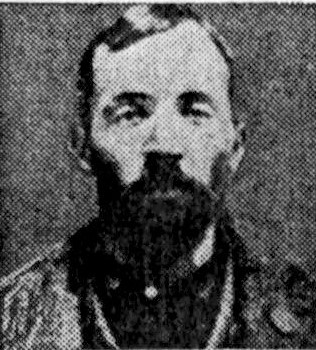
Martin Stickles, commonly known as the “Kelso Killer,” was an American serial killer responsible for three murders in Cowlitz County, Washington, between November 1899 and November 1900. His victims were attacked inside their rural homes while they were eating supper. In each case, Stickles remained outside and fired a rifle through a window, giving his victims little or no opportunity to defend themselves.
Robbery appears to have been the primary motive behind the killings. After shooting his victims, Stickles entered their homes and searched for money, watches, keys, and other valuables. He attempted to conceal the first murder by setting the victim’s cabin on fire. The similarities between the attacks eventually led investigators to conclude that the same person had committed all three murders.
Early Life
Martin Stickles was born on February 7, 1870, in Adams County, Iowa. When he was approximately 18 months old, his family moved to Washington. Accounts of his childhood described him as physically sickly and behaviorally unusual. His mother later claimed that he had always seemed unnatural and was prone to unpredictable episodes of anger.
Little reliable information survives about Stickles’ education, employment, or personal relationships. By adulthood, he had become an isolated fisherman who lived aboard a scow, a flat-bottomed boat used on shallow waterways. He traveled along the Columbia, Cowlitz, and Coweeman rivers and apparently had few close connections within the communities surrounding Kelso and Castle Rock.
His secluded lifestyle allowed him to move through the region without attracting much attention. Stickles was familiar with the rural roads, river routes, farms, and isolated residences of Cowlitz County. This knowledge helped him approach his victims’ homes after dark and escape before neighbors or law-enforcement officers could respond.
The Murder of William B. Shanklin
Stickles committed his first known murder on November 22, 1899. The victim, William B. Shanklin, was a farmer living in a cabin near Kelso, Washington. Shanklin had previously been a neighbor of Stickles, meaning the killer was familiar with both the victim and the location of his home.
That evening, Shanklin was seated at his table eating supper. Stickles approached the cabin without announcing himself and positioned himself outside a window. He fired a rifle through the glass, striking Shanklin and killing him at the table.
After the shooting, Stickles entered the cabin and searched through Shanklin’s belongings. He stole valuables, including property that would later help investigators connect him to the crime. Before leaving, he set fire to the cabin, apparently hoping that the flames would destroy the body, physical evidence, and any indication that a robbery had occurred.
The fire did not prevent authorities from recognizing that Shanklin had been murdered. Investigators searched the surrounding area and attempted to identify anyone who might have had a reason to kill him. Washington Governor John Rankin Rogers reportedly offered a reward of $300 for information leading to the identification of the murderer.
Despite the investigation and reward, the case initially remained unsolved. Another man was accused and brought to trial, but he was ultimately released. Stickles was reportedly present during portions of the legal proceedings, watching while someone else faced suspicion for the murder he had committed.
The Murders of Cornelius and Massey Ann Knapp
Almost exactly one year later, Stickles repeated the same method of attack. On November 28, 1900, he targeted the home of Cornelius Knapp and his wife, Massey Ann Elliott Knapp, near Castle Rock, Washington.
Cornelius was 68 years old, and Massey Ann was 56. The couple had lived in the region for many years and were considered established residents of the community. On the evening of the murders, they were seated inside their home having supper.
Stickles approached the residence under the cover of darkness and fired his rifle through a window. Cornelius and Massey Ann were both struck and fatally wounded. The sudden attack closely resembled the Shanklin murder, including the selection of victims eating an evening meal and the use of a rifle fired from outside the residence.
After killing the couple, Stickles entered the Knapp home and stole valuables. Unlike the Shanklin murder, he did not burn the building. The bodies were discovered inside the residence, and authorities immediately recognized that the victims had been deliberately shot by an assailant standing outside.
Investigators found only one set of footprints leading to and from the property. This evidence strongly suggested that a single killer had committed the murders. The similarity to the still-unsolved Shanklin case caused authorities to examine whether the three deaths were connected.
Confirmed Victims
- William B. Shanklin — Died November 22, 1899, near Kelso, Cowlitz County, Washington. Shanklin was shot with a rifle through the window of his cabin while eating supper. Stickles entered the home, stole valuables, and set the cabin on fire in an attempt to conceal the murder.
- Cornelius Knapp — Died November 28, 1900, near Castle Rock, Cowlitz County, Washington. The 68-year-old was shot through a window while eating supper with his wife. Stickles entered the residence after the shooting and stole property.
- Massey Ann Elliott Knapp — Died November 28, 1900, near Castle Rock, Cowlitz County, Washington. The 56-year-old was murdered beside her husband during the rifle attack on their home.
Investigation and Arrest
The Knapp murders produced intense fear throughout Cowlitz County. Residents understood that the killer had approached an occupied home, shot two people through a window, and escaped into the surrounding countryside. Because the attack resembled Shanklin’s murder, investigators began searching for someone familiar with both areas and motivated by theft.
Stickles eventually came under suspicion and was taken into custody for questioning. He initially denied involvement. His position weakened when investigators confronted him with property connected to William Shanklin, including a watch and keys identified as having belonged to the murdered farmer.
Faced with this evidence, Stickles admitted that he had participated in the crimes. However, he attempted to shift responsibility for the actual shootings onto a man named Edward Pierce. Stickles claimed that Pierce had fired the rifle while he merely helped plan the robberies and shared in the stolen property.
Authorities found his account unconvincing. Only one set of footprints had been found near the Knapp residence, indicating that one person had approached and departed from the scene. Investigators also determined that Pierce had been aboard his scow on the Columbia River when the Knapps were killed.
Stickles repeatedly contradicted himself while describing the murders. Observers reported that he discussed the killings with an unsettling lack of emotion. He reportedly laughed at portions of his story and displayed little understanding of the seriousness of his actions.
Confession
While being held in jail in December 1900, Stickles attended a religious service conducted for prisoners by members of the Salvation Army. After the service, he announced that he had converted to Christianity and gave a more complete confession.
In this confession, Stickles admitted that he had acted alone and was personally responsible for the murders of William Shanklin, Cornelius Knapp, and Massey Ann Knapp. The admission eliminated his earlier attempt to blame Edward Pierce and confirmed investigators’ belief that a lone gunman had committed all three killings.
Stickles claimed to accept the possibility of execution and spoke as though he believed his religious conversion had guaranteed his forgiveness. His calm and occasionally cheerful behavior disturbed observers who expected him to display remorse for the deaths of his victims.
Trial and Conviction
Despite confessing, Stickles entered a formal plea of not guilty when he appeared before the court. His defense attorneys and members of his family argued that he suffered from mental illness and lacked normal judgment. His mother’s descriptions of his childhood behavior were used to support the claim that he had never been mentally sound.
The prosecution presented his confessions, possession of stolen property, knowledge of the crime scenes, and the matching methods used in the murders. The evidence showed that Stickles had selected isolated homes, waited until the occupants were seated near a visible window, shot them from outside, and entered the buildings to steal valuables.
The jury deliberated for approximately one hour before finding Stickles guilty of first-degree murder. He was sentenced to death by hanging. Although he was associated with all three killings, the death sentence was imposed following his conviction for the murder of William B. Shanklin.
Execution
Martin Stickles was executed at Kalama, Washington, on January 25, 1901. He was 30 years old. Before the hanging, he delivered a brief statement expressing his religious faith and his belief that he would be received into heaven.
The execution was badly performed. When the trapdoor opened, the calculated drop failed to produce a clean hanging. The rope tore flesh from Stickles’ neck, causing severe bleeding. Medical personnel examined him after the drop and determined that he had died within minutes.
His body was released to his family for burial. Reports of the execution described the presence of a veiled woman who quietly observed the proceedings and left shortly afterward. She was later said to have corresponded with Stickles after answering a newspaper advertisement in which he sought a wife.
Criminal Pattern and Motive
Stickles’ murders followed a recognizable pattern. He selected rural victims who were inside their homes at night, observed them through a window, and fired without warning. By attacking from outside, he avoided entering into a confrontation and reduced the likelihood that his victims could identify or resist him.
The timing of the murders was also significant. Each attack occurred while the victims were having supper. The light from the homes would have allowed Stickles to see his targets clearly while he remained concealed in the darkness outside.
The thefts committed after the shootings indicate that financial gain was a central motive. Stickles did not appear to have substantial income beyond fishing, and the victims possessed property that he believed he could sell or use. His decision to burn Shanklin’s cabin further demonstrated an effort to destroy evidence and prevent the robbery from being discovered.
The one-year interval between the Shanklin murder and the Knapp killings suggests that Stickles did not act in a continuous frenzy. Instead, he returned to the same method after the first crime had remained unsolved. His ability to avoid arrest in 1899 may have increased his confidence and encouraged him to kill again.
Legacy
Martin Stickles became known as the Kelso Killer because his first documented murder occurred near Kelso and because all three killings took place within Cowlitz County. His case is among the earliest recognized examples of serial murder in Washington state.
The murders demonstrated the vulnerability of isolated rural households during a period when communication and transportation were limited. Law-enforcement officers could not quickly secure crime scenes, compare evidence across jurisdictions, or distribute information as efficiently as modern investigators.
Stickles’ case also became remembered for the controversy surrounding his mental condition and the gruesome circumstances of his execution. Although his family and attorneys claimed that he was mentally unsound, the court found him legally responsible for his actions. His confessions, deliberate selection of victims, theft of property, and attempt to destroy evidence showed that the crimes involved planning and an awareness of wrongdoing.
His three confirmed victims were killed in their own homes for relatively modest financial gain. William B. Shanklin, Cornelius Knapp, and Massey Ann Knapp were not strangers selected during spontaneous encounters. They were residents of communities Stickles knew, living in homes he could approach and rob. Their murders ended only after stolen property and Stickles’ own contradictory confessions exposed him as the killer.