Henry Meyer: The Nineteenth-Century Insurance Poisoner
Introduction
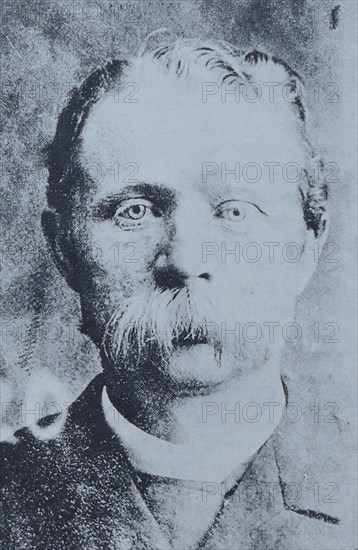
Dr. Henry C. W. Meyer was a German-born physician, confidence man and convicted murderer whose criminal career unfolded across several American cities during the late nineteenth century. He was also known by numerous aliases, including William Reuter, Hugo Wehler, Schaffer, Oswald and Stoffen. Contemporary investigators suspected that Meyer repeatedly used poison, false identities and fraudulent life-insurance policies to profit from the deaths of people around him.
Meyer operated with his wife, generally identified in historical accounts as Maria or Mary Meyer. The couple moved between communities in Illinois, Indiana, Ohio, Michigan and New York, changing their names whenever suspicion followed them. Their schemes often involved arranging insurance coverage on a selected person, naming themselves or an associate as beneficiary and then attempting to collect after that person died unexpectedly.
Early Life and Medical Career
Meyer was born in Germany around 1848 and later immigrated to the United States. By the 1870s, he had settled in Chicago and obtained medical training. His knowledge of medicine gave him access to drugs and allowed him to recognize symptoms that could resemble natural illness. It also placed him in a position of trust when relatives, acquaintances or criminal associates became sick.
Questions about Meyer arose early in his American career. His first wife, sometimes identified by her former married name of Kirchoff, died suddenly not long after their marriage. Meyer subsequently married another woman whose previous husband had also died under suspicious circumstances. Meyer and his new wife were reportedly arrested in 1879 after authorities investigated the deaths, but laboratory examinations did not uncover sufficient evidence of poison to support murder charges.
The lack of a successful prosecution allowed Meyer to continue moving from place to place. Later reports connected him to additional unexplained deaths in Chicago, Indianapolis, Cincinnati, Detroit and other cities. Many of those allegations were never proved in court, and the identities and precise death dates of several suspected victims were not reliably preserved.
The Insurance-Fraud Method
Meyer’s suspected method depended on deception rather than sudden public violence. He and his associates allegedly selected people whose deaths could produce an insurance payment. Applications were completed under genuine or assumed names, and policies were sometimes obtained from several companies at once. Meyer could then use his medical knowledge to administer poison gradually while describing the victim’s decline as an ordinary disease.
The couple’s frequent use of aliases made their movements difficult to trace. A marriage could be staged, a false household established and an insurance policy purchased before the participants disappeared into another city. By the time an insurer became suspicious, the Meyers might already be living under different names hundreds of miles away.
Some people recruited into the schemes appear to have understood that insurance fraud was being planned. They may have expected to participate in a staged disappearance or the substitution of another body. According to the prosecution in Meyer’s best-documented case, however, one such accomplice became more valuable dead than alive.
The Murder of Ludwig Brant
Ludwig Brant, whose surname was also reported as Brandt, had met Meyer while both men were imprisoned in Joliet, Illinois. Brant later traveled with the Meyers and used the name Gustave Baum. Under the plan developed in New York, Maria Meyer participated in a marriage ceremony with Brant while presenting herself under another identity. Several life-insurance policies were then taken out on his life, with Maria listed as the beneficiary.
The original fraud may have involved obtaining a corpse, falsely identifying it as Brant and allowing him to disappear under another name. Prosecutors contended that Meyer abandoned that complicated arrangement and decided to kill Brant instead. Because Brant was already cooperating in the fraudulent insurance scheme, he apparently did not realize that the physician and Maria intended to make his death genuine.
Brant became ill at a residence on East 13th Street in Manhattan. Meyer was said to have supervised or influenced his treatment while representing the sickness as natural. Brant died in New York City on March 30, 1892. He was approximately 26 years old and was buried on April 1 under the false identity associated with the insurance applications.
Confirmed Victim
- Ludwig Brant, also known as Gustave Baum — Died March 30, 1892, at a residence on East 13th Street in Manhattan, New York City. Brant was poisoned during a conspiracy involving multiple life-insurance policies. His death became the basis of Henry Meyer’s murder prosecution and conviction.
Suspected Victims and Unproven Deaths
After Meyer’s arrest, detectives and newspapers connected him to a much larger series of suspicious deaths. Reports claimed that he and Maria had been associated with as many as eight or more possible victims. The allegations included Meyer’s first wife, a former husband of another wife, members of Maria’s family and unidentified people in Chicago, Indianapolis, Cincinnati, Detroit and Massachusetts.
Most of these deaths were never established as murders through a completed criminal trial. Some bodies were examined without revealing identifiable poison, while other cases were too old for meaningful forensic testing. The surviving reports frequently conflict about names, relationships and locations. For that reason, these individuals cannot responsibly be presented as confirmed victims of Henry Meyer.
- Meyer’s first wife — Died suddenly in the Chicago area during the late 1870s. Her death prompted suspicion, but no reliable and independently verified date of death is available in surviving summaries, and Meyer was not convicted in connection with it.
- The former husband of Meyer’s later wife — Reportedly died suddenly before Meyer married the widow. Authorities investigated the circumstances, but no poison was conclusively identified and no murder conviction followed.
- Mary Neiss — Named in historical reports as a possible victim associated with the Meyers’ suspected poisoning activities. The surviving information does not provide a sufficiently verified death date or a completed prosecution establishing Meyer’s responsibility.
- Unidentified Indianapolis woman or girl — Contemporary accounts alleged that a female victim died during one of the couple’s insurance schemes in Indianapolis, Indiana. Her name and exact date of death remain uncertain.
- Unidentified Cincinnati man — Investigators reportedly examined a suspicious death connected with Meyer in Cincinnati, Ohio. No verified name or date of death has been consistently documented.
- Unidentified Detroit man — Meyer was suspected of involvement in a death in Detroit, Michigan, but the available historical record does not establish the person’s identity, death date or Meyer’s legal responsibility.
- Several unidentified Chicago victims — Nineteenth-century reports claimed that multiple suspicious deaths in Chicago may have been linked to Meyer and his wife. The allegations were not proved at trial, and dependable names and dates are unavailable.
The Insurance Investigation
Following Brant’s death, Maria submitted claims to the companies that had insured him under the name Gustave Baum. Some insurers paid their portions of the policies, but the Mutual Life Insurance Company became suspicious. Its investigators examined the marriage, the identities used by the participants and the circumstances of Brant’s illness.
The investigation gradually exposed inconsistencies in the applications and connected Gustave Baum to Ludwig Brant. Detectives learned of Meyer’s prior criminal history, his medical background and his movements through several states. What began as an inquiry into a questionable insurance claim developed into a fifteen-month search for a suspected professional poisoner.
Meyer and Maria fled New York and continued using aliases. Detectives eventually traced them to Detroit, Michigan. On July 12, 1893, New York investigators arrested the couple and began the process of returning them to Manhattan to face charges involving Brant’s death.
Arrest and Trial
Meyer’s trial opened in New York City in December 1893 and attracted national attention. Prosecutors described him as a calculating poisoner who had transformed murder into a business. They argued that the insurance arrangements supplied a clear financial motive and that Meyer’s conduct during Brant’s illness demonstrated his role in the killing.
The prosecution faced the difficulty common to nineteenth-century poisoning cases: toxicology was still developing, and certain substances could be hard to detect after death. The state therefore relied heavily on circumstantial evidence, testimony about the insurance conspiracy and proof that Meyer had controlled access to Brant while the victim was ill.
Meyer denied being a serial poisoner and challenged the reliability of witnesses who had participated in fraud themselves. His defense argued that the government had built its case from rumor, questionable testimony and unrelated suspicious deaths. Nevertheless, the evidence surrounding Brant’s insurance policies and fatal illness persuaded the jury that Meyer was criminally responsible.
Conviction and Sentence
Henry Meyer was convicted of second-degree murder for the poisoning death of Ludwig Brant. He received a life sentence and was sent to Sing Sing Prison in Ossining, New York. Although investigators believed he may have killed several other people, Brant’s death remained the only homicide conclusively established against him through conviction.
Maria Meyer was also prosecuted for her involvement in the conspiracy, but the case against her did not produce a comparable murder conviction. Historical accounts indicate that she received a much shorter period of imprisonment for an offense connected with the fraud. Questions about the exact extent of her involvement in earlier deaths were never fully resolved.
Historical Significance
Henry Meyer’s case illustrates how life insurance, modern mobility and weak interstate communication could be exploited during the late nineteenth century. A person using an alias could move to another city, create a new identity and obtain policies before local authorities learned about earlier allegations. Meyer’s medical background made the suspected crimes especially difficult to recognize because he could describe poisoning symptoms as ordinary disease.
The case also demonstrates the limits of the era’s forensic science. Investigators suspected a long succession of deaths but lacked the reliable chemical evidence needed to prosecute most of them. Newspaper accounts frequently treated accusations as established fact, producing later claims that Meyer and his wife had been convicted of numerous murders. In reality, the historical record clearly supports one convicted murder while leaving the remaining deaths in the category of suspicion.
Conclusion
Dr. Henry Meyer was a convicted poisoner and suspected serial killer whose schemes combined medical knowledge, false identities, fraudulent marriages and life-insurance policies. His proven victim was Ludwig Brant, also known as Gustave Baum, who died in Manhattan on March 30, 1892, after participating in what he believed was an insurance fraud rather than a plan for his own murder.
Meyer’s conviction ended a career that investigators believed had left a trail of unexplained deaths across several states. Although the true number of his victims may never be known, the Brant case revealed a deliberate system in which trust was manipulated, identities were manufactured and human lives were assigned a financial value. Meyer spent the remainder of his known life imprisoned at Sing Sing, while the unproved deaths associated with his travels remained unresolved.