Reuben Taylor and the 1972 De Mau Mau Murders
Overview
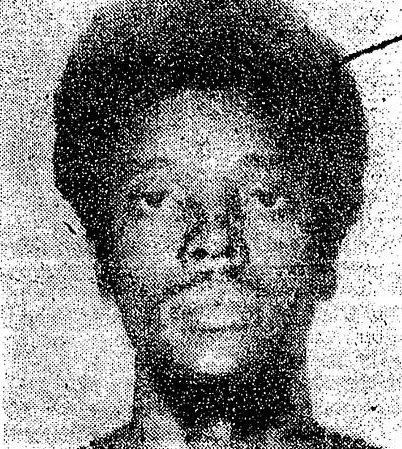
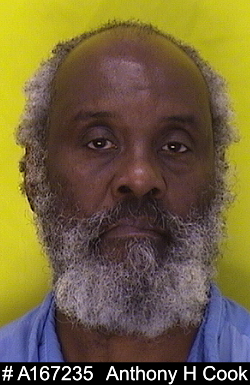
Reuben Taylor was a Chicago man and Vietnam War veteran convicted for his participation in the August 4, 1972, robbery and murder of four members of the Corbett family in Barrington Hills, Illinois. Taylor and several associates were publicly identified as members of a loosely organized group called the De Mau Mau. During an intense investigation in October 1972, authorities accused members of the group of involvement in nine killings committed at four Illinois locations.
Although Taylor has frequently been classified as a serial killer because investigators connected the group to nine deaths, the legal record requires an important distinction. Taylor was convicted of the four Corbett murders, but he was not convicted of personally committing all nine killings attributed to the De Mau Mau. Some of the additional cases were prosecuted against other alleged members of the group, and historical accounts have questioned whether the authorities and contemporary news media overstated the organization, structure, and motives of the De Mau Mau.
Early Life and Military Service
Reuben Taylor was born on June 5, 1950, in Jackson, Mississippi. His parents were students at Jackson State University and later moved the family to Chicago. Taylor grew up in the North Lawndale neighborhood, where he reportedly performed well in school, participated in the Boy Scouts, and served in his school’s color guard. He nevertheless experienced neighborhood violence and repeated confrontations with street gangs.
In 1969, Taylor enlisted in the United States Marine Corps. During his military service, he encountered severe racial tension and became familiar with Black Marines who used the name De Mau Mau. The name referenced both the Mau Mau anticolonial movement in Kenya and the Vietnamese expression “di mau,” meaning to move or leave quickly. Taylor completed his service and received an honorable discharge in 1971.
After returning to Chicago, Taylor enrolled at Malcolm X College and studied inhalation therapy. He also became associated with a Chicago group of Black veterans who called themselves the De Mau Mau. Accounts sympathetic to Taylor describe the organization as an informal fraternity created for mutual assistance, cultural education, and protection. Police and prosecutors later portrayed it as a violent gang responsible for robberies and racially motivated murders.
The Murder of Michael Gerchenson
Michael Gerchenson, a 19-year-old sophomore at Southern Illinois University, was killed on May 3, 1972. His bullet-riddled body was discovered near Interstate 57 outside West Frankfort in southern Illinois. Reports stated that he had been shot six times, including twice in the head, and that his automobile had been taken.
Investigators later reported that ballistic evidence linked a firearm used in Gerchenson’s killing to one of the guns involved in the Corbett murders. Members of the alleged De Mau Mau group were charged in connection with Gerchenson’s death. Taylor’s name became publicly associated with the case during the broad October 1972 announcement of arrests, although his established murder convictions arose from the later Corbett family killings.
The Corbett Family Murders
On August 4, 1972, Taylor traveled with his younger brother, Donald Taylor, and associates Michael Clark and Nathaniel Burse to Barrington Hills, an affluent community northwest of Chicago. The men selected the home of retired insurance executive Paul Corbett for a robbery. Available accounts indicate that the residence was chosen without any known previous relationship between the intruders and the family.
The men approached the house under the pretense of asking for directions. Once a woman opened the door, the intruders displayed a handgun and forced the occupants together. Paul Corbett, his wife Marion, Marion’s daughter Barbara Boand, and Marion’s sister Dorothy Denny were detained while the men searched for money and valuables.
Testimony presented during the legal proceedings indicated that the robbers took cash, a gold watch, and a ring. The victims were forced into or near a kitchen pantry. According to Taylor’s later account, a dog began barking and Donald Taylor threw a knife toward it. Barbara Boand reacted by standing and shouting. Reuben Taylor then shot her in the chest with a larger-caliber weapon.
The other three captives were subsequently shot in the back of their heads with a .25-caliber handgun. Paul Corbett, Marion Corbett, and Dorothy Denny were found together in the pantry. Barbara Boand was found in the kitchen. The calculated shooting of the restrained victims transformed the robbery into one of the most notorious multiple murders in the Chicago suburbs during the early 1970s.
Prosecution testimony attributed three of the fatal shots to Donald Taylor and the shooting of Barbara Boand to Reuben Taylor. Even though Taylor maintained that he had originally intended to commit robbery rather than murder, Illinois law allowed him to be held responsible for every death committed during the jointly planned felony.
The Hawtree Family Murders
On September 4, 1972, three members of the Hawtree family were murdered at their rural home near Monee, Illinois. The victims were Stephen Hawtree, his wife Judy Hawtree, and their teenage son Thomas Hawtree. Their bodies were discovered together in the basement, and each had been shot in the head.
The killings resembled the Corbett murders because several victims had been gathered in one area of a home and executed. Investigators reported that ballistic testing connected a .25-caliber firearm used in the Hawtree killings to other crimes attributed to alleged De Mau Mau members. The weapon itself was not immediately recovered, making the ballistic conclusions and statements from informants central parts of the investigation.
The Murder of William Richter
Army Specialist Five William Richter, 23, was murdered on September 2, 1972, while on leave from military service. Richter and another man, James Davis, were sleeping in a pickup truck parked near an expressway in the Highland Park area when armed robbers approached them.
Richter was fatally shot during the robbery, while Davis survived the attack. Six alleged De Mau Mau members were indicted for Richter’s murder, the armed robbery, and the attempted murder of Davis. Court testimony later described a plan to rob men sleeping in trucks because the attackers believed the drivers might be carrying money.
Other defendants, rather than Reuben Taylor, were ultimately convicted in separate trials for the Richter crimes. The case was nevertheless included in the group of nine murders publicly attributed to the De Mau Mau when authorities announced the arrests in October 1972.
Victims
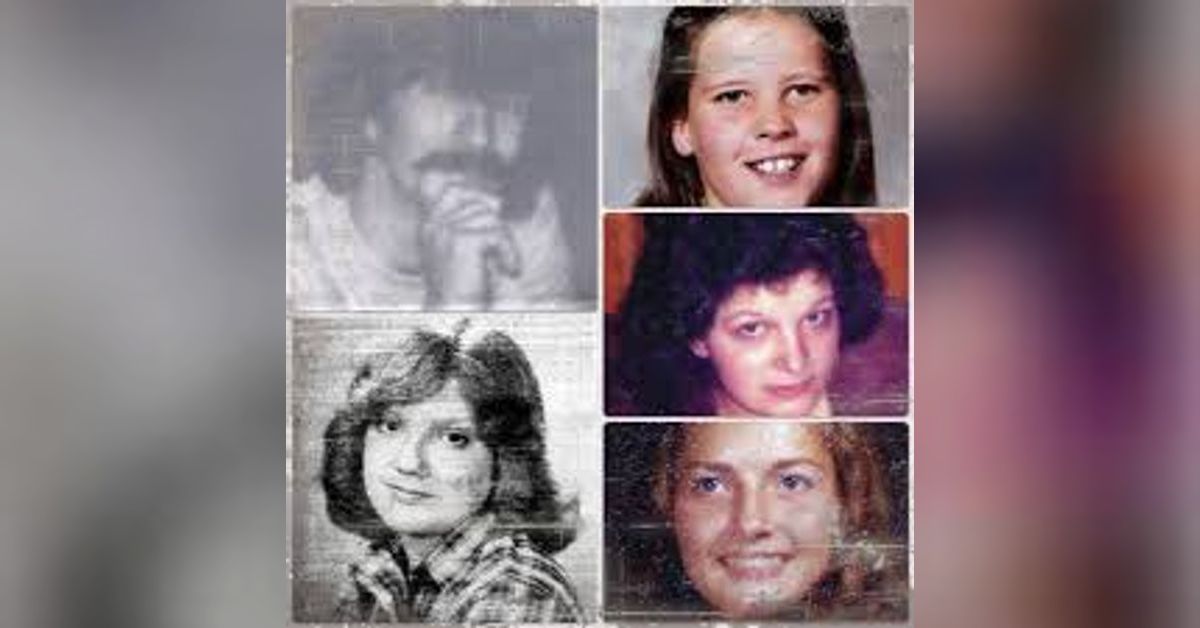
- Michael Gerchenson, 19 — Killed on May 3, 1972. His body was found near Interstate 57 outside West Frankfort, Illinois. He had been shot multiple times, and his automobile was taken. The case was publicly linked to alleged De Mau Mau members through ballistics and the wider investigation.
- Paul Corbett, 67 — Killed on August 4, 1972, inside his home in Barrington Hills, Illinois. The retired insurance executive was robbed, confined in a pantry, and shot in the back of the head.
- Marion Corbett, 58 — Killed on August 4, 1972, at the Corbett residence in Barrington Hills, Illinois. She was forced into the pantry with other family members and shot in the back of the head.
- Barbara Boand — Killed on August 4, 1972, at the Corbett residence in Barrington Hills, Illinois. She was Marion Corbett’s daughter from an earlier marriage. Reuben Taylor shot her in the chest after she reacted during the robbery.
- Dorothy Denny — Killed on August 4, 1972, at the Corbett residence in Barrington Hills, Illinois. She was Marion Corbett’s sister and was shot in the back of the head while confined with the other captives.
- William Richter, 23 — Killed on September 2, 1972, while sleeping in a pickup truck near an expressway in the Highland Park area of Illinois. He was shot during a planned robbery. Reuben Taylor was associated with the broader investigation, although other defendants were convicted in this case.
- Stephen Hawtree, 56 — Killed on September 4, 1972, at his family’s rural home near Monee, Illinois. His body was found in the basement with those of his wife and son.
- Judy Hawtree, 53 — Killed on September 4, 1972, at the Hawtree residence near Monee, Illinois. She was shot in the head and discovered in the basement with her husband and son.
- Thomas Hawtree, 17 — Killed on September 4, 1972, at his family’s home near Monee, Illinois. The teenager was found shot to death in the basement beside his parents.
Investigation and Arrests
By October 1972, police believed ballistic evidence connected firearms used in the Corbett, Hawtree, Gerchenson, and Richter murders. Authorities also relied on statements obtained from suspects and informants. On October 15, officials announced that several men had been arrested and that eight alleged De Mau Mau members were being held or sought in connection with nine murders.
Those publicly identified included Reuben Taylor, Donald Taylor, Michael Clark, Nathaniel Burse, Edward Moran Jr., Robert Wilson, and other alleged associates. Officials described some of the suspects as leaders or gunmen and suggested that racial hatred may have influenced the attacks because all nine victims were white. Contemporary reporting repeatedly characterized the De Mau Mau as a militant organization created to murder white people.
Later examinations of the case challenged portions of that narrative. Critics argued that the group was less organized than authorities claimed and that political pressures, sensational news coverage, and racial fear contributed to the portrayal of the defendants. The murders themselves were real and exceptionally brutal, but the evidence did not establish that every person associated with the De Mau Mau participated in every killing.
Trial and Conviction
Taylor, Donald Taylor, Michael Clark, and Nathaniel Burse were charged with the murders and armed robbery committed at the Corbett residence. At a preliminary hearing in October 1972, prosecutors presented evidence that the defendants had made statements describing the robbery and shootings. A judge found probable cause to send the four murder charges to a grand jury.
Nathaniel Burse never completed a trial in the Corbett case. While being held in the Lake County Jail on charges connected to the Richter murder, Burse and fellow defendant Edward Moran were strangled to death in their cells on June 15, 1973. Their deaths added another violent and controversial chapter to the De Mau Mau prosecutions.
Reuben Taylor, Donald Taylor, and Michael Clark were convicted of the Corbett murders and armed robbery. Reuben Taylor received a sentence that ensured decades of imprisonment under Illinois law. Because the crimes occurred before Illinois abolished its former system of indeterminate sentences, Taylor became one of the state’s remaining “C-number” prisoners, inmates whose release depended on approval from the Illinois Prisoner Review Board.
Imprisonment and Parole Proceedings
Taylor spent more than four decades in prison and repeatedly appeared before the state parole board. Supporters described him as a rehabilitated prisoner who accepted responsibility for his role in the Corbett murders, maintained a strong institutional record, and no longer represented a threat to the public. They also argued that parole decisions were influenced by the broader and disputed image of the De Mau Mau as a terrorist organization responsible for nine racially motivated executions.
The parole board repeatedly denied his release. Even board members who reportedly considered Taylor personally rehabilitated expressed difficulty overlooking the enormity of the Corbett murders. Four innocent people had been terrorized in their home, robbed, confined, and deliberately killed. Taylor’s direct shooting of Barbara Boand and his participation in the felony made him legally and morally responsible for the entire massacre.
Classification and Legacy
Reuben Taylor is sometimes listed as a serial killer with nine victims because police attributed four separate murder incidents to men identified with the De Mau Mau. That description can be misleading when applied to Taylor individually. His confirmed convictions involved the four Corbett family victims killed during one criminal episode. Public authorities connected him and the alleged organization to five additional deaths, but separate defendants were prosecuted for some of those crimes, and the evidence did not prove that Taylor personally killed all nine victims.
The case remains historically significant because it combined a home-invasion massacre, several other firearm murders, returning Vietnam veterans, racial conflict, disputed gang allegations, and aggressive political rhetoric. The Corbett murders alone established Taylor’s participation in a devastating act of mass murder. The broader De Mau Mau investigation illustrates how separate crimes can become grouped into a serial-murder narrative even when responsibility differs among multiple suspects.
Behind the controversy were nine people whose lives ended violently between May and September 1972. The Corbett family was attacked in the security of its home, the Hawtree family was executed in a rural basement, Michael Gerchenson was killed and abandoned near a highway, and William Richter was shot while sleeping in a truck. Their deaths produced multiple prosecutions, decades of imprisonment, and continuing debate over the true extent of Reuben Taylor’s role in the entire series.