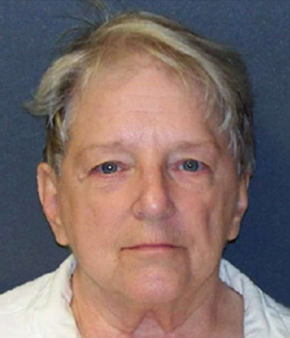
Richard Raymond Valenti: The Folly Beach Serial Killer
Overview
Richard Raymond Valenti was a U.S. Navy sailor whose name became synonymous with terror in the coastal community of Folly Beach, South Carolina, during the early 1970s. Between 1973 and 1974, Valenti abducted, sexually assaulted, and murdered at least three teenage girls. His method was brutal and calculated; he would bind his victims and hang them, watching them die. Valenti confessed to three murders after his arrest in April 1974, which was prompted by a surviving victim who identified him. He was convicted of two of the murders and sentenced to two consecutive life terms. The third murder charge was never brought to trial. Valenti was also a suspect in at least five other non-fatal attacks on young women. For decades, he was a recurring figure in parole hearings, where the families of his victims steadfastly opposed his release. Valenti died of natural causes in prison in 2020, after 46 years of incarceration.
Early Life and Background
Richard Raymond Valenti was born on January 8, 1943, in New York City. Little is publicly known about his childhood and upbringing. As an adult, he enlisted in the U.S. Navy and was eventually stationed at the Charleston Naval Shipyard in South Carolina. He lived in a house on East Arctic Avenue in Folly Beach, a small beach town near Charleston. During his trial, testimony revealed a darker side to his personal life. His wife testified that Valenti had a fetishistic interest in ropes and that she had once found him naked, fondling a rope while masturbating. A doctor who evaluated him stated that Valenti had "a serious mental disorder which is the desire to control women in bondage." A prosecutor would later describe him as a "sexual deviant."
The Murders of Sheri Clark and Alexis Latimer
On the afternoon of May 23, 1973, best friends Sheri Jan Clark, 14, and Alexis Ann Latimer, 13, went for a walk on Folly Beach and vanished. Initially, police treated their disappearance as a runaway case, a painful memory for Alexis's mother, who recalled it took two and a half weeks for a serious investigation to begin.
The grim truth of what happened to the girls would not be known for nearly a year. Valenti later confessed to the details of their abduction and murder. He approached the girls on the beach with a gun and forced them into an abandoned shower house near his home. There, he bound and gagged them. In a taped statement, Valenti described how he forced the girls to partially undress and stand on chairs. He then placed nooses around their necks, tied the ropes to overhead water pipes, and kicked the chairs out from under them, watching as they died by hanging. After they were dead, he buried their bodies in shallow graves in the sand dunes near his house.
The Murder of Mary Earline Bunch
Nine months after the disappearance of Clark and Latimer, another teenager went missing from Folly Beach. On February 20, 1974, 16-year-old Mary Earline Bunch vanished. Her decomposed body was the first to be discovered, found buried on Folly Beach in April 1974 with her hands and feet bound with rope. An autopsy determined her cause of death was asphyxia from a deep gag and a ligature around her neck. After his arrest, Valenti confessed to killing Bunch and led investigators to her grave, which was near where he had buried his first two victims. One victim's sister recalled seeing Valenti at the police station after his arrest, clutching a Bible with a missing person's flier for Mary tucked inside its pages. He reportedly claimed that "the Lord told him to kill them" because "they had the devil inside."
The Victims
- Sheri Jan Clark, 14 — Disappeared on May 23, 1973, from Folly Beach while walking with her friend Alexis. Her sister, Paula Clark Marion, became a dedicated advocate, speaking out against Valenti's release at his many parole hearings.
- Alexis Ann Latimer, 13 — Vanished with Sheri Clark on May 23, 1973. Her mother, Mary Latimer, expressed immense relief upon Valenti's death, stating it was a release from the recurring trauma of his parole hearings.
- Mary Earline Bunch, 16 — Went missing on February 20, 1974, from Folly Beach. Her body was the first to be found, leading to the discovery of the other victims.
Investigation and Capture
The break in the case came not from the murder investigations, but from another assault. In September 1973, Valenti had attacked a young woman, forcing her into a vacant house and making her partially strip. She survived, and in April 1974, she learned his name and reported him to the police.
On April 16, 1974, Richard Valenti was arrested for this unrelated assault. During questioning, he began to talk about his desire to bind and gag women. He soon confessed to the murders of Sheri Clark, Alexis Latimer, and Mary Earline Bunch. Crucially, he led police to the sand dunes where he had buried the girls' bodies. The remains of Clark and Latimer were unearthed on April 17, 1974, about 10 months after they disappeared. Their identities were confirmed through dental records and personal items found at the grave, including a necklace and a ring.
Valenti was also linked to several other attacks. In one incident on February 12, 1974, a girl was found tied to a tree but alive on James Island. On April 12, 1974, just before his arrest, he abducted three girls from Summerville, who were found gagged and bound, but otherwise unharmed, under a house in Folly Beach after one managed to loosen her gag and scream for help.
Trial and Sentence
On April 18, 1974, Valenti was charged with three counts of murder and six counts of assault. A Charleston County grand jury indicted him on May 27, 1974, for the three murders and two of the assaults.
Valenti's trial for the murders of Alexis Latimer and Sheri Clark took place in June 1974. The prosecution presented his taped confession, in which he chillingly detailed the killings. The Charleston County Medical Examiner testified that the girls had died by hanging. On June 27, 1974, the jury found Richard Valenti guilty on both counts of murder.
The prosecutor sought the death penalty, but at the time of the trial, capital punishment in South Carolina was suspended following the U.S. Supreme Court's 1972 *Furman v. Georgia* decision. As a result, the judge sentenced Valenti to two consecutive life sentences. He was never tried for the murder of Mary Earline Bunch or for the other assault charges, as those charges were dropped after he received the two life sentences. Valenti filed an appeal, but his conviction was upheld by the South Carolina Supreme Court in October 1975.
Imprisonment and Death
Under the law in effect at the time of his sentencing, Valenti became eligible for parole after serving just ten years. His first parole hearing was in 1983, and for the next 37 years, the families of his victims were forced to relive their trauma every two years to fight his release. They attended hearings, organized petitions that gathered thousands of signatures, and spoke to the media to ensure Valenti remained behind bars. The parole board denied his release 21 times.
On December 16, 2020, Richard Raymond Valenti died at the age of 77. He had been transferred from Kirkland Correctional Institution to an outside hospital on November 18 for what the South Carolina Department of Corrections described as a long-standing illness unrelated to COVID-19. His death finally brought a measure of peace to the families who had fought for so long to keep him imprisoned. Alexis Latimer's mother told a reporter, "To think that we do not have to go through another parole hearing, to not have to relive what happened to our daughter and to Sherri, it's a real relief... this is the best Christmas present I could have."