Bruce McArthur: The Toronto Village Killer
Overview
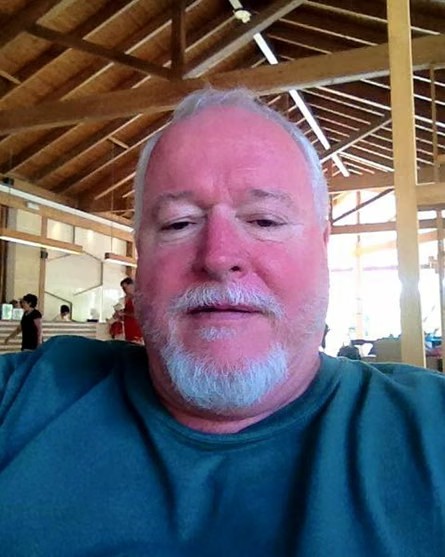
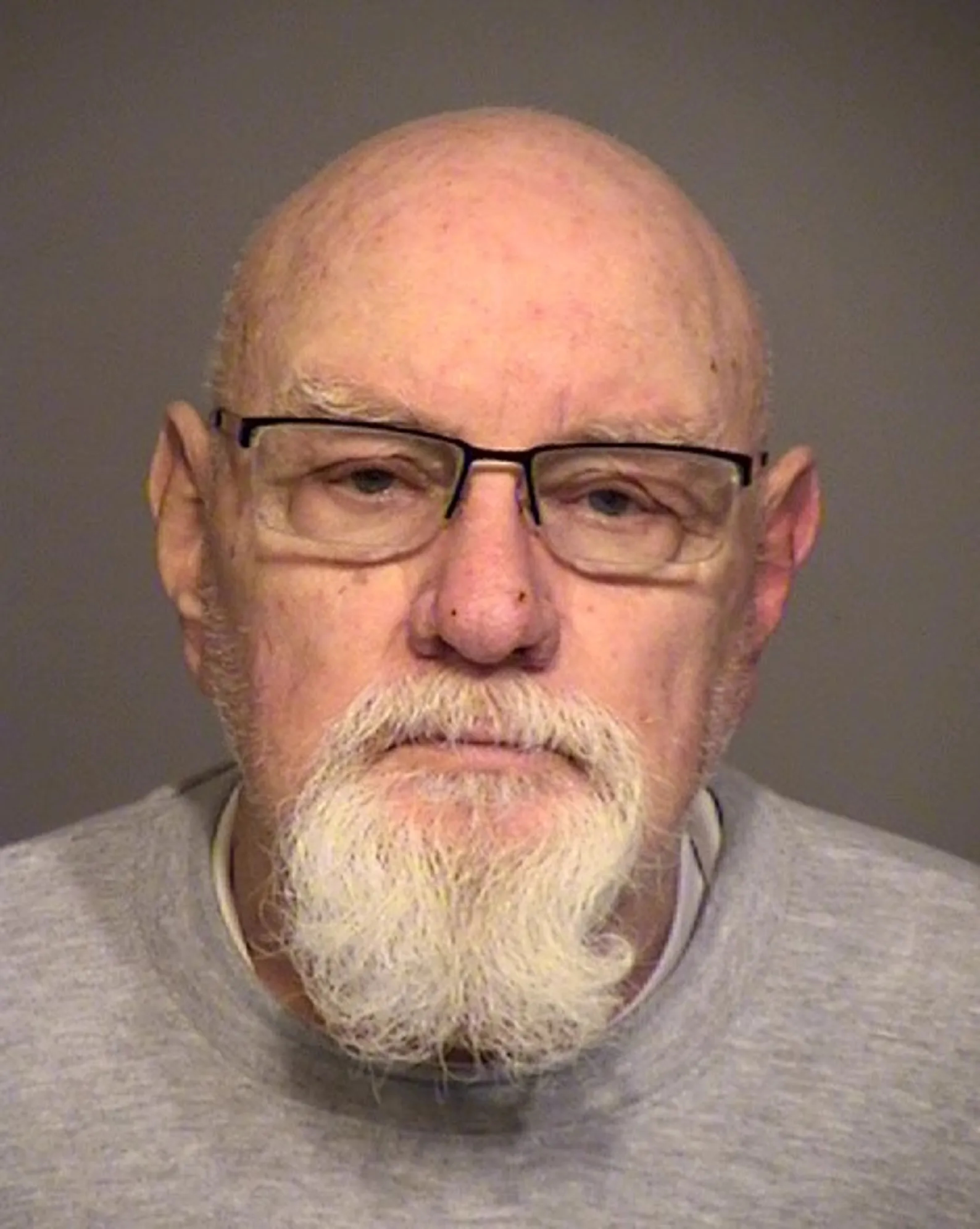
Between 2010 and 2017, Bruce McArthur, a self-employed landscaper and part-time mall Santa, murdered eight men in Toronto. His victims were men with connections to the city's Gay Village, many of whom were vulnerable due to their immigration status, homelessness, or struggles with addiction. McArthur lured the men to his apartment, where he murdered them during sexual encounters. He then dismembered their bodies, hiding the remains in large planter boxes at a residential property where he worked as a landscaper. For years, community members voiced fears of a serial killer, but it wasn't until the disappearance of a well-known local man in 2017 that a dedicated police task force finally closed in on McArthur. His arrest on January 18, 2018, brought an end to a decade of terror. McArthur pleaded guilty to eight counts of first-degree murder and was sentenced to life in prison, bringing the largest serial killer investigation in Toronto's history to a close.
Early Life and Background
Thomas Donald Bruce McArthur was born on October 8, 1951, in Lindsay, Ontario, and grew up on a farm near Argyle. His parents were known in the community for fostering troubled children from Toronto. McArthur's home life was marked by religious conflict between his devout Presbyterian father and Catholic mother; McArthur often sided with his mother, which he felt earned his father's scorn. He later told a therapist he believed his father suspected he was gay and tried to suppress it through hard manual labor on the farm.
After high school, McArthur completed a business course and began working as a buyer's assistant for the Eaton's department store in Toronto. At age 23, he married Janice Campbell, and they had two children, a son and a daughter. The family moved to the suburb of Oshawa, and McArthur worked as a traveling salesman for hosiery and clothing companies. He was active in his church, a life he later described as an attempt to suppress his homosexuality.
In the early 1990s, McArthur began having affairs with men and eventually came out to his wife. They separated in 1997, and McArthur declared bankruptcy in 1999 after losing his job. He moved to Toronto, started a landscaping business, and became a fixture in the city's Gay Village, a neighborhood centered around Church and Wellesley streets. He was active on dating apps, presenting a friendly, grandfatherly image that masked a darker side. In 2001, he assaulted a male sex worker with a metal pipe, for which he received a conditional sentence but later obtained a pardon, leaving him with no criminal record.
The Murders
McArthur's killing spree began in 2010 and continued for seven years. His victims were men he met in and around the Gay Village, many of whom were of South Asian or Middle Eastern descent. The murders followed a pattern: he would lure them to his 19th-floor apartment in the Thorncliffe Park neighborhood, restrain and sexually assault them, and then kill them by ligature strangulation.
After the murders, McArthur would dismember the bodies in his apartment. He meticulously staged and photographed his victims, both before and after death, keeping digital trophies of his crimes. He also kept personal items belonging to the men, such as jewelry. The dismembered remains of seven of his victims were buried in large garden planters at a home in Leaside, where he stored his landscaping equipment. The remains of his eighth victim were found in a ravine behind the same property.
The first known victim was Skandaraj Navaratnam, a man McArthur had been in a relationship with years earlier, who disappeared over Labour Day weekend in 2010. Later that year, Abdulbasir Faizi vanished after being seen in the Gay Village. Majeed Kayhan, another man with ties to the community, went missing in 2012. These initial disappearances prompted a police investigation, but it was closed without any suspects identified.
The killings continued with Soroush Mahmudi in 2015, Kirushna Kumar Kanagaratnam and Dean Lisowick in 2016, and finally Selim Esen and Andrew Kinsman in 2017. The victims were often vulnerable and their disappearances did not always trigger immediate, high-level police response. Lisowick, for example, was never reported missing.
The Victims
- Skandaraj Navaratnam, 40 — Disappeared in September 2010. Known as Skanda to his friends, he had a past relationship with McArthur and was remembered for his vibrant personality.
- Abdulbasir Faizi, 42 — Last seen on December 29, 2010. He was a husband and father who frequented the Gay Village and worked at a printing company. His car was found abandoned near the home where McArthur stored his landscaping equipment.
- Majeed Kayhan, 58 — Went missing in October 2012. An immigrant from Afghanistan, he was also a subject of the initial police investigation, Project Houston.
- Soroush Mahmudi, 50 — Reported missing in August 2015 by his wife. He was an immigrant from Iran.
- Kirushna Kumar Kanagaratnam, 37 — Died in early 2016. He was a refugee from Sri Lanka who arrived in Canada aboard the MV Sun Sea in 2010. His death was not connected to McArthur until after the killer's arrest.
- Dean Lisowick, 47 — Murdered around April 2016. Lisowick lived in homeless shelters and struggled with addiction. He was never reported missing, and friends described him as a caring person with a big heart.
- Selim Esen, 44 — Vanished on April 16, 2017. Originally from Turkey, Esen was a graduate of a social work program and was known for his kindness.
- Andrew Kinsman, 49 — Last seen on June 26, 2017. A well-known and beloved figure in the community, Kinsman was a superintendent and a volunteer for the Toronto People with AIDS Foundation. His prompt and widely publicized disappearance proved to be the catalyst for the investigation that finally caught McArthur.
Investigation and Capture
Early police efforts were criticized as inadequate. In 2012, the Toronto Police Service launched Project Houston to investigate the disappearances of Navaratnam, Faizi, and Kayhan. McArthur was interviewed by police in 2013 as part of this probe but was dismissed as a person of interest. The project was concluded in 2014 with no arrests made.
The turning point came in the summer of 2017 after the disappearances of Selim Esen and Andrew Kinsman. Kinsman's friends and community members mobilized quickly, and his disappearance was reported within 72 hours. This led to the creation of a new task force, Project Prism. A crucial piece of evidence emerged when investigators found a single word, "Bruce," written on Kinsman's calendar for the day he vanished. This, combined with surveillance video showing Kinsman getting into a red Dodge Caravan, led police directly to Bruce McArthur.
Police placed McArthur under surveillance. By November 2017, he was a primary suspect. The investigation escalated, and on January 18, 2018, officers, fearing for the safety of a man they saw entering McArthur's apartment, forced their way in. They found the man tied to a bed but unharmed. McArthur was arrested on the spot. A search of his computer revealed a folder for his latest intended victim, containing photos of the man he had just brought home. The forensic investigation that followed was one of the largest in Toronto's history, involving searches of over 100 properties where McArthur had worked. This led to the gruesome discovery of human remains in garden planters at a Leaside home.
Trial and Sentence
On January 29, 2019, Bruce McArthur pleaded guilty to all eight counts of first-degree murder, avoiding a lengthy trial. During the sentencing hearing, the court heard harrowing details of the crimes. Crown prosecutors revealed that McArthur had kept "souvenirs" from his victims, including a notebook and jewelry. Evidence showed he had photographed his victims, posing their bodies after death.
The Crown argued for a sentence that would make McArthur ineligible for parole for 50 years, citing the brutality and predatory nature of the crimes. McArthur's defense pointed to his guilty plea and advanced age as reasons for a more lenient sentence.
On February 8, 2019, Ontario Superior Court Justice John McMahon sentenced McArthur to life in prison with no possibility of parole for 25 years. The judge called McArthur's actions "pure evil" but noted that the guilty plea had spared the victims' families the trauma of a trial. Under the sentence, McArthur will be 91 years old before he is eligible to apply for parole.
Aftermath and Legacy
The Bruce McArthur case sent shockwaves through Toronto and particularly its LGBTQ+ community. It exposed deep-seated mistrust between the community and the Toronto Police Service, which faced harsh criticism for its handling of the missing persons cases. For years, community members had raised alarms about a potential serial killer, but their concerns were repeatedly dismissed by police officials, who stated there was no evidence of such a threat.
In the wake of McArthur's conviction, the Toronto Police Services Board commissioned an independent review of how police handle missing persons investigations. The final report, released in 2021, found systemic discrimination and made 151 recommendations for change. The Toronto Police Service issued a formal apology for its investigative shortcomings and committed to implementing the recommendations, including the creation of a dedicated missing persons unit. The case became a catalyst for significant reforms aimed at improving police-community relations and ensuring that the disappearances of marginalized individuals are taken seriously in the future.