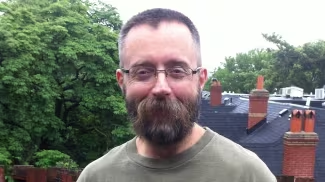
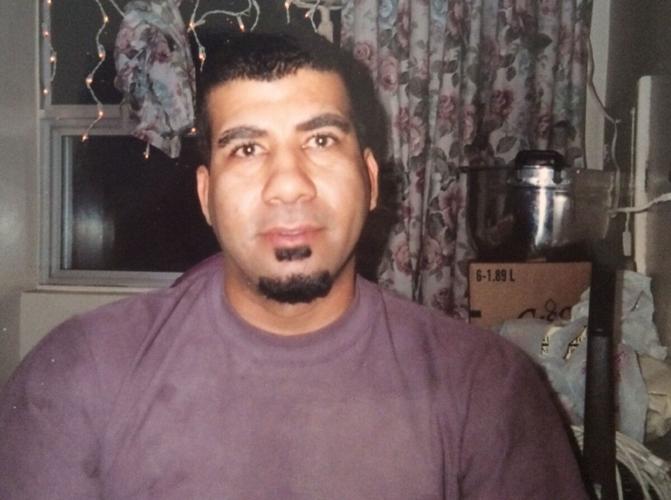
Selim Esen was a kind and curious man, a person his brothers said “thought, believed, felt and lived free as a bird, beyond any borders and any boundaries.” A 44-year-old man of Turkish origin, Selim was known for his gentle nature and his passion for learning, gardening, and exploring new places. He was an intelligent man with university degrees in sociology and philosophy who stood firm for fairness and social justice.
Born in Istanbul and raised in Ankara, he found it difficult to live as a gay man in Turkey and eventually moved to Toronto, Canada, in 2013, with the hope of marrying his boyfriend and starting a new life. Though that relationship did not last, Selim was determined to build a life for himself, recently completing a peer counseling course at St. Stephen's Community House to help others in his community.
In the spring of 2017, Selim was facing challenges and working to get his life back on track. He was last seen alive on the evening of April 15 or 16, 2017, in the area of Bloor Street East and Ted Rogers Way in Toronto. A friend reported him missing on April 30, 2017, after he vanished without a trace. His disappearance was considered suspicious, and friends described him as being in a vulnerable state at the time. He had no family in Canada, and those who knew him grew increasingly worried as time passed with no word.
Selim’s disappearance, along with that of another man, Andrew Kinsman, in June 2017, prompted the Toronto Police Service to launch a dedicated task force called Project Prism in August of that year. This investigation looked into the disappearances of both men and also considered potential links to three earlier missing persons cases from the city’s Gay Village that were investigated under a previous task force, Project Houston. The investigation into Kinsman's disappearance eventually led police to identify a self-employed landscaper, Bruce McArthur, as a person of interest by September 2017.
The investigation was one of the largest in the history of the Toronto Police Service, involving extensive surveillance and forensic work. On January 18, 2018, police arrested McArthur and initially charged him with the murders of Selim Esen and Andrew Kinsman. The full horror of his crimes was revealed as investigators began searching properties linked to him. At a home on Mallory Crescent where McArthur stored his landscaping equipment, police discovered the dismembered remains of multiple victims hidden in large planters. Selim's remains were among those identified. The search of McArthur's apartment also uncovered a notebook belonging to Selim.
Bruce McArthur, who became known as the Toronto Village Killer, was ultimately charged with eight counts of first-degree murder for a string of killings that took place between 2010 and 2017. His victims were men he had met in and around Toronto's Gay Village. McArthur’s method was ligature strangulation. On January 29, 2019, he pleaded guilty to all eight counts. He was sentenced to life in prison with no possibility of parole for 25 years.
During the sentencing hearing, Selim’s family and friends shared their profound grief. A friend, Richard Kikot, described Selim as a "romantic" who believed in the power of love. His family submitted a statement describing their shattered lives. "We can't come to terms with his savage murder," they wrote. "It is like part of our body is cut into pieces and will keep bleeding forever." His brothers, who traveled from the United Kingdom for the court proceedings, remembered Selim’s "tender and kind humanity," which they said "came before everything else." They also expressed deep concern over how long it took authorities to act on the missing persons reports, a sentiment echoed by many in the community. In October 2018, family and friends gathered for a funeral service to finally bring closure and remember the kind-hearted man whose life was stolen.