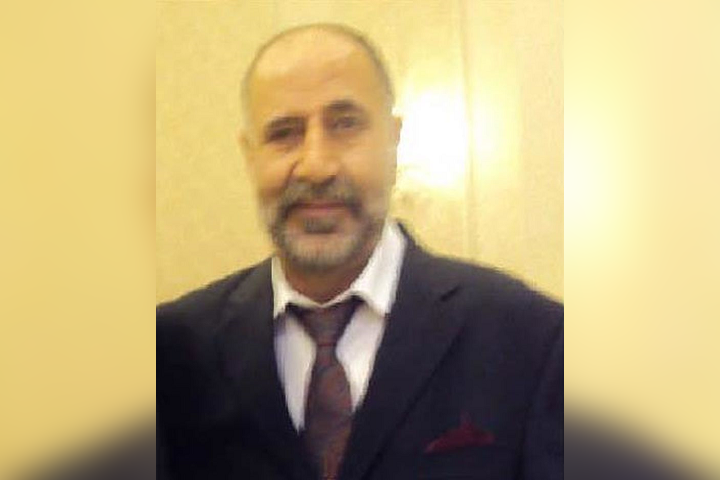
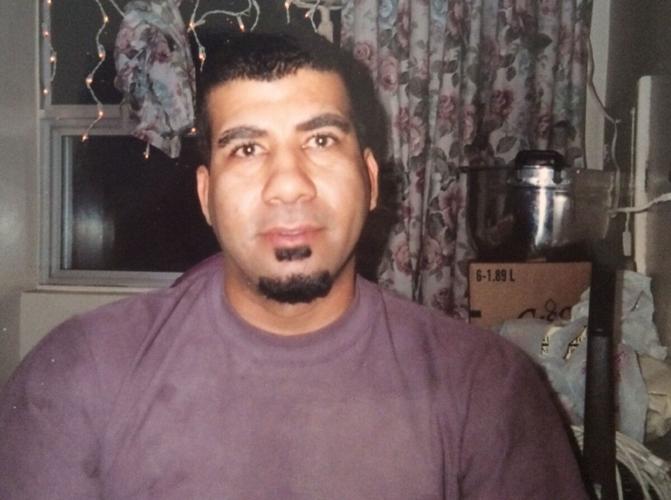
Andrew Kinsman was a man who built community wherever he went. The 49-year-old, a familiar and beloved figure in Toronto, was known for his kindness, his integrity, and his dedication to helping others. A graduate of McMaster University, he channeled his passion for social good into a career, working with organizations like the Toronto HIV/AIDS Network and volunteering for the Toronto People with AIDS Foundation (PWA).
Andrew was the kind of person who baked for his friends and neighbors, looked after his apartment building as its superintendent with meticulous care, and deeply loved his 17-year-old cat. His life was stable, full of connection, and defined by his thoughtful regard for those around him.
The day after Toronto's 2017 Pride weekend, on June 26, Andrew Kinsman vanished. He was last seen in the Cabbagetown neighborhood near Parliament and Winchester Streets. For those who knew him, his silence was an immediate cause for alarm. It was completely out of character for him to be out of touch or to shirk his responsibilities. When friends entered his apartment on June 28, they found nothing amiss, except for one unthinkable detail: his cat was unfed and without water. This, more than anything, convinced them something was terribly wrong. His sister, Patricia, later said, "He would never have left his 17-year-old cat in the apartment alone without food and water for three days."
The disappearance of such a well-known and connected man galvanized the community and, ultimately, the police. While other men had gone missing from Toronto's Gay Village in preceding years, Kinsman's case became a tipping point. His extensive network of friends and family organized searches, distributed posters, and relentlessly pushed for answers. Their advocacy led the Toronto Police Service to create a dedicated task force, Project Prism, in July 2017 to investigate the disappearances of both Kinsman and another man, Selim Esen. This investigation proved to be the catalyst that would finally unmask a serial killer who had been preying on the community for years.
The crucial break in the case came from Kinsman’s own apartment. Investigators found his calendar with a single name written on the date he disappeared: "Bruce." This clue, combined with surveillance video showing a man resembling Kinsman getting into a red Dodge Caravan, led police to landscaper Thomas Donald Bruce McArthur. By mid-August 2017, McArthur was a person of interest, and by November, after his van was located and traces of Kinsman's blood were found inside, he became the prime suspect. Police placed him under surveillance, building a case that connected him not only to Kinsman but to a string of other missing men.
On January 18, 2018, police arrested McArthur and charged him with the murders of Andrew Kinsman and Selim Esen. The search for their bodies led investigators to a residential property on Mallory Crescent where McArthur had worked and stored his landscaping equipment. There, in large planters, they made a gruesome discovery: the dismembered remains of multiple victims. On February 8, 2018, police confirmed they had found the remains of at least six people, and that one set had been identified through fingerprints as belonging to Andrew Kinsman. His sister, Karen Coles, expressed the family's painful relief, stating, "We're glad that he's been found... knowing where he is is better than wondering."
Bruce McArthur, dubbed the "Toronto Village Killer," was ultimately proven responsible for the murders of eight men between 2010 and 2017. Investigators found that he used ligature strangulation and kept mementos of his crimes, including photographs of his victims posed after their deaths. On his computer, police discovered over 100 photos of Kinsman, including 18 taken after he was killed, staged with a rope around his neck. To avoid a trial, McArthur pleaded guilty to eight counts of first-degree murder. He was sentenced to life in prison with no possibility of parole for 25 years.
Andrew Kinsman's murder was a profound loss, but his disappearance was the critical event that finally brought a serial killer's reign of terror to an end. Unlike some of McArthur's other victims who were more marginalized, Andrew was deeply embedded in his community, and his absence created a void that could not be ignored. He is remembered not as a victim, but as a kind, dependable, and funny man who cared deeply for people and animals. His legacy, as one tribute noted, is one of "thoughtful regard for the well-being of individuals and the community," a legacy that ultimately helped bring his killer to justice and protect countless others.