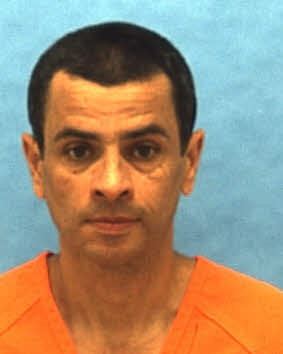
Edwin Bernard Kaprat III: The Florida Killer Who Preyed on the Vulnerable
Background and Early Criminal History
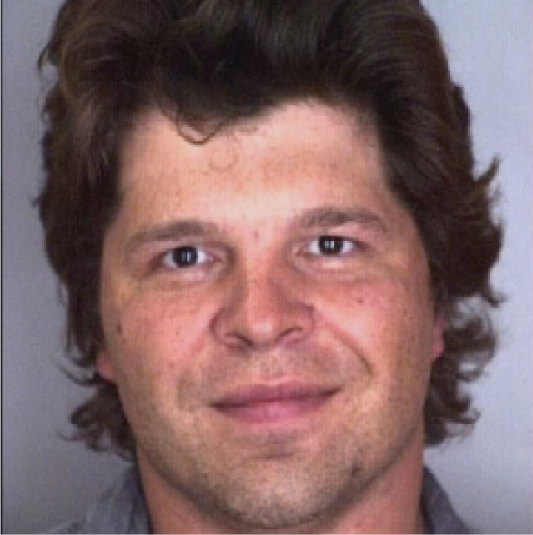
Edwin Bernard Kaprat III was an American serial killer, rapist and arsonist whose crimes spread fear through communities in west-central Florida during the early 1990s. Commonly known as Edwin “Mike” Kaprat, he was born on September 21, 1964, in New York City. By adulthood, he had developed a reputation for explosive anger, substance abuse and violent behavior. He eventually moved to Florida, where he worked as a machinist and sometimes assisted his father with repairs, remodeling projects and other jobs at local residences.
Those connections gave Kaprat access to homes occupied by elderly residents. He became familiar with their routines, learned who lived alone and understood which houses could be entered without immediately attracting attention. His later crimes showed a recurring pattern: vulnerable victims were attacked inside or near their homes, and fires were started in apparent attempts to destroy physical evidence and make the deaths appear accidental.
Kaprat’s first known connection to a homicide came in February 1991, more than two years before the series of attacks that made him notorious. Lee Anthony Bugay III, a 27-year-old man, disappeared in the Tampa area on February 21, 1991. His body was discovered the following day in mangroves near the Courtney Campbell Causeway. Bugay had suffered severe head injuries consistent with being beaten by a heavy object such as a tire iron or metal pipe.
Investigators learned that Kaprat had used Bugay’s stolen credit card after the killing. Kaprat was arrested and faced charges that included first-degree murder, armed robbery, forgery and dealing in stolen property. The evidence was not considered sufficient to obtain a murder conviction, and questions were raised about the reliability of statements attributed to him. He was instead convicted of offenses connected to Bugay’s stolen property. Kaprat received house arrest, violated its conditions and was later incarcerated. He was released on May 7, 1993.
The Hernando County Attacks
Only three months after his release, a frightening sequence of fires, assaults and deaths began in Hernando County. The victims were primarily elderly women living in Spring Hill, Brooksville and nearby retirement communities. Several of the fires were initially attributed to electrical problems. As the attacks continued, however, investigators began to recognize that the deaths were connected by more than coincidence.
Kaprat’s method involved gaining access to a residence, overpowering the occupant and then setting the home on fire. In the most clearly documented murders, the victims were beaten or strangled and sexually assaulted. The fires appear to have been intended to conceal the attacks, destroy fingerprints and other forensic evidence, and delay recognition that a serial offender was operating in the area.
The violence caused widespread fear among older residents. People installed additional locks and alarm systems, purchased firearms, stayed with relatives or refused to remain alone. What had first appeared to be a series of unrelated household fires was gradually revealed as a concentrated campaign of predatory violence.
Victims and Attacks
- Lee Anthony Bugay III — February 21, 1991, Tampa area: Bugay, 27, disappeared on February 21 and was found dead on February 22 in mangroves near the Courtney Campbell Causeway. He had been beaten in the head with a heavy object. Kaprat used Bugay’s credit card and was prosecuted for crimes involving Bugay’s property, but he was not convicted of the murder.
- Sophia Francis Garrity — August 7, 1993, Spring Hill, Hernando County: Garrity, 80, died when fire consumed her home. Her death was initially treated as an accident, reportedly caused by an electrical malfunction. She lived near Kaprat’s sister, and Kaprat had a personal connection to Garrity’s family. After his arrest, authorities considered Garrity one of the victims in the series, although Kaprat was not brought to trial for her death before he died.
- William and Alice Whitney — attacked August 17, 1993, Spring Hill, Hernando County: William Whitney, 84, and his wife, Alice, 83, were attacked inside the home they were attempting to sell. Their assailant apparently posed as someone interested in the property. Both were severely beaten, and a fire was started inside the residence. A neighbor heard screams and a smoke alarm, allowing the couple to be rescued. Alice survived. William suffered devastating brain injuries and died on November 19, 1993, after developing pneumonia associated with the injuries and his deteriorating condition. His death was classified as a homicide, and Kaprat was charged with his murder.
- Ruth Goldsmith — August 18, 1993, Brooksville area, Hernando County: Goldsmith, 70, died in a fire that destroyed her mobile home. Investigators initially believed the blaze had been caused by an electrical problem. Kaprat’s mother had been involved in selling the mobile home to Goldsmith, providing another connection between the suspect and a victim. After the later murders exposed a pattern, Goldsmith’s death was reconsidered as part of Kaprat’s series.
- Lydia Riddell — September 2, 1993, Brooksville area, Hernando County: Riddell, 79, was found dead in her burned mobile home. Unlike the earlier fires, evidence at the scene made it difficult to dismiss her death as accidental. She had been restrained and sexually assaulted before the fire was started. Kaprat had accompanied his father while work was performed at her residence, giving him prior knowledge of the home. Kaprat was tried and convicted of Riddell’s first-degree murder in January 1995.
- Lorraine “Alice” Burnham Dawe — September 26, 1993, Spring Hill, Hernando County: Dawe, 87, was found murdered in her home after another unsuccessful attempt to destroy the scene with fire. She had been beaten and sexually assaulted. Kaprat later gave investigators a detailed account of the attack, stating that he applied crushing force to her neck after believing she was suffering a heart attack. He was convicted of Dawe’s murder shortly after his conviction in the Riddell case.
The Investigation Tightens Around Kaprat
The investigation accelerated after Lydia Riddell’s death and the discovery of Lorraine Dawe. Detectives reviewed the earlier fires, compared the victims’ backgrounds and looked for individuals with access to multiple residences. Kaprat’s name repeatedly appeared. His father had performed work for several victims, his mother had a connection to Ruth Goldsmith’s mobile home, and Kaprat had lived or spent time near some of the crime scenes.
Investigators also learned that Dawe had reportedly expressed concern about Kaprat coming to her residence and asking to use the telephone. Physical evidence placed him at relevant locations, including fingerprints associated with the crime scenes. Cigarette butts and other forensic material were examined, and investigators closely monitored Kaprat’s movements.
Law-enforcement officers conducted an extensive surveillance operation that included electronic tracking equipment placed on vehicles used by Kaprat and his father. An undercover officer interacted with Kaprat and gathered information that further strengthened investigators’ suspicions. Authorities also examined reports of harassing or obscene telephone calls received by elderly women before some of the attacks.
By early October 1993, detectives believed they had identified the man responsible for the killings. Search and arrest warrants were obtained for Kaprat, his residence, his vehicle and biological samples that could be compared with evidence from the victims’ homes.
Arrest and Confession
Kaprat was arrested near his family’s Spring Hill residence on October 8, 1993. During questioning, he confessed to the murders of the four elderly women and to the attack on William and Alice Whitney. His statements included details investigators believed could have been known only by the offender.
Kaprat reportedly described acting on violent sexual urges and admitted setting fires after attacking his victims. His account of Dawe’s murder was particularly disturbing. He claimed that after sexually assaulting her, he believed she was experiencing a heart attack and crushed or broke her neck under the pretense of ending her suffering. Prosecutors viewed the statement not as an act of mercy, but as an admission that he intentionally killed a defenseless victim while committing a sexual assault.
Authorities charged Kaprat with a large collection of offenses, including four counts of murder, two counts of attempted murder, four counts of sexual battery, multiple counts of burglary involving battery, five counts of arson and one count of robbery. After William Whitney died on November 19, 1993, Kaprat was also charged with his murder because medical authorities connected Whitney’s death to the injuries suffered during the August attack.
Evidence and Criminal Trials
Kaprat later pleaded not guilty, and his attorneys challenged the admissibility and reliability of his confession. The defense argued that detectives had pressured him during the interrogation by shouting, accusing him of lying and repeatedly demanding different answers. Prosecutors maintained that Kaprat had voluntarily spoken to investigators and that his statements were supported by independent physical and circumstantial evidence.
Rather than attempting to prosecute all of the cases at once, authorities first brought Kaprat to trial for the murder of Lydia Riddell. The evidence included his recorded statements, his familiarity with Riddell’s residence and forensic information recovered during the investigation. After a trial lasting approximately ten days, the jury deliberated for several hours before finding him guilty of first-degree murder in January 1995.
Kaprat was then tried separately for the murder of Lorraine Dawe. Once again, prosecutors presented his confession alongside evidence showing his access to the victim and knowledge of the crime. He was convicted of Dawe’s murder later that same month. The juries in both cases recommended that he receive the death penalty.
On February 28, 1995, Kaprat was formally sentenced to death for the murders of Riddell and Dawe. Because he had received two death sentences, the remaining prosecutions involving Garrity, Goldsmith, Whitney and the other charges had not been completed when his own life came to a violent end.
Kaprat’s Death in Prison
Kaprat was transferred to Florida State Prison in Raiford to begin serving his death sentences. He spent only a short time on death row. On April 19, 1995, Kaprat and another prisoner, Charles Street, were attacked and fatally stabbed during a confrontation involving other inmates.
Kaprat was 30 years old when he died. Fellow prisoners Mario Lara and Rigoberto Sanchez-Velasco were identified as his attackers. His death ended the possibility of trying him for the remaining murders and prevented the victims’ families from seeing every allegation examined before a jury.
The Scope of His Crimes
Kaprat is generally associated with six homicide victims: Lee Anthony Bugay III, Sophia Garrity, Ruth Goldsmith, Lydia Riddell, Lorraine Dawe and William Whitney. However, his precise legal responsibility differed from case to case. He was convicted only of murdering Riddell and Dawe. He was charged with Whitney’s murder, confessed to the Hernando County attacks and was strongly linked to the deaths of Garrity and Goldsmith, but those cases did not reach completed trials. He was connected to Bugay through the use of stolen property but was not convicted of killing him.
The Hernando County crimes were especially frightening because Kaprat exploited ordinary relationships of trust. He was not an unknown figure wandering randomly through the area. He had entered some homes while helping his father perform legitimate work, knew relatives of certain victims and understood which residents were elderly, isolated or physically unable to resist him.
Fire was one of his most important tools. It concealed the initial nature of some deaths so effectively that authorities first classified the incidents as accidents. The delay allowed him to continue attacking. Once investigators reexamined the earlier fires, they found a pattern involving vulnerable victims, similar locations, personal connections to Kaprat and efforts to burn away evidence.
Legacy of the Case
Edwin Bernard Kaprat III became known in the media as the “Granny Killer” because most of his victims were elderly women. The nickname, however, can obscure the broader cruelty of his crimes. He targeted people whose age, health or isolation made them less able to defend themselves. He entered private homes, used extreme violence and attempted to disguise deliberate killings as household tragedies.
The case also demonstrated the importance of reviewing apparently accidental deaths when similar incidents occur within a limited area. Garrity’s and Goldsmith’s fatal fires did not initially appear to be murders. Only after Riddell and Dawe were found with unmistakable evidence of assault did investigators fully recognize the earlier deaths as potential parts of the same series.
Kaprat’s arrest on October 8, 1993, brought relief to a frightened community, but it could not undo the damage caused during the preceding months. Families lost parents and grandparents, survivors were left with permanent physical and emotional injuries, and elderly residents who had once felt secure in their homes became fearful of strangers and even familiar workers.
Although Kaprat’s own death prevented the completion of every prosecution, the investigation established a detailed picture of a violent offender who used familiarity, physical strength, sexual aggression and arson to prey upon vulnerable people. His two murder convictions and death sentences formally held him responsible for the killings of Lydia Riddell and Lorraine Dawe, while the larger body of evidence tied him to a series of deaths and attacks that terrorized Hernando County in 1993.