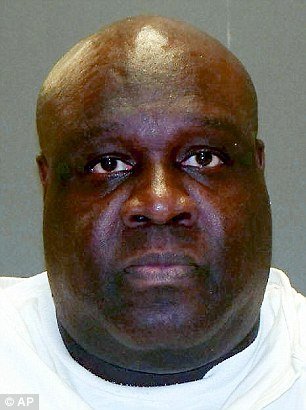
Matthew Steven Johnson: The Hartford Serial Killer
A Series of Murders in Hartford
Matthew Steven Johnson is an American serial killer convicted of murdering three women in Hartford, Connecticut, between April 2000 and July 2001. The victims were found within a relatively small area near Hartford’s Asylum Hill neighborhood, and each had suffered devastating injuries to the head and neck. Investigators discovered striking similarities among the crime scenes, including the secluded locations, the condition of the victims’ clothing and evidence that each woman had engaged in sexual contact shortly before her death.
Johnson preyed upon women living in vulnerable circumstances. The three women he was convicted of killing had histories of drug use and sex work, circumstances that may have made them less likely to be immediately reported missing and more willing to accompany someone to an isolated location. Johnson’s attacks were exceptionally violent. The women were beaten, strangled or stomped with such force that their skulls, faces and necks were severely damaged. Prosecutors later argued that the recurring methods and crime-scene characteristics demonstrated that the murders were the work of one offender.
The Murder of Aida Quinones
On the afternoon of April 16, 2000, the body of 33-year-old Aida Quinones was discovered near an Interstate 84 overpass beside Laurel Street in Hartford. She was lying facedown beneath dirt and gravel. Her clothing had been moved, leaving portions of her body exposed, and one of her shoes had been removed. Investigators concluded that she had been killed by severe violence inflicted upon her head and neck.
The secluded location and disturbed clothing suggested that Quinones had been attacked after accompanying her killer to an area where he expected little interference. Biological evidence recovered during the investigation eventually became essential to identifying Johnson. His DNA was found in evidence associated with Quinones, directly contradicting his later claim that he did not know her and had not had sexual relations with a woman for many years.
The Murder of Rosali Jimenez
Rosali Jimenez, 33, was found dead on August 29, 2000, inside an abandoned building at 50–52 Cedar Street in Hartford. Her body was discovered only a few months after the murder of Aida Quinones and within the same general section of the city. Jimenez had sustained catastrophic blunt-force injuries to her head and neck. The violence was consistent with being repeatedly stomped or struck with tremendous force.
Investigators recovered physical evidence from the scene, including cigarette butts and biological material. Blood found beneath Jimenez’s fingernails indicated that she may have scratched her attacker while attempting to defend herself. DNA testing would later connect Johnson to her and strengthen the prosecution’s argument that the same man had killed all three women.
The Murder of Alesia Ford
The third confirmed victim, 37-year-old Alesia Ford, was found on July 22, 2001, near or inside an abandoned building at 1 Myrtle Street in Hartford. Her partially clothed body bore injuries similar to those suffered by Quinones and Jimenez. Ford had been strangled and beaten, with extensive trauma concentrated around her head and neck.
Ford’s death occurred approximately eleven months after Jimenez was found. The location, condition of her clothing and nature of her injuries closely resembled the earlier cases. Biological evidence associated with Ford also contained Johnson’s DNA. With three women found in comparable circumstances and forensic evidence connecting Johnson to each of them, investigators had the foundation for a serial-murder prosecution.
Confirmed Victims
- Aida Quinones, 33: Her body was discovered on April 16, 2000, near the Interstate 84 overpass at 85 Laurel Street in Hartford, Connecticut. She had suffered severe injuries to her head and neck.
- Rosali Jimenez, 33: Her body was discovered on August 29, 2000, inside an abandoned building at 50–52 Cedar Street in Hartford, Connecticut. She had been killed through extreme blunt-force trauma to her head and neck.
- Alesia Ford, 37: Her body was discovered on July 22, 2001, at or near an abandoned building at 1 Myrtle Street in Hartford, Connecticut. She had been beaten and strangled.
Other Deaths Examined by Investigators
Johnson has also been publicly associated with the deaths of two other Hartford women whose bodies were found under circumstances resembling the confirmed murders. He was not convicted or formally held responsible for these deaths, and they should therefore be distinguished from the three cases proven in court.
- LaDawn Roberts, 28: She was found dead in June 1999 on the rear porch of a property on Garden Street in Hartford. Her death occurred before the three murders for which Johnson was convicted.
- Rosalind A. Casey, 32: She was found dead in June 2000 on Sigourney Street in Hartford. Her death fell between the killings of Aida Quinones and Rosali Jimenez.
The Forensic Investigation
Hartford police, the Connecticut State Police Cold Case Unit and specialists from the state forensic laboratory examined a larger group of suspicious deaths involving women in Hartford. Investigators noticed that several victims had been found in the Asylum Hill area and that three cases shared particularly strong similarities. The bodies of Quinones, Jimenez and Ford were discovered within a relatively short distance of one another, their clothing had been disturbed in comparable ways and each woman had suffered overwhelming trauma to the head or neck.
Forensic scientist Dr. Henry Lee reviewed the evidence and testified about the similarities among the murders. DNA recovered from semen and other biological material connected Johnson to all three women. Additional evidence, including blood and cigarette butts, helped investigators reconstruct the circumstances surrounding the attacks. Johnson’s DNA profile was available to authorities because of his previous convictions, allowing evidence from the homicide scenes to be compared with a known sample.
Johnson’s Criminal History
Long before the murders, Johnson had accumulated a history of violence and sexual offenses. As a young man, he assaulted and robbed women, and at the age of 19 he attacked a security guard during an attempted robbery inside the Cathedral of St. Joseph in Hartford’s Asylum Hill neighborhood. He received a lengthy prison sentence but served only a portion of it.
Johnson was also convicted in connection with attacks against women during the late 1980s and early 1990s. These incidents included unlawfully restraining a woman and raping and beating another. The surviving victims were able to identify him, resulting in his apprehension. His record placed his DNA in law-enforcement databases and gave investigators a crucial means of identifying him years later.
Arrest and Prosecution
Johnson was arrested in January 2002 after forensic evidence linked him to the murders. He was initially charged in the deaths of Aida Quinones and Alesia Ford, and the case involving Rosali Jimenez was subsequently added. Prosecutors chose to try the three murder charges together because they believed the repeated methods, geographic proximity and forensic connections demonstrated a common pattern.
Johnson denied knowing the women. During questioning, he reportedly claimed that he could not explain why his semen was associated with the victims and insisted that he had not had sexual intercourse with a woman since 1982. The DNA evidence directly contradicted that assertion. At trial, the prosecution presented the forensic findings, the similarities among the crime scenes and Johnson’s connection to each victim.
Conviction and Sentence
In February 2004, a jury found Matthew Steven Johnson guilty of all three murders. The verdict established his responsibility for the deaths of Aida Quinones, Rosali Jimenez and Alesia Ford. In April 2004, he was sentenced to 60 years in prison for each murder. The sentences were ordered to run consecutively, producing a total term of 180 years and ensuring that he would remain imprisoned for the rest of his life.
Johnson continued to deny responsibility and challenged his convictions. Among his arguments was the claim that the three charges should have been tried separately and that testimony describing the crimes as serial killings unfairly influenced the jury. In 2008, the Connecticut Supreme Court rejected his arguments and upheld the convictions and sentences.
A Pattern of Violence Against Vulnerable Women
The crimes of Matthew Steven Johnson demonstrated how a predator could exploit women whose lives were complicated by addiction, poverty and sex work. The victims were not merely names in a criminal prosecution. Aida Quinones, Rosali Jimenez and Alesia Ford were three individual women whose lives ended through deliberate and extraordinary violence. Their circumstances may have placed them in Johnson’s path, but they did not diminish the seriousness of their deaths or the losses suffered by their families.
The investigation ultimately succeeded because detectives treated the murders as potentially connected and because forensic specialists preserved and compared evidence from each scene. DNA testing transformed a series of seemingly separate killings into a unified case against one offender. Johnson’s conviction brought legal accountability for three murders, although questions have remained about whether he was responsible for additional deaths in Hartford. His 180-year sentence permanently removed him from the community and closed the prosecution of one of the city’s most disturbing serial-murder cases.