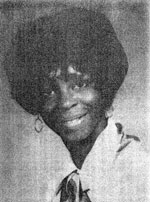
On July 22, 2001, the body of thirty-seven-year-old Alesia Ford, an African-American female, was discovered next to the loading dock of an abandoned building at 1 Myrtle Street in Hartford, Connecticut. Her head and face were covered in blood, and her clothing was in disarray; her shirt had been pushed up, and her pants and underwear were pulled down, dangling from one leg.
An autopsy later revealed that she had died in the late afternoon of the previous day from blunt force trauma to her head and neck. Evidence also showed that she had been manually strangled just before her death.
The investigation into Alesia Ford's murder became part of a larger inquiry into a series of killings in the Hartford area. Her case was linked to the deaths of two other women, Aida Quinones and Rosali Jimenez, whose bodies had been found in similar circumstances within a one-mile radius in 2000 and 2001. All three women were known to be drug users and had histories of prostitution. The similarities in how the victims were killed and how their bodies were left led investigators to believe they were searching for a serial killer. A significant breakthrough in the case came from forensic evidence. DNA from semen samples collected from Alesia Ford's body was tested and found to match the DNA profile of a man named Matthew Steven Johnson. His DNA was also found on the other two victims, linking him to all three murders.
Matthew Steven Johnson, a homeless drifter with a prior criminal record, was arrested in January 2002 and charged with the murders of Alesia Ford and Aida Quinones. In February 2004, a jury found the forty-year-old guilty of three counts of murder for the slayings of Ford, Quinones, and Jimenez. During the trial, prosecutors presented the compelling DNA evidence, and famed forensic scientist Henry Lee testified about the similarities in the killings, suggesting a lone serial killer was responsible. The defense attempted to cast doubt by pointing out that other DNA profiles were also found on the victims and that not all evidence from the crime scenes had been tested. A former homeless man also testified that he saw Ford with a man who was not Johnson the night before she died. Despite these arguments, Johnson was convicted and sentenced to three consecutive life sentences. His conviction and sentence were later upheld by the Connecticut Supreme Court.